Shandong Qilu lndustrial Co.,Ltd.

Why Forging Rings Are the Best for Strong Industrial Parts
Welcome to My Blog!
Before we dive into the content, I’d love for you to join me on my social media platforms where I share more insights, engage with the community, and post updates. Here’s how you can connect with me:
Facebook:https://www.facebook.com/profile.php?id=100090903441806
Now, let’s get started on our journey together. I hope you find the content here insightful, engaging, and valuable.
Table of Contents
Introduction
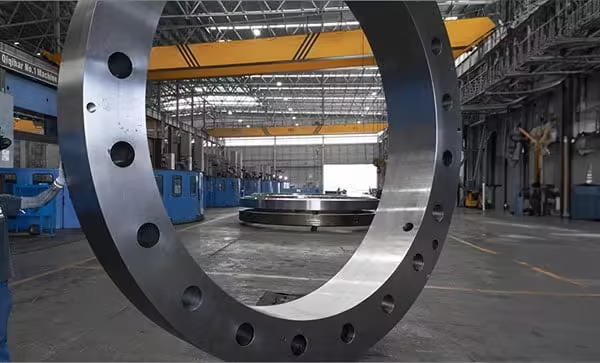
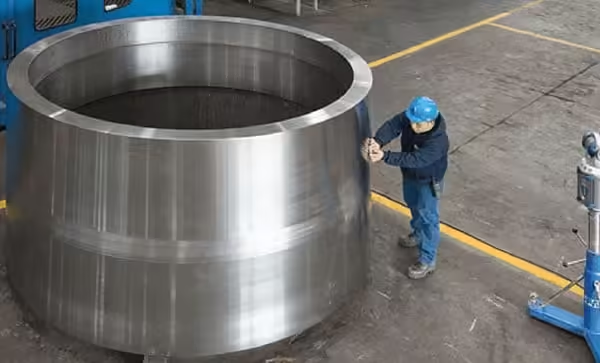
In the world of industrial manufacturing, strength, durability, and precision are crucial elements in the production of high-quality parts. One material that stands out in meeting these demands is forging rings. Known for their robust characteristics and reliability, forging rings are a preferred choice in various industries that require components capable of enduring extreme conditions. This blog post delves into why forging rings are the best option for strong industrial parts, their advantages, and how they outperform other manufacturing techniques.
What Are Forging Rings?

Forging rings are round, precision-engineered components that are formed through the forging process, which involves applying heat and pressure to a metal material. This method significantly differs from other manufacturing techniques like casting or machining, as it results in parts that have enhanced strength, better structural integrity, and more uniform material properties. The act of forging realigns the grain structure of the material, making these rings a superior option for industries requiring components that can withstand extreme stresses and provide consistent reliability.
The Forging Process
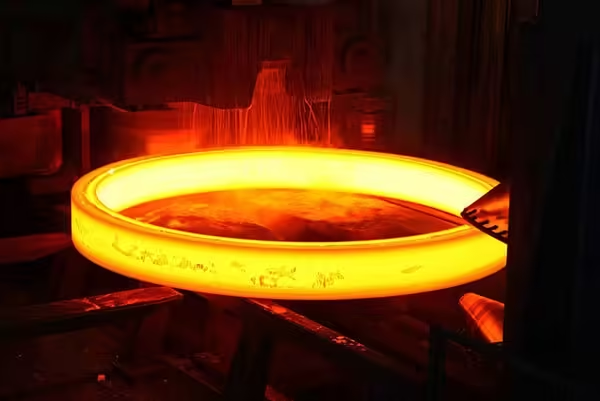
The journey of creating a forged ring starts with selecting high-quality metal alloys, carefully chosen for their ability to withstand the intense forces involved in forging. These alloys are heated to a specific temperature, making them pliable enough for shaping. Once they reach the correct temperature, the material is placed under controlled pressure, which forces it into the desired shape. The result is a component that boasts uniform density throughout, reducing the occurrence of weak spots or defects that can occur with other methods. This precision in the forming process ensures that the final product maintains its strength and performance under demanding conditions.
Key Materials Used for Forging Rings
There are several materials commonly used in the production of forged components, each offering distinct advantages depending on the application. Among the most frequently used metals are carbon steel, alloy steel, stainless steel, and titanium. Carbon steel is a popular choice due to its combination of strength and flexibility, making it highly versatile for many uses. Alloy steel, on the other hand, offers enhanced mechanical properties, such as improved resistance to wear and corrosion. Stainless steel, favored for its resistance to rust and corrosion, is often chosen when parts are exposed to harsh environments. Titanium, while more expensive, is highly sought after in industries such as aerospace due to its superior strength-to-weight ratio.
Why Are Forging Rings Preferred for Strong Industrial Parts?
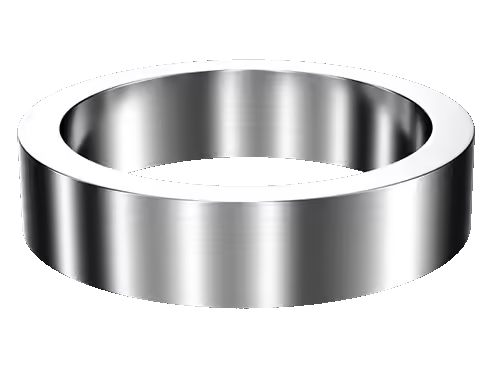
In industrial manufacturing, components are often required to endure heavy stress, harsh conditions, and demanding workloads. Forged rings stand out as a preferred choice due to their remarkable strength, reliability, and resistance to wear. This section explores the key reasons why these circular forged components are highly favored in the production of durable industrial parts.
Increased Strength and Durability
One of the most significant benefits of these forged components is their superior strength and durability. The forging process aligns the grain structure of the material, which improves its overall mechanical properties. This structural enhancement results in parts that are far stronger and more resilient than those produced through casting or machining. For industries such as automotive, aerospace, and heavy machinery, where parts are subjected to constant stress, high-impact forces, and substantial loads, this increased strength is crucial. Components made from forged materials can withstand higher levels of pressure and continue to perform reliably even in the harshest environments.
Resistance to Fatigue and Impact
Another reason for the preference for these forged components is their exceptional ability to resist both fatigue and impact. Unlike parts made through other methods, these components have improved resilience to repeated stresses, making them ideal for high-performance applications. Whether it’s the critical systems of aerospace machinery or the heavy-duty parts of industrial machines, these forged components offer the toughness required to function under extreme conditions. Their resistance to sudden shocks, vibrations, and other forms of mechanical impact ensures that they maintain their integrity and performance throughout their lifecycle, even under the most demanding circumstances.
Applications
Forging rings are used across various industries where strength, precision, and reliability are essential. Below are some common applications of forging rings in different industrial sectors:
| Industry | Application |
|---|---|
| Aerospace | Aircraft components, landing gear parts, turbine rings |
| Automotive | Engine parts, wheel hubs, suspension components |
| Heavy Machinery | Gear rings, hydraulic components, bearing rings |
| Oil and Gas | Valve components, drilling equipment parts |
| Construction | Load-bearing components, equipment frames, couplings |
How Do Forging Rings Compare to Other Manufacturing Methods?
When evaluating various manufacturing techniques, such as casting or machining, forged components demonstrate clear advantages in terms of performance, durability, and reliability. This section explores the key differences between forging and these other methods, shedding light on why forged parts are often the preferred choice for high-stress applications.
Forging vs. Casting
Casting involves melting metal and pouring it into molds to create parts. While this method is often used for complex shapes, it comes with its own set of challenges. One major drawback of casting is the potential for porosity, which can lead to air pockets or other imperfections inside the part. These weaknesses can significantly compromise the structural integrity and performance of the component. Additionally, casting can sometimes result in less uniform material properties.
In contrast, the forging process produces components with much higher strength and fewer internal defects. The application of heat and pressure during forging aligns the grain structure of the metal, leading to a more consistent and robust part. This enhanced grain alignment improves the overall mechanical properties, making forged components more resilient and better suited to withstand high-impact and heavy-load applications. For industries where performance and safety are critical, such as aerospace or automotive, these qualities make forged parts far superior to their cast counterparts.
Forging vs. Machining
While machining provides precision, it often results in material waste and is less efficient than forging. Additionally, machined parts lack the grain structure alignment found in forged components, which can lead to weaker mechanical properties. Forged parts, with their enhanced grain structure, offer superior strength, durability, and performance under stress.
How to Choose the Right for Your Needs?
Choosing the right forging ring depends on several factors, such as material, size, and application. It’s important to select a forging ring that meets the specific demands of your project to ensure optimal performance and longevity.
Factors to Consider
- Material Strength: Choose materials based on the load-bearing requirements of your application.
- Size and Dimensions: Ensure the forging rings are appropriately sized for the intended purpose.
- Environmental Conditions: Select materials that can withstand the temperature, pressure, and environmental factors of your application.
Conclusion
Forging rings are an essential component in the manufacturing of strong industrial parts. Their superior strength, resistance to impact, and overall durability make them the preferred choice for a wide range of industries. Whether for aerospace, automotive, or heavy machinery, forging rings offer unmatched reliability and performance that other manufacturing methods simply cannot replicate. By understanding the advantages of forging rings and selecting the right material for your needs, you can ensure that your industrial components stand the test of time and perform at the highest level.
FAQ
What are the primary benefits of forging rings in industrial parts?
Forging rings provide increased strength, resistance to fatigue and impact, and greater durability compared to parts made by other manufacturing methods like casting or machining.
How does the forging process improve the material strength of the rings?
The forging process aligns the grain structure of the material, enhancing its strength and making it more resistant to deformation and failure.
What types of materials are commonly used?
Common materials for forging rings include carbon steel, alloy steel, stainless steel, and titanium, each offering different properties suitable for various applications.
How do forging rings perform in high-stress environments?
Forging rings excel in high-stress environments due to their resistance to fatigue, impact, and wear. They are ideal for applications that require strong, reliable components.
Can forging rings be used for precision parts?
Yes, forging rings can be precisely engineered to meet the requirements of demanding applications, making them suitable for industries like aerospace and automotive.