Shandong Qilu lndustrial Co.,Ltd.

utomotive Parts Forging Materials and Their Impact on Forged Auto Parts ReliabilityUtomotive
Table of Contents
In the manufacturing of safety-critical components, utomotive Parts Forging Materials determine not only mechanical performance but also process stability and cost control. For a professional forging manufacturer, material selection is never a catalog decision. It is an engineering judgment that directly affects grain flow, fatigue resistance, machinability, and long-term reliability.
Unlike cast or fabricated parts, forged components rely on controlled plastic deformation to optimize internal structure. Therefore, utomotive Parts Forging Materials must be evaluated not only by chemical composition, but also by forgeability, heat treatment response, and structural integrity after deformation.
Why Material Selection Matters in Forged Automotive Parts
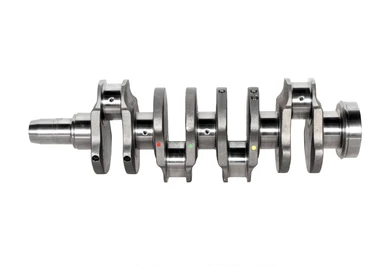
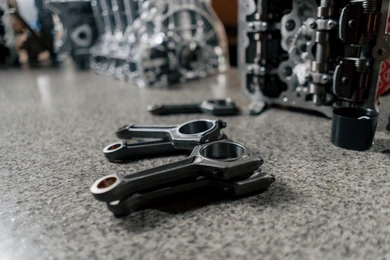
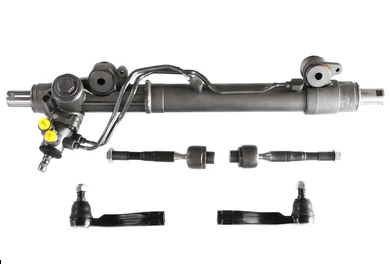
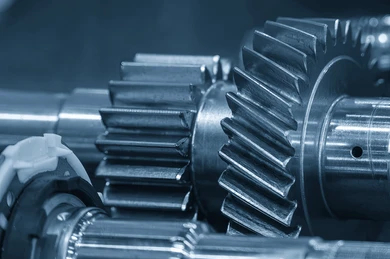
Forged crankshafts, connecting rods, steering knuckles, and transmission gears operate under cyclic loads, shock impact, and temperature variation.
The choice of utomotive Parts Forging Materials influences:
- Yield strength and tensile strength
- Fatigue life under dynamic loading
- Impact toughness in low temperatures
- Resistance to wear and surface damage
- Dimensional stability after heat treatment
According to ASM International, controlled grain flow in forged steel significantly improves fatigue resistance compared to cast structures (ASM Handbook, Volume 14A).
This is why forged automotive components depend heavily on optimized utomotive Parts Forging Materials rather than generic steel grades.
Common utomotive Parts Forging Materials Used in the Industry
Carbon Steels
Medium carbon steels such as C45 and 1045 are widely used for structural forged parts.
They provide:
- Good strength-to-cost ratio
- Acceptable hardenability
- Stable forging performance
For non-safety-critical components, these utomotive Parts Forging Materials remain cost-efficient solutions.
Alloy Steels
For higher load applications, alloy steels like 42CrMo4 (AISI 4140) or 4340 are preferred.
Advantages include:
- Improved hardenability
- Enhanced fatigue resistance
- Better high-temperature stability
These utomotive Parts Forging Materials are commonly applied in drive shafts, gear blanks, and suspension components.
Microalloyed Steels
Microalloyed steels reduce or eliminate quenching and tempering steps.
For forging manufacturers, this means:
- Lower heat treatment cost
- Reduced distortion
- Improved productivity
This category of utomotive Parts Forging Materials supports lean production strategies.
Stainless and Special Steels
Used in corrosion-sensitive or high-temperature environments.
Though less common in standard vehicle structures, they play roles in exhaust systems and specialty performance applications.
How Forging Process Influences utomotive Parts Forging Materials
Material cannot be separated from process.
Open-die forging, closed-die forging, and precision forging impose different strain distributions.
For example:
- High alloy steels require stricter temperature control
- Large cross-sections demand deeper hardenability
- Thin-wall precision forgings need controlled deformation resistance
When selecting utomotive Parts Forging Materials, we evaluate:
- Hot deformation behavior
- Flow stress characteristics
- Risk of cracking
- Grain refinement capability
Scientific studies published in the Journal of Materials Processing Technology confirm that forging temperature and strain rate significantly affect microstructure evolution in alloy steels.
This directly impacts forged automotive part durability.
Mechanical Properties vs Manufacturing Efficiency
Automotive OEMs often focus on ultimate strength.
However, from a forging manufacturer’s perspective, utomotive Parts Forging Materials must also balance:
- Tool wear rate
- Machining allowance
- Heat treatment cycle time
- Scrap rate
Over-specifying alloy content increases cost without proportional performance gains.
Material optimization, not maximum strength, defines competitive forged component production.
Sustainability and Lightweighting Considerations
Modern vehicle platforms prioritize weight reduction.
Advanced high-strength steels are increasingly included in utomotive Parts Forging Materials portfolios.
Benefits include:
- Thinner sections with equal load capacity
- Reduced vehicle mass
- Improved fuel efficiency
According to WorldAutoSteel, optimized high-strength steel applications contribute significantly to vehicle lightweight strategies.
For forging manufacturers, this trend reshapes material development direction.
Heat Treatment Compatibility
Heat treatment response is critical.
Different utomotive Parts Forging Materials exhibit varied quench sensitivity and tempering behavior.
Improper selection can cause:
- Distortion
- Surface decarburization
- Internal stress concentration
A reliable forging supplier validates material selection through:
- Jominy hardenability testing
- Metallographic examination
- Mechanical property verification
This ensures forged parts meet international automotive standards.
Global Standards and Compliance
utomotive Parts Forging Materials must comply with international standards such as:Utomotive
- ASTM
- DIN
- EN
- JIS
Material traceability is essential in global supply chains.
Professional forging manufacturers maintain full material certification and chemical composition records to support OEM audits.
Strategic Material Selection for Long-Term Performance
Selecting utomotive Parts Forging Materials is not simply matching grade to drawing.
It requires:
- Understanding load spectrum
- Considering lifecycle fatigue
- Evaluating production scalability
- Predicting post-machining behavior
The right material shortens production cycles, stabilizes quality, and improves final component reliability.
Conclusion
For a forging manufacturer serving global automotive markets, utomotive Parts Forging Materials are the foundation of performance and profitability.
From carbon steels to advanced alloy systems, each material must be assessed through the lens of forgeability, heat treatment response, structural optimization, and cost control.
Strategic material engineering ensures that forged automotive components meet safety demands, efficiency goals, and long-term durability expectations in modern vehicle platforms.
If you want to learn more about forged parts, please click here.