Shandong Qilu lndustrial Co.,Ltd.

Unlocking the Power of Forge Products for Maximum Durability
Welcome to My Blog!
Before we dive into the content, I’d love for you to join me on my social media platforms where I share more insights, engage with the community, and post updates. Here’s how you can connect with me:
Facebook:https://www.facebook.com/profile.php?id=100090903441806
Now, let’s get started on our journey together. I hope you find the content here insightful, engaging, and valuable.
Table of Contents
Introduction
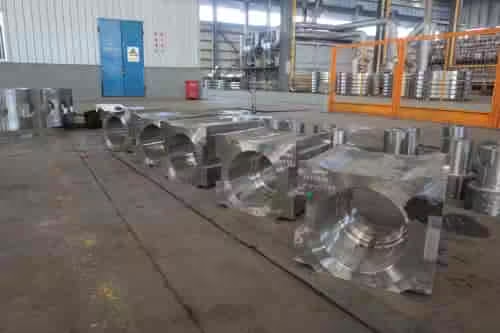
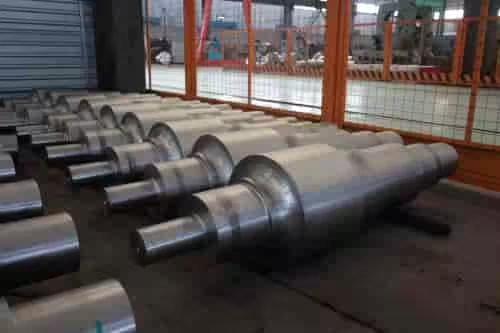
Forge products are critical components in numerous industries due to their exceptional durability, strength, and reliability. Forging, a process of shaping metals under high pressure after heating, greatly enhances the material properties of metals, allowing them to withstand high stress and extreme conditions. As industries demand higher performance, understanding the significance of forge products and how they contribute to maximizing durability is essential for any business or operation involved in heavy-duty machinery or critical applications.
In this blog post, we will explore the importance of forge products, their role in improving durability, their wide-ranging applications, and the essential factors to consider when selecting forge products for your operations. By delving into these aspects, you’ll gain a comprehensive understanding of how forge products can optimize your projects and contribute to long-term success.
What Are Forge Products?
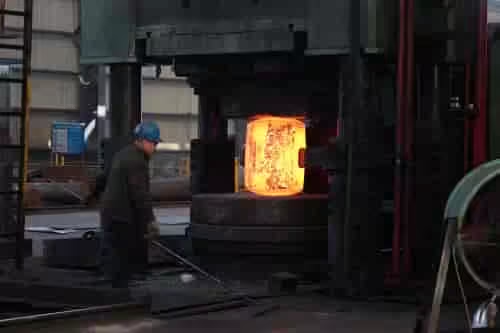
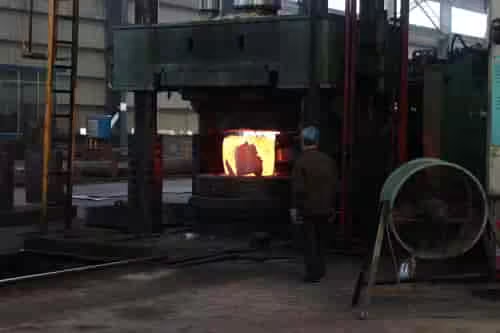
Forge products are created through a process called forging, where metal is heated to a malleable temperature and shaped using mechanical force. Unlike other manufacturing methods such as casting, forging results in denser, more durable materials with superior mechanical properties. This makes forge products ideal for use in high-stress applications, including automotive engines, aerospace parts, and industrial machinery. The benefits of forging stem from the way it alters the grain structure of the material, producing a tighter, more uniform arrangement of metal fibers, which improves overall strength.
When metals undergo the forging process, they become significantly stronger because the grain structure aligns in the direction of the applied force, making the metal more resistant to fatigue, cracks, and deformation. Additionally, the heating and cooling cycles during the forging process help remove impurities, further enhancing the material’s reliability.
The Process of Forging: How It Works
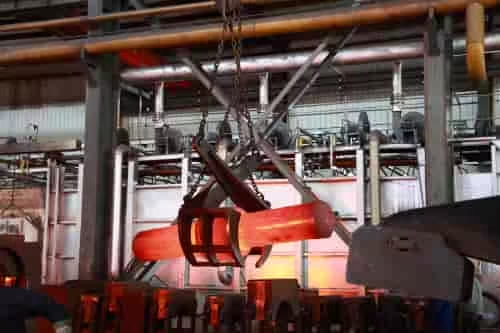
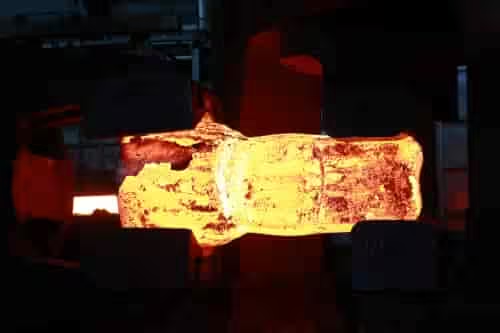
The process of forging begins with the selection of high-quality materials, such as carbon steel, alloy steel, or stainless steel. These metals are heated to specific temperatures that allow them to become soft and malleable. Once heated, they are placed between a hammer or press die, which applies immense pressure to shape the metal into the desired form.
Forging can be performed in different ways, including:
- Open-die forging: The metal is placed between flat or simple shaped dies, allowing for a range of custom shapes.
- Closed-die forging: The metal is placed between two dies that have the shape of the final product, providing more intricate designs.
- Roll forging: The metal is passed through rotating rolls, reducing the thickness and length of the material.
Each method serves different needs, depending on the material, shape, and application required. The outcome, however, is always the production of forge products with enhanced mechanical properties.
Why Forge Products Offer Superior Durability
The primary reason why forge products are known for their durability is their ability to withstand extreme conditions and heavy usage. The forging process itself results in a superior material structure, offering advantages that are essential for heavy-duty and high-performance applications.
Improved Material Strength
One of the key benefits of forge products is their enhanced strength. During the forging process, the metal’s grain structure is elongated and aligned, which gives the product higher tensile strength and the ability to handle significant loads and forces. This makes forge products less prone to breaking, cracking, or warping under pressure.
Resistance to Wear and Fatigue
Forge products are highly resistant to wear and fatigue. The improved grain structure and heat treatment of the metal during the forging process make it more durable against repetitive stress and heavy impact. This is especially important in applications like automotive and aerospace, where components must endure frequent loading and unloading cycles without losing structural integrity.
Ability to Withstand High Temperatures and Corrosive Environments
Many forge products are designed to operate in harsh environments, including high temperatures, corrosive conditions, and extreme pressure. Whether in engines, turbines, or oil rigs, forge products can withstand these challenges better than products made from other manufacturing processes, making them indispensable in certain sectors.
Key Applications
Forge products are crucial in many industries due to their strength, durability, and resistance to extreme conditions. Below are some key sectors that rely heavily on forge products:
- Automotive Industry
In the automotive industry, forge products are used for engine components, suspension parts, drivetrain systems, and more. Components such as crankshafts, connecting rods, and gears require exceptional strength and durability to withstand the stresses of daily driving, and forging offers the perfect solution. The superior mechanical properties of forged automotive parts help ensure they maintain performance over time and in demanding conditions.
- Aerospace Industry
The aerospace industry demands materials that can handle extreme conditions, such as high temperatures, vibrations, and stresses. Components like turbine blades, engine parts, and landing gear are often made from forge products to ensure both safety and performance. The high durability of these products is essential in preventing catastrophic failures, especially when aircraft are subjected to extreme stress during takeoff, flight, and landing.
- Oil & Gas Industry
The oil and gas industry requires robust materials that can handle the extreme pressures and temperatures found in pipelines, valves, and drilling equipment. Forge products are ideal for these applications, as they provide the strength and durability necessary to withstand the harsh environments of oil rigs, deep-sea drilling, and high-pressure pipelines.
- Construction and Heavy Equipment
Heavy machinery and construction equipment also rely heavily on forge products. Components such as gears, axles, and structural parts must be able to bear substantial loads while maintaining performance under challenging conditions. The ability to resist wear and tear is crucial in construction, where equipment is used in abrasive environments like gravel pits or demolition sites.
Key Features
When selecting forge products, it’s essential to ensure they meet the required standards for durability, performance, and quality. Here are some key features to look for:
| Feature | Importance |
|---|---|
| Material Quality | High-quality materials ensure better strength, corrosion resistance, and longevity. |
| Grain Structure | A uniform grain structure enhances toughness and resistance to stress and cracks. |
| Heat Treatment | Proper heat treatment improves hardness, wear resistance, and fatigue strength. |
| Tolerance | Tight tolerances ensure proper fitting and consistent performance in the final product. |
| Surface Finish | A smooth surface reduces friction, minimizing wear and prolonging product life. |
Selecting forge products with these features ensures that your components will perform optimally throughout their lifespan, even under challenging conditions.
How to Maximize the Durability
To ensure that forge products reach their maximum potential in terms of durability and performance, proper maintenance and usage are key. Here are several ways to optimize their longevity:
- Ensure Proper Heat Treatment
Heat treatment plays a vital role in enhancing the mechanical properties of forge products. By applying the correct heat treatments, such as quenching, tempering, or annealing, you can significantly improve the strength, hardness, and fatigue resistance of the material.
- Perform Regular Inspections
Regular inspections are crucial for identifying any potential issues, such as wear, cracks, or corrosion. Catching problems early can prevent component failure and costly repairs. Non-destructive testing methods, such as ultrasonic or magnetic particle inspection, are often used to assess the integrity of forge products without causing damage.
- Use Within Specified Limits
Forge products are designed for specific applications and conditions. To maximize their durability, always ensure they are used within their designated operating limits, such as temperature, pressure, and load. Exceeding these limits can cause premature failure or degrade the material’s performance.
Conclusion
Forge products offer unparalleled durability, strength, and resistance to wear, making them essential in industries that require high-performance components. By understanding the forging process, the benefits of forged materials, and the critical factors that contribute to their durability, you can optimize their use in various applications. Whether in automotive, aerospace, oil & gas, or heavy construction, forge products are vital for ensuring reliability and long-term success.
Investing in high-quality forge products and following best practices for their maintenance and usage will contribute to the longevity and efficiency of your operations. The next time you select components for your project, remember that the strength and durability of forge products can make all the difference.
FAQ
Q1: What is the main advantage of forge products over cast products?
Forge products are stronger, more durable, and resistant to fatigue due to their superior grain structure, which is aligned in the direction of applied force.
Q2: What materials are commonly used to make forge products?
Common materials include carbon steel, alloy steel, stainless steel, and other high-performance metals that offer strength, toughness, and resistance to wear.
Q3: How do I choose the right forge product for my needs?
Consider the material requirements, operating conditions (temperature, pressure), and the specific application of the forge product. Work with suppliers who can provide materials that meet your exact specifications.
Q4: Can forge products be recycled?
Yes, forge products can be recycled, as metals used in forging are often reusable. However, the properties of recycled materials may vary, so it’s essential to ensure that they meet the necessary standards.