Shandong Qilu lndustrial Co.,Ltd.

Top Benefits of Using Forged Aluminum Components
Table of Contents
Introduction

In today’s competitive manufacturing industry, choosing the right materials and processes is key to producing high-quality, durable products. Forged aluminum components stand out for their superior strength-to-weight ratio, reliability, and cost-effectiveness. Whether in automotive, aerospace, or industrial machinery, understanding the benefits of aluminum forgings can improve product performance and efficiency.
Qilu specializes in the production of high-quality forgings, such as shafts, rings, and discs. We have advanced equipment with capacities ranging from 200 to 4,000 tons and monthly production ranging from 1 to more than 100,000 pieces, ensuring the highest quality forged aluminum components and fast global delivery. This blog will introduce the main advantages of aluminum forgings and why it is the best manufacturing choice for your project.
What Are Forged Aluminum Components?
Forged aluminum components are created by applying compressive forces to aluminum billets or ingots at high temperatures, reshaping the metal to desired forms with enhanced mechanical properties. Unlike casting or machining from raw blocks, forging aligns the metal grain flow, resulting in improved strength, toughness, and fatigue resistance. This process makes aluminum forgings an ideal choice for critical applications where lightweight yet strong components are essential.
Why Choose Forged Aluminum?
The advantages of aluminum forgings stem from the material’s intrinsic properties combined with the forging process. Below are the key benefits that make aluminum forgings components superior:
1. Exceptional Strength and Durability
Forging enhances the internal structure of aluminum, aligning its grain flow in the direction of stress. This alignment significantly improves tensile strength and impact resistance compared to cast or machined aluminum parts. Components made from aluminum forgings withstand harsh environments and prolonged mechanical stress without failure.
2. Lightweight with High Performance
One of aluminum’s most valued traits is its lightweight nature. Forged aluminum components offer the perfect balance between low weight and high strength, enabling industries such as aerospace and automotive to reduce overall weight without sacrificing performance. This contributes to fuel efficiency and better handling.
3. Enhanced Fatigue Resistance
Repeated loading and unloading cycles can cause cracks or failures in metal components. Forged aluminum parts exhibit superior fatigue resistance due to their refined microstructure, ensuring longer service life and reduced maintenance costs.
4. Improved Machinability and Precision
Forging produces a dense, uniform material that machines more predictably than castings or extrusions. This results in better dimensional accuracy and surface finish for complex parts, reducing the need for extensive secondary machining.
Table: Comparison of Key Properties of Forged Aluminum vs. Other Manufacturing Methods
| Property | Forged Aluminum | Cast Aluminum | Machined Aluminum |
|---|---|---|---|
| Tensile Strength (MPa) | 350 – 450 | 180 – 250 | 200 – 300 |
| Fatigue Resistance | High | Moderate | Low |
| Weight | Low | Low | Low |
| Grain Structure | Aligned & Continuous | Random & Porous | Interrupted |
| Surface Finish | Excellent | Variable | Excellent |
| Cost | Moderate to High | Low | High |
| Production Volume | Suitable for Mass & Low | Suitable for Mass | Suitable for Prototypes |
Additional Benefits of Forged Aluminum Components
Superior Corrosion Resistance
Aluminum naturally forms a thin oxide layer protecting it from corrosion. Forged aluminum components benefit from this property and the dense microstructure reduces corrosion pathways, making them suitable for outdoor and marine applications.
Better Impact and Wear Resistance
Thanks to the refined grain flow and compressive stresses introduced during forging, aluminum forgings parts resist impact and wear better than other forms, increasing their operational lifespan.
Versatility in Design
Forging allows manufacturers to produce complex shapes and sizes with fewer defects. This design flexibility helps engineers optimize components for performance and weight reduction.
Environmental Sustainability
Forged aluminum is recyclable and requires less energy to produce compared to some other metals, contributing to more sustainable manufacturing practices.
Industries Benefiting from Forged Aluminum Components
- Automotive: Lightweight suspension parts, crankshafts, and wheels.
- Aerospace: Structural components that demand high strength-to-weight ratio.
- Industrial Machinery: Durable gears, shafts, and fittings.
- Marine: Corrosion-resistant parts exposed to seawater.
- Electronics: Heat sinks and lightweight structural parts.
Why Trust Qilu for Your Forged Aluminum Needs?
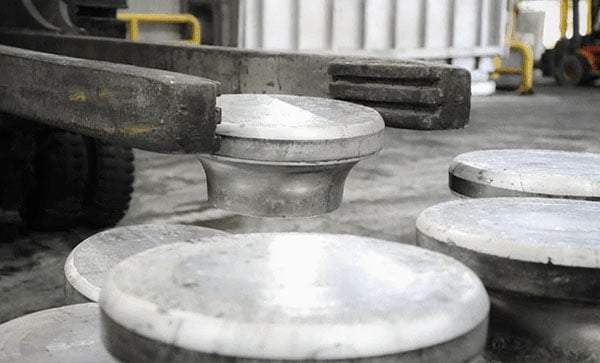
At Qilu, our commitment to quality is unmatched. We use forging presses ranging from 200 to 4000 tons and have a comprehensive quality control system that ensures every aluminum forgings component meets international standards. Our capability to produce from 1 to over 100,000 pieces means we serve both specialized and mass production needs. With our global delivery network and extensive inventory, we provide timely solutions that keep your projects on schedule.
Conclusion
Choosing forged aluminum components offers significant advantages including superior strength, lightweight construction, enhanced fatigue resistance, and excellent machinability. These benefits translate into longer-lasting, reliable parts that improve overall product performance across numerous industries.
When it comes to high-quality aluminum forgings components, Qilu stands out as a trusted manufacturer dedicated to delivering excellence. Whether you need shaft forgings, ring forgings, or disc forgings, our advanced equipment and global logistics ensure your order is fulfilled with precision and speed.
Ready to enhance your products with forged aluminum components? Contact us today to discuss your specific requirements and experience the Qilu difference.
FAQ
What is the main difference between forged aluminum and cast aluminum?
Forged aluminum is produced by compressing aluminum billets under high pressure, aligning the grain structure for better mechanical properties. Cast aluminum is poured into molds and solidifies with a more random grain structure, resulting in lower strength and fatigue resistance.
Are aluminum forgings components more expensive than cast ones?
Generally, forging involves higher initial costs due to equipment and tooling but results in stronger, longer-lasting parts. The total cost of ownership is often lower due to reduced maintenance and improved performance.
Can aluminum forgings components be customized?
Yes, forging allows for great design flexibility, enabling manufacturers to produce complex and precise shapes tailored to specific applications.
How does Qilu ensure the quality of aluminum forgings parts?
Qilu uses advanced forging presses and inspection facilities. Our quality control protocols include material testing, dimensional verification, and stress analysis to meet international standards.
Is aluminum forgings suitable for high-temperature applications?
Forged aluminum has good thermal stability but is generally used in applications up to moderate temperatures. For extreme high-temperature environments, other alloys or materials may be recommended.