Shandong Qilu lndustrial Co.,Ltd.

The Ultimate Guide to Forge Aluminum
Table of Contents
Introduction

In modern manufacturing, selecting the right materials and processes for demanding applications is crucial. Forge aluminum stands out for its exceptional strength, durability, and reliability, fundamentally improving material performance.
As a professional forging manufacturer, Qilu understands the importance of aluminum forging. We have invested heavily in advanced equipment and testing facilities to ensure that all forgings meet the highest quality standards. With ample inventory and a global delivery network, we can deliver your orders promptly and keep your project on schedule. This guide aims to help you understand the advantages of forged aluminum and provide a reference for your decision-making.
What Exactly Is Forge Aluminum?
Forge aluminum is a manufacturing process where a solid aluminum alloy is shaped using localized compressive forces, typically from a hammer or a press. This process fundamentally transforms the material’s microstructure, resulting in a product with superior strength and durability. Unlike casting, which involves pouring molten metal into a mold, forging mechanically works the material in its solid state. This process refines the grain structure, eliminates internal porosity, and creates a dense, homogeneous component that is far more reliable and robust. The process can be categorized into hot, warm, and cold forging, each offering unique benefits depending on the application’s specific requirements. The choice of forging method and alloy is carefully selected to optimize the final part’s mechanical properties, making forge aluminum a highly engineered and controlled process.
Key Differences: Aluminum Forging vs. Casting
One of the most significant differences between forging and casting is the internal structure of the final part. Casting results in a random, often coarse grain structure that can be prone to internal defects like porosity or inclusions. These flaws act as stress concentrators, which can lead to premature failure. In sharp contrast, the forge aluminum process refines the grain structure and creates a continuous grain flow that follows the component’s shape. This optimized grain flow acts like a muscle fiber, providing directional strength and making the part significantly more resistant to fatigue and crack propagation.
The Role of Grain Structure in Forged Parts
Grain structure is a crucial factor in the strength and longevity of any metal component. The forge aluminum process fundamentally alters this structure. During forging, the intense compressive forces break down the coarse, dendritic grain structure of the raw material. The grains are then elongated and aligned to follow the contours of the component, a phenomenon known as grain flow. This continuous, optimized grain flow is the single greatest metallurgical advantage of forging. It ensures greater material uniformity and provides directional strength that resists stress concentrations. This refined microstructure is the primary reason forged parts consistently outperform cast parts in demanding applications.
The Importance of Heat Treatment for Forged Aluminum
After a component is forged, it often undergoes heat treatment to achieve its final desired mechanical properties. Heat treating processes like solution treating and aging can further increase the strength and hardness of forge aluminum parts. For example, a forged aluminum component might be heated to a specific temperature and then rapidly cooled (quenched), followed by a controlled aging process. This heat treatment fine-tunes the microstructure, allowing for the precipitation of strengthening phases, which makes the material even more suitable for high-stress applications. The forging process prepares the material perfectly for these subsequent treatments, allowing for optimal property enhancement.
Forge Aluminum for Superior Strength and Durability
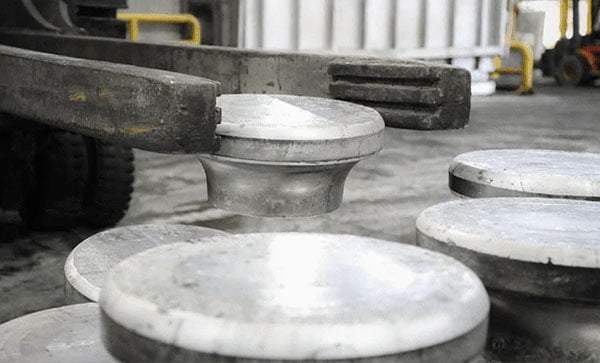
The enhanced grain structure and the absence of internal defects make forge aluminum components significantly stronger and more durable than their cast counterparts. They can withstand greater loads, stresses, and impacts, leading to a longer service life and more reliable performance in demanding environments. Forging mechanically works the metal, compacting it and eliminating the internal voids that often plague cast parts. This results in an incredibly dense, solid, and homogeneous material. This inherent strength and robustness are invaluable in critical applications where component failure could have severe consequences.
Forge Aluminum’s Exceptional Fatigue Resistance
Fatigue resistance is a critical property for components subjected to repetitive stress, such as those found in engines, machinery, and vehicles. The continuous grain flow created when you forge aluminum helps inhibit the initiation and growth of cracks. This means forged parts can endure a far greater number of stress cycles before failure. In comparison, cast parts, with their random grain structure and potential internal flaws, are much more susceptible to fatigue cracks. This superior fatigue resistance is a key reason why forge aluminum is the material of choice for safety-critical components.
Why Forge Aluminum Is a Lightweight Solution
Aluminum is already a lightweight metal, but the forging process makes it even more effective. By strengthening the material, engineers can design parts that are lighter without compromising on performance. The superior strength-to-weight ratio achieved through forging is a game-changer for industries focused on maximizing efficiency and performance. This advantage allows for weight savings in aircraft, improving fuel efficiency, and in vehicles, enhancing handling and performance. When you forge aluminum, you get the best of both worlds: a lightweight component with the strength of much heavier materials.
Understanding Material Utilization in Forging
The forge aluminum process is highly efficient in terms of material usage. Because the metal is shaped rather than cut, there is very little material waste compared to subtractive methods like machining from solid bar stock. This near-net-shape capability drastically reduces the amount of scrap and chips generated during production. This efficiency not only lowers costs for the manufacturer and the client but also contributes to a more sustainable and environmentally friendly manufacturing process by conserving raw materials.
Cost-Effectiveness of Forge Aluminum in the Long Run
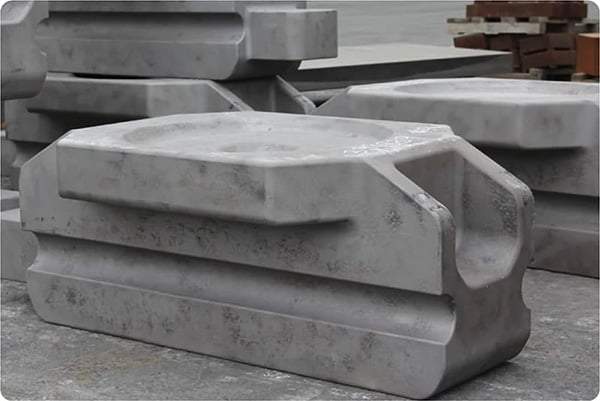
While the upfront cost of tooling for a forging operation can be higher than for other methods, its long-term value is undeniable. The reduced need for machining, lower material waste, and extended component lifespan lead to significant savings over the product’s entire lifecycle. The superior durability and reliability of forge aluminum parts also reduce maintenance and replacement costs. This makes it a strategically sound investment for high-volume production and critical applications where a dependable component is paramount.
Comparative Analysis: Forging vs. Other Methods
To further illustrate the benefits of forge aluminum, here is a comparative analysis with other common aluminum manufacturing methods.
| Feature / Method | Forging | Casting (Sand/Die) | Machined from Bar Stock |
| Grain Structure | Refined & Aligned (Optimal Grain Flow) | Coarse & Random (Potential for Porosity) | Cut Through (Can expose weak points) |
| Tensile Strength | Superior | Good (Lower due to defects) | Very Good |
| Fatigue Resistance | Excellent (Due to grain flow) | Poor to Moderate | Moderate |
| Dimensional Accuracy | Very High (Near-Net Shape) | Moderate to Good | Excellent (Post-machining) |
| Internal Defects | Minimal | High potential for porosity/inclusions | Low (If raw material is sound) |
| Material Utilization | Very High | Moderate | Low (High scrap rate) |
| Tooling Cost | High | Moderate to Low | Low |
Conclusion
Choosing forge aluminum is a strategic investment in the long-term performance and integrity of your product. This process significantly improves the material’s strength, durability, and fatigue resistance, making it an ideal choice for demanding applications.
Qilu is committed to providing the highest quality forgings. With advanced technology, stringent quality standards, and an efficient global distribution network, we are a reliable partner for your critical forging needs. Contact us to learn how our expertise in forged aluminum can benefit your project.
FAQ
Is forged aluminum always more expensive than cast aluminum?
While the initial tooling cost for forging can be higher, the overall cost-effectiveness often favors forge aluminum for high-volume production. Its near-net-shape capability reduces material waste and machining time, leading to significant savings over the product’s lifecycle.
Can forge aluminum be used for complex shapes?
While casting offers greater flexibility for extremely intricate and internal shapes, advancements in precision closed-die forging have significantly expanded the range of complex geometries that can be produced. Modern forge aluminum techniques can create parts with tight tolerances and complex external features.
What is the main benefit of forging for fatigue resistance?
The main benefit is the creation of an optimized grain flow. Forging aligns the material’s internal grains to follow the part’s contours, inhibiting the initiation and growth of micro-cracks under cyclical loading. This makes a forge aluminum part far more resistant to fatigue failure.
Which industries benefit most from forged aluminum?
Industries that require a combination of high strength, lightweight components, and absolute reliability benefit most. This includes aerospace, automotive, marine, defense, and heavy industrial machinery, where component integrity is paramount.