Shandong Qilu lndustrial Co.,Ltd.

The Benefits of Open Die Forging Process
Table of Contents

The open die forging process is a powerful and versatile metalworking method used across various industries to produce strong, reliable components. Unlike other forging techniques, this process involves shaping metal between flat or contoured dies that do not enclose the workpiece entirely. As a result, it offers exceptional design flexibility, superior mechanical properties, and customization potential that other manufacturing methods struggle to match.
What Is Open Die Forging Process?
Open die forging begins with a heated ingot or billet, which is manipulated between open dies through a series of controlled blows, presses, or rolls. The forging equipment “kneads” the metal, gradually forming it into the desired shape. This process refines the grain structure, eliminates internal voids, and aligns the grain flow with the part geometry—resulting in significantly stronger, more resilient components.
This grain refinement and improved density provide exceptional strength, ductility, and resistance to fatigue. Components forged using this method include shafts, discs, rings, and other large, simple shapes used in demanding applications.
Advantages of Open Die Forging Process
The open die forging process offers a wide array of benefits, making it ideal for custom and heavy-duty applications:
- Design Versatility: Capable of producing parts in varied shapes and sizes without expensive tooling.
- Improved Grain Flow: Creates a continuous grain structure aligned with the part’s geometry for optimal strength.
- Superior Mechanical Properties: Enhances fatigue resistance, toughness, and elongation.
- Cost Efficiency for Large Parts: Especially suitable for low to medium volume production of large components.
- Reduced Material Waste: Minimizes excess material, making it an eco-friendly choice.
- Enhanced Microstructure: Replaces coarse cast structures with fine, uniform grains.
Open Die Forging vs. Closed Die Forging
Both methods serve different purposes, but the open die forging process stands out in situations where flexibility and strength are paramount. Closed die forging confines the metal within a mold, ideal for high-volume, precise parts. However, open die forging is more suitable for producing larger parts without the limitations of pre-made molds, offering a more economical solution for custom or oversized components.
Why Open Die Forging Outperforms Casting
When compared to casting, open die forging delivers parts with superior mechanical performance. Forged parts are denser, more uniform, and free from porosity or shrinkage common in castings. This process also allows for better structural integrity and a higher degree of customization, making it ideal for mission-critical components in sectors like aerospace, energy, and heavy industry.
Open Die Forging Applications
The open die forging process is widely used across industries such as:
- Oil & Gas
- Power Generation
- Aerospace
- Mining
- Food Processing
- Press Repair & Maintenance
It’s the preferred method for producing custom-shaped components that require outstanding strength, durability, and reliability.
Qilu Forgings – Your Trusted Partner in Open Die Forging
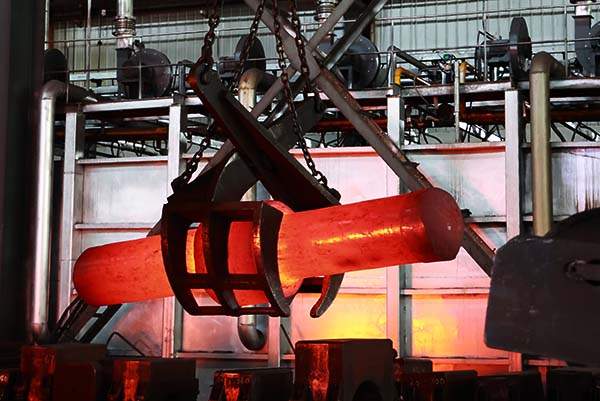
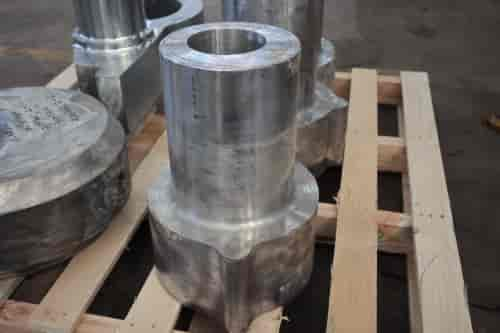
At Qilu Forgings, we specialize in manufacturing high-quality open die forgings including shaft forgings, ring forgings, and disc forgings. We’ve invested heavily in state-of-the-art production and testing equipment to ensure our products meet the highest standards of quality and reliability. With forging equipment ranging from 200 tons to 4000 tons, we can produce from single-piece prototypes to over 100,000 metal forgings.
Backed by extensive inventory and global delivery capabilities, Qilu Forgings is committed to meeting your needs—quickly, efficiently, and to your exact specifications.
Ready to Strengthen Your Project?
Choose Qilu Forgings for your next custom open die forging process project. Contact us today for a quote or to learn more about how our forged solutions can deliver superior performance, longer service life, and uncompromising quality for your most demanding applications.
FAQ
What is the difference between open die forging and closed die forging?
Open die forging shapes metal between flat or simple dies without fully enclosing the workpiece, allowing for greater flexibility and part size. Closed die forging, on the other hand, uses custom-shaped dies to form precise, often smaller parts with higher production volumes.
What materials can be used in the open die forging process?
Common materials include carbon steel, alloy steel, stainless steel, aluminum, titanium, and nickel-based alloys—selected based on the application’s performance requirements.
What types of parts are best suited for open die forging?
Large or heavy parts with relatively simple geometries such as shafts, rings, discs, and hollows are ideal. The process is perfect for custom, low-to-medium volume production.
Is open die forging more expensive than casting?
While the initial cost per part may be higher, open die forged components offer better strength, durability, and longevity—leading to lower lifetime costs, especially in critical applications.
How long does it take to deliver a custom open die forging?
Lead times depend on size, material, and quantity. At Qilu Forgings, we maintain stock and global delivery capabilities to ensure fast turnaround and on-time delivery for most orders.