Shandong Qilu lndustrial Co.,Ltd.

The Benefits of Forged Aluminum: Superior Strength
Welcome to My Blog!
Before we dive into the content, I’d love for you to join me on my social media platforms where I share more insights, engage with the community, and post updates. Here’s how you can connect with me:
Facebook:https://www.facebook.com/profile.php?id=100090903441806
Now, let’s get started on our journey together. I hope you find the content here insightful, engaging, and valuable.
Table of Contents
Introduction
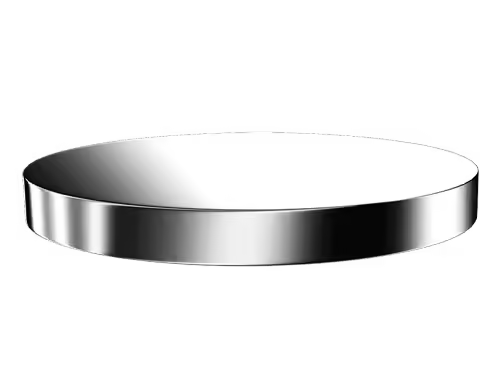
In industries where strength, durability, and performance are non-negotiable, forged aluminum stands out as a leading material choice. Whether you’re in aerospace, automotive, marine, or industrial manufacturing, the benefits of aluminum forged go beyond just weight savings—this material delivers exceptional mechanical properties, corrosion resistance, and cost-effectiveness.
This blog provides a comprehensive exploration of forged aluminum, covering everything from its manufacturing process to its real-world advantages, applications, and maintenance. By the end of this guide, you’ll understand why aluminum forged continues to grow in demand and how it can elevate your next engineering or manufacturing project.
What is Forged Aluminum?
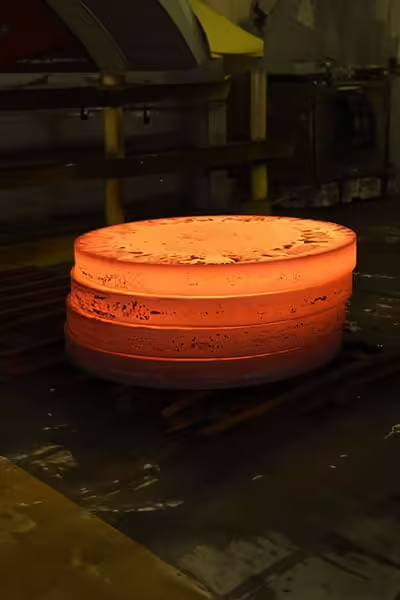
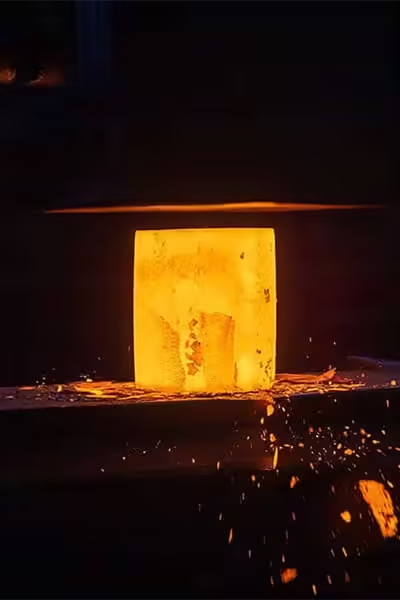
Forged aluminum is a type of aluminum component formed by applying compressive forces to aluminum billets or ingots at high temperatures. Unlike cast or machined parts, aluminum forged undergoes deformation under pressure, which refines its grain structure and results in increased mechanical strength and resistance to fatigue.
This process creates a denser, more uniform material with superior strength-to-weight ratios compared to alternative fabrication methods, making aluminum forged a preferred material across multiple engineering disciplines.
Advantages of Forged Aluminum
Enhanced Strength and Structural Integrity
Forged aluminum boasts significantly higher tensile strength and fatigue resistance compared to cast or welded components. The refined grain structure from forging makes it ideal for high-stress applications like suspension parts, wheel hubs, or aircraft components.
Lightweight and High Performance
Aluminum is already a lightweight metal, but the forging process enhances its structural capabilities without adding unnecessary mass. Forged aluminum allows engineers to reduce overall weight while maintaining durability, making it especially valuable in weight-sensitive applications like aerospace or racing vehicles.
Corrosion Resistance
Aluminum naturally resists corrosion due to its passive oxide layer, and aluminum forged further benefits from consistent density and grain flow, reducing weak points that could lead to premature degradation in harsh environments.
Excellent Machinability and Fabrication Versatility
Forged aluminum can be further machined, welded, or heat treated based on project requirements. This flexibility makes it easier to integrate aluminum forged parts into complex systems or assemblies.
Cost Efficiency Over Time
Though the initial cost of forging may be higher than casting or extrusion, the long-term durability and reduced failure rates make aluminum forged a cost-effective choice. Fewer repairs, less downtime, and lower replacement costs contribute to overall savings.
Applications of Forged Aluminum Across Industries
Forged aluminum is used in a wide range of industries due to its strength, light weight, and resilience:
- Aerospace: Structural parts, landing gear, and control surfaces
- Automotive: Suspension arms, connecting rods, wheels, and steering components
- Marine: Hull reinforcements, propeller shafts, and brackets
- Defense: Armor panels, missile components, and high-impact structures
- Industrial: Hydraulic cylinders, press tools, and conveyor systems
- Energy: Wind turbine parts, oil & gas connectors, and nuclear applications
Its versatility makes aluminum forged a reliable material for critical applications where safety and longevity are essential.
Comparison Table: Forged Aluminum vs. Other Aluminum Forms
| Property | Forged Aluminum | Cast Aluminum | Extruded Aluminum |
|---|---|---|---|
| Strength-to-Weight Ratio | High | Moderate | Moderate to High |
| Fatigue Resistance | Excellent | Poor | Good |
| Grain Structure | Refined and Uniform | Porous, Random | Directional |
| Corrosion Resistance | High | Moderate | Good |
| Machinability | High | Moderate | High |
| Cost Efficiency (Long-Term) | High | Low | Moderate |
| Suitable for High Stress | Yes | Limited | Yes (with reinforcement) |
| Surface Finish Options | Good | Requires post-processing | Good |
The Forging Process of Aluminum Explained
Step 1: Heating the Aluminum Billet
The aluminum billet is preheated to increase its malleability while preserving its metallurgical integrity. This typically happens at temperatures ranging from 375°C to 500°C.
Step 2: Forging Under Pressure
The heated billet is placed into a forging die, where it is pressed or hammered into the desired shape using a forging press. This step aligns the grain flow with the geometry of the part.
Step 3: Trimming and Heat Treatment
Excess material is trimmed off, and the component undergoes heat treatment processes such as solution heat treatment and aging to achieve optimal mechanical properties.
Step 4: Final Finishing and Quality Control
The forged part is then machined and inspected for tolerances, surface finish, and mechanical strength. Non-destructive testing is often used to ensure integrity.
Why Forged Aluminum is Ideal for High-Performance Design
Optimized Grain Flow Enhances Strength
Grain flow is critical in determining the performance of a component. Forged aluminum aligns the grain flow in the direction of applied stress, improving fatigue resistance and impact performance.
Customization Opportunities
Forged aluminum components can be produced in complex geometries and customized for specific mechanical requirements, allowing greater design flexibility compared to casting.
Reduces Failure Points
The forging process minimizes internal voids, porosity, and inclusions—common issues in cast components. This results in a stronger and more reliable final product.
Environmental and Sustainability Benefits of Forged Aluminum
Energy-Efficient Lifecycle
Aluminum is 100% recyclable, and aluminum forged maintains its properties even after multiple recycling cycles. Using recycled aluminum in forging helps reduce carbon emissions and energy use.
Durability Reduces Waste
Because aluminum forged lasts longer and requires fewer replacements, it contributes to sustainability by minimizing industrial waste and conserving resources.
Meets Green Manufacturing Standards
Many forging facilities now operate under green manufacturing guidelines, reducing water use, emissions, and material waste while producing aluminum forged parts.
Maintenance Tips for Forged Aluminum Components
Routine Inspections
Regular visual and ultrasonic inspections help detect cracks, corrosion, or deformation early. This proactive maintenance approach prevents larger issues.
Proper Storage
Store aluminum forged in dry, controlled environments to prevent unnecessary exposure to moisture or corrosive substances.
Surface Protection
Anodizing or applying protective coatings can enhance corrosion resistance and prolong surface quality, especially in marine or outdoor applications.
Conclusion
Forged aluminum is a game-changing material that offers superior strength, unmatched reliability, and long-term value across numerous demanding industries. From aerospace components to industrial machinery, the performance benefits of aluminum forged are hard to overlook.
If you’re searching for a trusted source of high-quality aluminum forged components, contact us today. Our team provides custom solutions tailored to your application needs and is ready to help you harness the power of aluminum forged in your next project.
FAQ
What makes forged aluminum stronger than cast aluminum?
Forged aluminum has a refined grain structure and fewer internal defects, which significantly enhances its mechanical strength and fatigue resistance compared to cast aluminum.
Can aluminum forged be welded?
Yes,aluminum forged can be welded, but proper techniques must be used to avoid compromising the structural integrity of the part. Preheating and post-weld heat treatment are often recommended.
What alloys are commonly used in forged aluminum?
Popular alloys include 6061, 7075, and 2024, each chosen based on the required strength, corrosion resistance, and machinability.