Shandong Qilu lndustrial Co.,Ltd.

Performance Pick: Forged Steel vs Cast Steel
Welcome to My Blog!
Before we dive into the content, I’d love for you to join me on my social media platforms where I share more insights, engage with the community, and post updates. Here’s how you can connect with me:
Facebook:https://www.facebook.com/profile.php?id=100090903441806
Now, let’s get started on our journey together. I hope you find the content here insightful, engaging, and valuable.
Table of Contents
Introduction

When selecting materials for industrial components like shafts or heavy machinery, the choice between Forged Steel vs Cast Steel is crucial, directly impacting product quality, durability, and reliability. This decision is vital for designers, sourcers, and specifiers aiming for optimal results and preventing failures.
This guide will thoroughly compare Forged Steel vs Cast Steel, examining their material structures and performance characteristics. By understanding these key differences, you can make a confident and informed material selection for your critical projects.
Forged Steel vs Cast Steel: Understanding the Basics
Before diving deeper, let’s get clear on what these two terms mean.
What is Forged Steel?
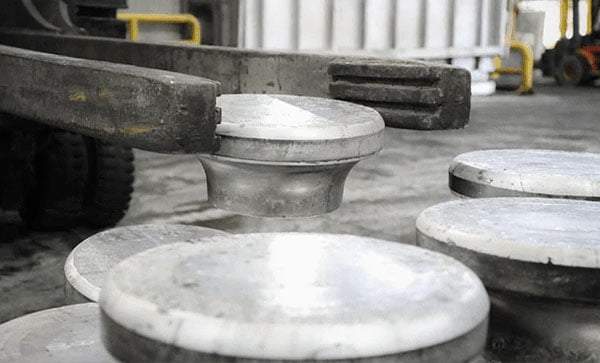
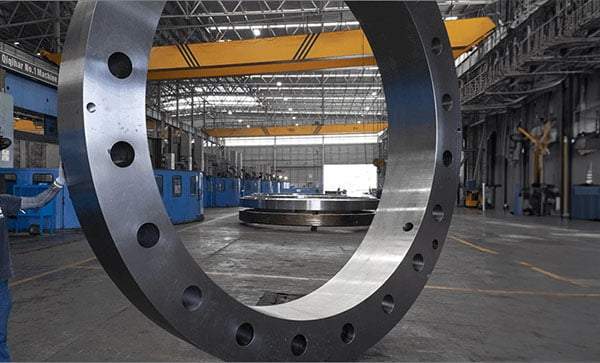
Forged steel refers to steel that has been shaped and compressed using hammering or pressing techniques. This process aligns the internal grain structure, enhancing the steel’s strength, impact resistance, and fatigue life. Forging is common for parts like axle shafts, bearing rings, and gear blanks, where toughness is essential.
What is Cast Steel?
Cast steel, on the other hand, is created by pouring molten steel into a mold. This allows for complex shapes and large components. Castings are suitable for applications where intricate geometry is needed, but they may contain porosity and are generally less resistant to impact compared to forgings.
Forged Steel vs Cast Steel: Key Performance Factors to Consider
Choosing between forged steel and cast steel is more than comparing appearance or price — it’s about critical properties that directly affect product life and function.
1. Strength and Toughness
Forged steel wins hands down when strength is your priority. The forging process refines grain flow, reducing weak points and boosting resistance to fatigue and cracking. Cast steel, while strong, often has a more random grain structure and can contain microscopic voids or inclusions.
| Feature | Forged Steel | Cast Steel |
|---|---|---|
| Grain Structure | Aligned, directional | Random, isotropic |
| Tensile Strength | Higher | Lower compared to forged steel |
| Impact Resistance | Excellent, absorbs shock loads well | Moderate, prone to cracking under stress |
| Fatigue Resistance | Superior, ideal for rotating parts (shafts, rings) | Lower, can fail under cyclic loads |
| Complex Shapes | Limited shape complexity | Excellent, suitable for intricate designs |
| Porosity Risk | Very low | Higher, risk of shrinkage or gas voids |
| Consistency & Reliability | High due to refined structure | Variable, dependent on casting quality |
2. Reliability in Critical Applications
In industries like aerospace, power generation, or heavy transport where failure is not an option, forged steel provides unmatched reliability. The forging process reduces chances of internal defects — ideal for forged shafts, forged discs, and forged rings, which face high mechanical stresses daily.
Cast steel, while useful for large complex parts like pump bodies or casings, may not guarantee the same reliability where repetitive stress is expected.
3. Weight Considerations
Did you know that forged parts can also contribute to weight savings? Due to higher strength, forged components can often be made with thinner cross-sections compared to cast parts — a key advantage in automotive or aerospace sectors where every gram counts.
Cast components generally require thicker sections to achieve the same load-bearing capacity, adding weight.
4. Quality Control and Inspection
Forged steel benefits from extensive post-forging inspection procedures such as ultrasonic testing, magnetic particle testing, and hardness evaluation, ensuring consistency and minimal defect rates. These parts undergo stringent control at each step — from billet selection to final heat treatment.
Cast steel, while also inspected, carries a higher risk of hidden porosity or shrinkage voids, which may only be detected under destructive testing or failure in service.
Forged Steel vs Cast Steel: Choosing the Right Fit for Your Project
Not every project needs the unmatched strength of forged steel, nor is casting always the easy way out. Here’s when you should consider each:
When to Choose Forged Steel:
- High stress or impact environments (e.g., shafts, gears, bearing components)
- Applications needing consistent performance and long fatigue life
- Situations where failure is catastrophic or safety-critical
When to Choose Cast Steel:
- Complex geometries that forging cannot achieve
- Large structural parts where slight internal defects are acceptable
- Lower stress environments or static loads
Conclusion
Forged steel vs cast steel: the optimal choice hinges entirely on the application. For high-reliability, safety-critical, and fatigue-resistant components, forged steel is superior due to its refined grain structure and inherent integrity.
Conversely, cast steel excels when intricate shapes, design flexibility, or cost-effectiveness for low-stress applications are primary considerations. Ultimately, the most intelligent decision involves balancing technical requirements, part geometry, and performance expectations to select the appropriate process. For critical industrial needs, choose the proven strength and reliability of forged steel. Contact us to discuss your specific forging requirements today!
FAQ
Which is stronger — forged steel vs cast steel?
Forged steel is generally stronger because its grain structure is aligned during processing, resulting in superior tensile and impact strength compared to cast steel.
Is forged steel more reliable than cast steel?
Yes. Forged steel components are more reliable in critical applications because they are less prone to defects like porosity, which can occur in cast steel parts.
When should I use cast steel instead of forged steel?
Cast steel is ideal when you need complex shapes that are difficult or impossible to achieve by forging, and when extreme strength is not the primary requirement.
How does fatigue resistance compare in forged steel vs cast steel?
Forged steel offers superior fatigue resistance, making it the better choice for rotating or dynamically loaded parts like shafts and rings.
Does forged steel cost more than cast steel?
While this post focuses on performance, forged steel often involves a higher upfront cost due to processing — but offers greater long-term value through durability and reliability.