Shandong Qilu lndustrial Co.,Ltd.

How Tool Forge Enhances Durability 7 Key Benefits
Welcome to My Blog!
Before we dive into the content, I’d love for you to join me on my social media platforms where I share more insights, engage with the community, and post updates. Here’s how you can connect with me:
Facebook:https://www.facebook.com/profile.php?id=100090903441806
Now, let’s get started on our journey together. I hope you find the content here insightful, engaging, and valuable.
Table of Contents
Introduction
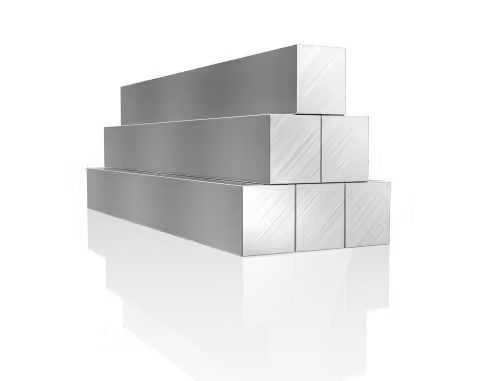
Tool Forge is an essential process that enhances the durability and performance of tools and equipment across various industries. The manufacturing of tools through forging techniques offers significant improvements over conventional methods. The process involves shaping metal through high-pressure force, resulting in products that are stronger, more reliable, and resistant to wear and tear. In this blog, we will explore seven key benefits of Tool Forge that contribute to enhanced durability and performance.
What is Tool Forge?
Tool forging refers to the technique of shaping metal using compressive forces, typically through hammering, pressing, or rolling. This process is often performed at high temperatures, which helps the metal maintain its strength while being shaped into precise forms. By improving the internal structure of the material, Tool Forge results in tools that possess increased durability, making them ideal for high-stress applications like industrial equipment, machinery parts, and cutting tools.
Key Characteristics of Tool Forge
The advantages of Tool Forge lie in the unique characteristics that the process imparts to the final product. Some of these include:
- Improved Grain Structure: The forging process realigns the grain structure of metals, making them more resilient to stress and wear.
- Enhanced Strength: The application of heat and pressure in Tool Forge helps to achieve better tensile and impact strength.
- Increased Resistance to Fatigue: Forged tools can withstand repeated stress cycles, which extends their life span.
- Higher Corrosion Resistance: Through precise control of the material’s properties, forged tools can be made more resistant to environmental factors.
7 Key Benefits of Tool Forge for Durability
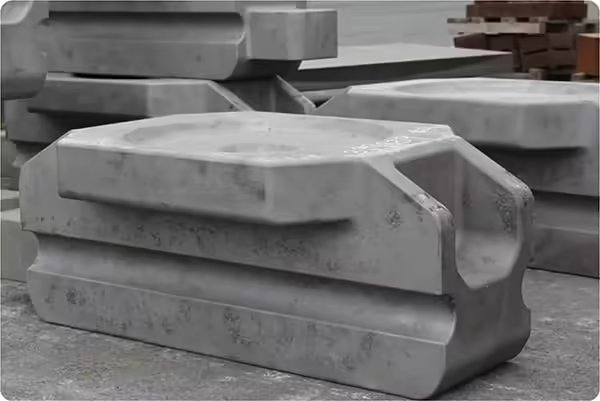
Tool Forge is renowned for its role in improving the durability of tools. Let’s delve deeper into the seven key benefits that make Tool Forge an invaluable technique.
Superior Strength and Reliability
The high-pressure forging process compacts the material, leading to a more uniform and tightly bound structure. This results in a significant increase in the material’s strength compared to cast or machined products. Tools forged through this process are less prone to breaking under heavy stress, making them highly reliable in demanding environments.
Improved Wear Resistance
Tools subjected to constant wear and tear, such as cutting instruments, benefit greatly from Tool Forge. The process improves hardness and resistance to abrasion, which helps tools maintain their functionality over extended periods. Forged tools are ideal for industries like construction and manufacturing, where wear resistance is crucial.
Enhanced Toughness Under Stress
Tool Forge creates a more durable structure by enhancing the toughness of tools. This means the tools can absorb shock loads without cracking or failing. The increased toughness is especially important for tools used in high-impact environments, such as in mining or heavy machinery.
Reduced Risk of Tool Failure
Through the forging process, tools experience fewer internal defects such as porosity and voids that are common in cast products. The result is a tool that is less prone to failure, even in the most extreme operating conditions. This reliability reduces maintenance costs and improves overall productivity.
High Temperature Resistance
The heat treatment process used in Tool Forge allows tools to better withstand high temperatures without losing their strength or shape. This makes forged tools ideal for use in industries such as automotive, aerospace, and steel production, where equipment is regularly exposed to intense heat.
Precise Customization for Specific Applications
Tool Forge allows for greater precision in producing tools with specific characteristics. This means tools can be customized to meet the exact needs of a particular application. Whether it’s for cutting, shaping, or handling heavy materials, the forging process ensures that the tools meet the required specifications with high accuracy.
Cost-Effectiveness Over Time
While the initial cost of forging may be higher than traditional methods, the increased durability of forged tools leads to long-term savings. Since forged tools last longer and require fewer replacements, they offer significant cost savings over the tool’s lifecycle.
Comparing It Benefits: A Quick Overview
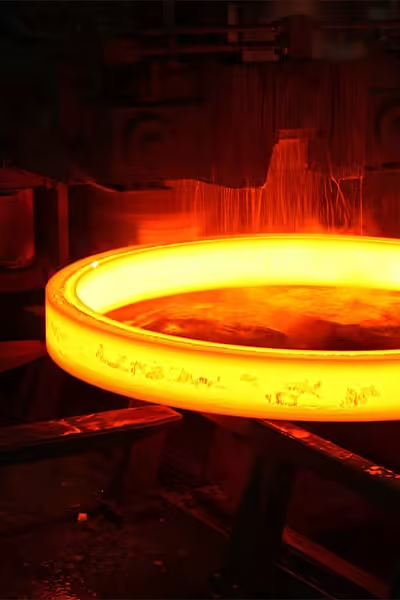
Here is a quick comparison of the benefits of Tool Forge:
| Benefit | Tool Forge Advantage |
|---|---|
| Strength and Reliability | Forged tools offer superior strength and resistance to failure under heavy load. |
| Wear Resistance | Enhanced hardness and resistance to abrasion. |
| Toughness | Ability to absorb shock and resist cracking under stress. |
| Reduced Risk of Failure | Fewer internal defects lead to greater tool longevity. |
| Temperature Resistance | High temperature tolerance, ideal for extreme conditions. |
| Customization | Tools can be precisely engineered for specific applications. |
| Cost-Effectiveness | Long-lasting tools result in fewer replacements, offering savings. |
How Tool Forge Contributes to Industry Advancements
Tool Forge plays a critical role in the advancement of various industries, particularly in fields requiring high-performance tools and machinery. For instance, industries like aerospace, automotive, and manufacturing rely heavily on forged tools that can withstand high stress, extreme temperatures, and continuous use. Tool Forge technology continues to evolve, offering new opportunities for improving tool performance and efficiency.
Conclusion
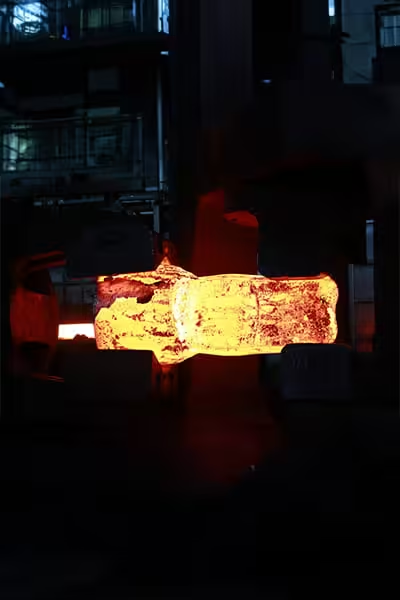
Tool Forge is an indispensable process for enhancing the durability and performance of tools across industries. The superior strength, wear resistance, and customizability that forged tools offer make them ideal for applications that demand reliability and longevity. By investing in Tool Forge, companies can not only improve their productivity but also save on long-term maintenance and replacement costs.
Take action now and explore the benefits of Tool Forge for your tools and equipment needs!
FAQ
What is It?
Tool Forge is the process of shaping metal using high-pressure force, which results in tools with improved durability, strength, and resistance to wear.
How does It improve tool strength?
The forging process compacts the metal’s grain structure, leading to stronger, more reliable tools that can withstand heavy stress.
Is It cost-effective?
While the initial investment may be higher, the increased durability and long lifespan of forged tools result in significant cost savings over time.
What industries benefit the most from It?
Industries such as aerospace, automotive, and construction benefit greatly from the enhanced durability and performance of forged tools.
Can tools forged through It be customized?
Yes, Tool Forge allows for precise customization, ensuring tools meet specific application requirements.