Shandong Qilu lndustrial Co.,Ltd.

How to Get Forged: Top 5 Strategies
Welcome to My Blog!
Before we dive into the content, I’d love for you to join me on my social media platforms where I share more insights, engage with the community, and post updates. Here’s how you can connect with me:
Facebook:https://www.facebook.com/profile.php?id=100090903441806
Now, let’s get started on our journey together. I hope you find the content here insightful, engaging, and valuable.
Table of Contents
Introduction
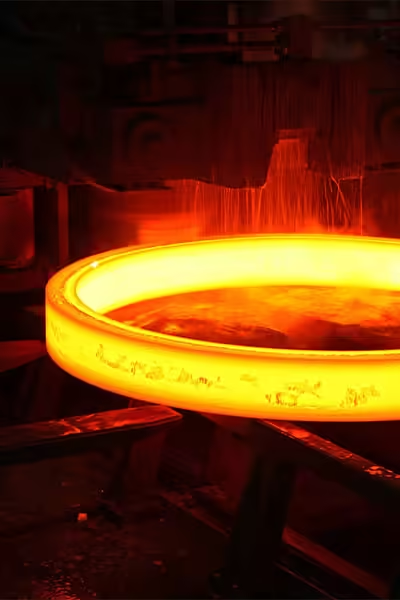
When it comes to shaping metal or transforming raw materials into powerful, durable, and reliable products, the process of forging stands at the forefront. “How to get forged” is a phrase that brings to mind images of fire, pressure, and precision, where the skill of the blacksmith or modern-day manufacturer meets science and art. Whether you are working on a custom project, enhancing the quality of materials, or simply learning more about the forging process, this guide will offer insights into the top strategies for getting forged.
Forging is a critical part of various industries such as automotive, aerospace, and construction, ensuring high-quality components are produced. By understanding the key strategies in forging, you can not only get forged but also optimize the process to achieve better results in a more efficient manner.
The Importance of Understanding the Forging Process
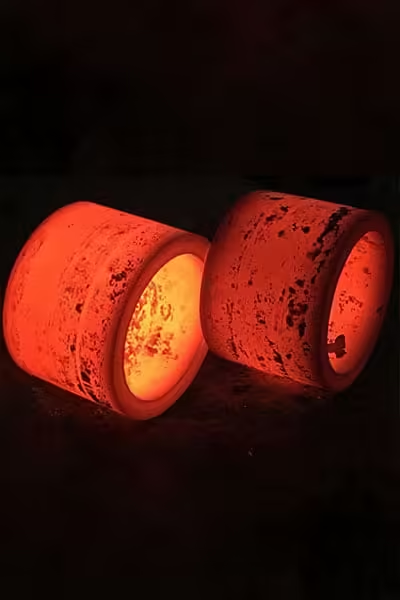
What is Forging?
Forging is the process of shaping metal by applying localized compressive forces. These forces are typically exerted through hammers, presses, or other tools that apply high pressure to the material, forming it into the desired shape. Unlike casting or machining, forging creates components with superior mechanical properties and exceptional durability.
Types of Forging
The forging process can be divided into several types, including:
- Open Die Forging: In this type, the metal is placed between two dies, but the shape is not fully enclosed. This allows for the creation of larger components.
- Closed Die Forging: This process involves the metal being enclosed within a die, which allows for more precise shaping, often resulting in parts with tighter tolerances.
- Ring Rolling: This type of forging is typically used for making rings, such as those found in turbines, bearings, and other specialized applications.
- Upset Forging: In this technique, the metal is compressed to increase its cross-sectional area, creating parts such as bolts, nuts, and other fasteners.
Understanding the nuances of each forging method is vital when deciding how to get forged, as different types suit different needs.
How to Get Forged: 5 Essential Strategies
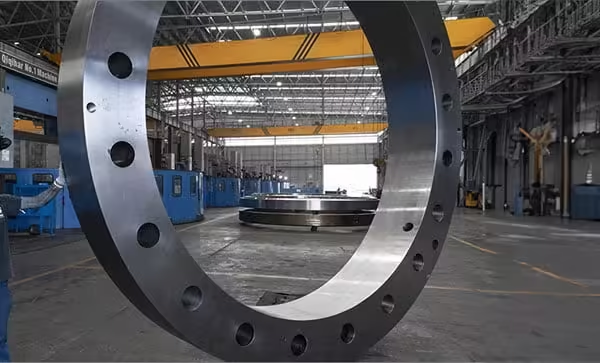
Choosing the Right Metal for Forging
The first step in the forging process is selecting the right material. Not all metals are suitable for forging, and the choice of material directly impacts the quality of the final product. Here are some metals commonly used in forging:
- Steel: The most commonly forged metal, steel is chosen for its excellent strength-to-weight ratio and versatility.
- Titanium: Often used in aerospace and medical applications due to its resistance to corrosion and its lightweight properties.
- Aluminum: Known for its lightweight nature, aluminum is often used in the automotive industry.
- Copper Alloys: These are frequently used for their excellent conductivity properties, often in electrical applications.
Each metal type requires different forging techniques and temperature ranges, so it’s essential to understand what works best for your specific project.
Understanding Temperature Control in Forging
Temperature control is critical in forging. The temperature at which the metal is heated affects its malleability and the ability to achieve the desired shape. Most metals require specific heating ranges to achieve optimal results:
- Hot Forging: The metal is heated to a temperature above its recrystallization point, making it malleable. This method is commonly used for large parts.
- Warm Forging: This involves forging at temperatures lower than hot forging but higher than cold forging, offering benefits like reduced wear on dies.
- Cold Forging: This is performed at room temperature, which allows for high precision but requires more force to shape the metal.
Getting the temperature right is key in understanding how to get forged, as this will determine the quality of the finished product.
Optimizing the Die Design for Efficiency
The die used in the forging process is essential for shaping the material. Die design can significantly affect the speed and quality of production. Some factors to consider in die design include:
- Die Material: Strong and durable materials like tool steels or tungsten carbide are commonly used for dies.
- Die Design: The shape, size, and tolerance of the die can influence how well the material flows and fills the cavity.
- Cooling and Lubrication: Proper cooling and lubrication of the die help prevent premature wear and ensure a smooth forging process.
Investing in a well-designed die will reduce errors and improve the overall quality of the product. This is crucial when trying to understand how to get forged in the most efficient way.
Selecting the Appropriate Forging Equipment
To get forged successfully, the right equipment must be in place. Forging presses, hammers, and other machinery are integral to the process. There are two main types of equipment used in forging:
- Hydraulic Presses: Known for their precision, hydraulic presses provide controlled pressure that helps shape materials accurately.
- Mechanical Hammers: These are more suitable for high-volume production and are often used in open die forging.
By selecting the correct equipment based on the material and product type, you can achieve better results and faster production times.
Quality Control and Inspection After Forging
After the forging process is complete, it is crucial to inspect the parts for quality. Common methods of quality control include:
- Ultrasonic Testing: This non-destructive test detects internal defects in the material.
- Visual Inspection: Manual or automated inspection to detect surface defects.
- Dimensional Measurement: Using tools like calipers and gauges to ensure the dimensions of the forged part are correct.
A thorough inspection ensures that the final product meets the necessary standards and is ready for use in its intended application.
Table: Common Metals Used in Forging and Their Applications
| Metal Type | Common Applications | Benefits | Temperature Range |
|---|---|---|---|
| Steel | Automotive, Aerospace | High strength, durability | 1200-1300°C |
| Titanium | Aerospace, Medical Devices | Lightweight, corrosion-resistant | 800-1000°C |
| Aluminum | Automotive, Aircraft | Light, corrosion-resistant | 400-500°C |
| Copper Alloys | Electrical components, Heat exchangers | Excellent conductivity | 800-900°C |
Conclusion
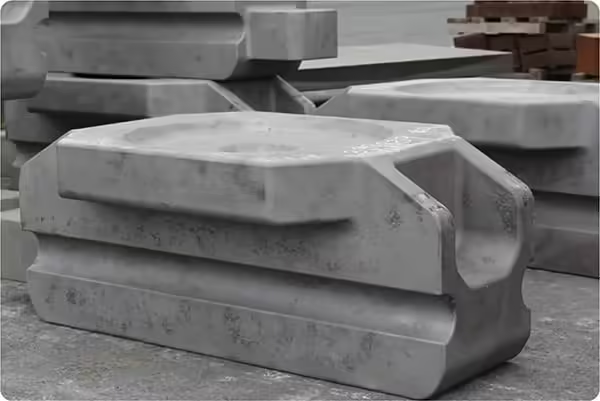
Understanding how to get forged is more than just choosing the right material; it involves making informed decisions on temperature, die design, equipment, and quality control. By applying these strategies, you can achieve a high-quality forged product that meets your needs.
If you’re ready to take the next step in your forging journey, consider consulting experts or investing in quality forging services to get the most out of your production.
FAQ
What is the best metal for forging?
Steel is the most commonly used metal for forging due to its strength and versatility, but titanium and aluminum are also excellent choices for specific industries like aerospace and automotive.
Can I forge at home?
While small-scale forging is possible at home with the right equipment, large-scale forging requires specialized tools and machinery.
How long does the forging process take?
The length of the forging process depends on the complexity of the part and the material being used, but it typically ranges from a few minutes to several hours.
What are the main challenges in forging?
Some challenges include maintaining the right temperature, ensuring precise die design, and achieving consistent material quality during production.