Shandong Qilu lndustrial Co.,Ltd.

Hot Forging: Applications in Various Industries
Welcome to My Blog!
Before we dive into the content, I’d love for you to join me on my social media platforms where I share more insights, engage with the community, and post updates. Here’s how you can connect with me:
Facebook:https://www.facebook.com/profile.php?id=100090903441806
Now, let’s get started on our journey together. I hope you find the content here insightful, engaging, and valuable
Table of Contents
Introduction
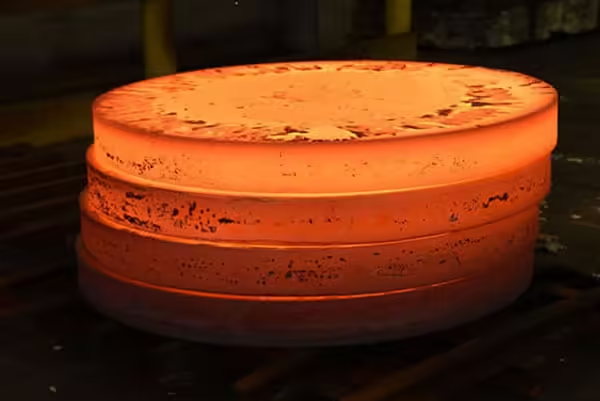
Hot forging is a manufacturing process that involves shaping metal at high temperatures, typically above the recrystallization temperature. This makes the metal more ductile and easier to deform, allowing for the creation of complex shapes with enhanced mechanical properties. The process is crucial for producing high-strength, durable components across a wide range of industries, from automotive to aerospace. Understanding the intricacies of hot forging is essential for engineers and manufacturers seeking optimal material processing solutions.
What is Hot Forging?
Hot forging is a process in which metal is heated to a high temperature and then shaped using a hammer or press. The high temperature makes the metal more ductile, which means it can be deformed more easily without breaking, reducing the risk of cracking or other defects. This ductility allows for greater manipulation of the metal, enabling the creation of intricate designs. Hot forging is typically used to create parts that are strong and durable, such as gears, shafts, and connecting rods, which are often subjected to high stress and strain in their applications.
Advantages of Hot smithing
Hot forging offers several advantages over other metal forming processes, such as:
- Improved strength and durability: Hot smithing can improve the strength and durability of metal parts by refining the grain structure. The process eliminates voids and weaknesses within the metal, resulting in a more homogenous and robust final product. This enhanced grain structure contributes to improved fatigue resistance and overall performance.
- Complex shapes: Hot forging can be used to create complex shapes that would be difficult or impossible to create with other processes. The high temperatures allow the metal to flow more easily into intricate die cavities, facilitating the production of components with detailed features. This capability is particularly valuable in industries requiring custom-designed parts.
- Cost-effective: Hot smithing can be a cost-effective process for producing large quantities of parts. While initial tooling costs can be significant, the ability to produce high volumes of parts efficiently makes it economically viable for mass production. This is especially true when compared to machining parts from solid billets, which generates significant material waste.
Hot Forging Processes
Open Die Forging
Open die forging is a type of hot forging in which the metal is shaped between two flat dies. This process is typically used to create simple shapes, such as bars and rings, and is often employed for prototyping or small production runs. Open die forging offers flexibility in part size and shape, but may require more finishing operations to achieve precise dimensions.
Closed Die Forging
Closed die forging is a type of hot smithing in which the metal is shaped between two dies that have been machined to the desired shape. This process is typically used to create more complex shapes, such as gears and crankshafts, with high precision and repeatability. Closed die forging is ideal for high-volume production, ensuring consistency and minimizing the need for secondary machining.
Impression Die Forging
Impression die forging is a type of closed die forging in which the metal is shaped by the impact of a hammer or press. This process is typically used to create parts that are complex in shape or require close tolerances. Impression die forging is often used for producing intricate components with complex geometries and fine details. It allows for the creation of near-net-shape parts, reducing material waste and machining time.
Upset Forging
Upset forging is a type of hot forging in which the metal is deformed by compressing it between two dies. This process is typically used to create parts that are round or cylindrical in shape, such as bolts and rivets. Upset forging is a highly efficient process, particularly for producing parts with enlarged heads or sections. It is widely used in the fastener industry for its speed and cost-effectiveness.
Hot Forging Materials
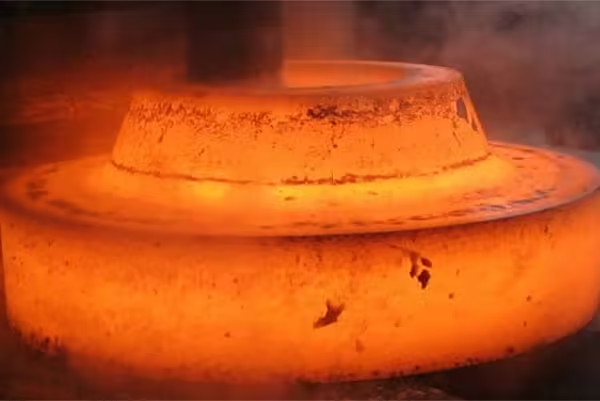
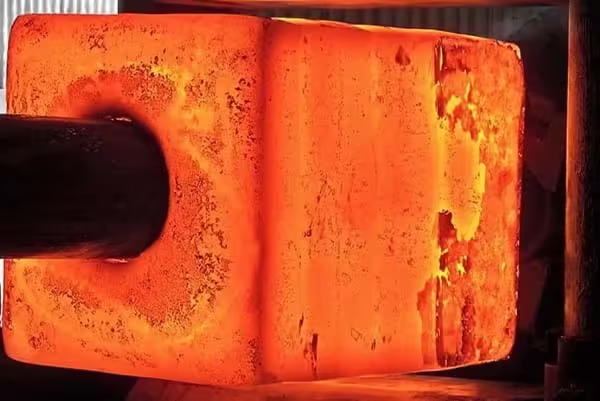
Steel
Steel is a common material that is used in hot forging. It is strong and durable, and it can be easily shaped at high temperatures. Various steel grades are suitable for hot smithing, each offering specific properties tailored to different applications. Carbon steels, alloy steels, and stainless steels are all commonly used in hot forging processes.
Aluminum
Aluminum is another common material that is used in hot smithing. It is lightweight and corrosion-resistant, and it can be easily shaped at high temperatures. Aluminum alloys offer a good balance of strength and weight, making them attractive for applications where weight reduction is critical. They are also highly resistant to corrosion, enhancing their suitability for harsh environments.
Titanium
Titanium is a strong and lightweight material that is used in hot forging for aerospace and other demanding applications. Titanium alloys possess exceptional strength-to-weight ratios, making them ideal for use in aircraft components and other high-performance applications. However, titanium can be more challenging to forge than steel or aluminum due to its higher processing temperatures and reactivity.
Copper
Copper is a ductile and corrosion-resistant material that is used in hot smithing for electrical and plumbing applications. Copper’s excellent electrical conductivity makes it a preferred material for electrical components, while its corrosion resistance makes it suitable for plumbing fittings and other applications exposed to moisture. Copper is also relatively easy to forge, contributing to its widespread use in these industries.
Applications of Hot Forging
Automotive Industry
Hot forging is used to create a variety of parts for the automotive industry, including:
- Gears
- Shafts
- Connecting rods
- Axles
- Wheels
These components are critical for vehicle performance and safety, requiring high strength and durability. Hot forging ensures that these parts can withstand the stresses and strains of operation.
Aerospace Industry
Hot forging is used to create a variety of parts for the aerospace industry, including:
- Engine components
- Structural components
- Landing gear components
The aerospace industry demands high-performance materials and manufacturing processes. Hot forging provides the necessary strength, reliability, and precision for these critical applications.
Construction Industry
Hot forging is used to create a variety of parts for the construction industry, including:
- Structural components
- Fasteners
- Tools
These components must be robust and durable to withstand the rigors of construction environments. Hot forging provides the necessary strength and toughness for these demanding applications.
Other Industries
Hot forging is also used in a variety of other industries, including:
- Agriculture
- Mining
- Oil and gas
- Power generation
These industries rely on hot forged components for their heavy machinery, equipment, and infrastructure. The process provides the necessary strength and reliability for these demanding applications.
Examples of Hot Forged Products
| Industry | Product |
|---|---|
| Automotive | Gears, crankshafts, connecting rods |
| Aerospace | Turbine blades, engine discs, structural components |
| Construction | Rebar, bolts, fasteners |
| Agriculture | Plow blades, harrow discs, cultivator teeth |
| Mining | Drill bits, crusher jaws, excavator buckets |
| Oil and gas | Drill collars, pipe fittings, valve bodies |
| Power generation | Turbine rotors, generator shafts, transformer cores |
Hot Forging Design Considerations
Part Design
The design of the part is an important consideration in hot forging. The part should be designed in such a way that it can be easily forged and that the desired shape and dimensions can be achieved. Factors such as draft angles, radii, and rib design must be carefully considered to ensure proper metal flow and die fill during the forging process. Proper design also minimizes the need for extensive machining after forging.
Die Design
The design of the dies is also an important consideration in hot forging. The dies must be designed to withstand the high temperatures and pressures involved in the process. Die materials, die geometry, and die strength are critical factors that must be considered. Proper die design ensures the production of high-quality forgings with minimal defects.
Material Selection
The material selection is also an important consideration in hot forging. The material must be able to withstand the high temperatures and pressures involved in the process and must have the desired properties for the intended application. Factors such as strength, ductility, corrosion resistance, and heat treatability must be considered when selecting a material. The chosen material directly impacts the performance and longevity of the forged component.
Hot Forging Equipment
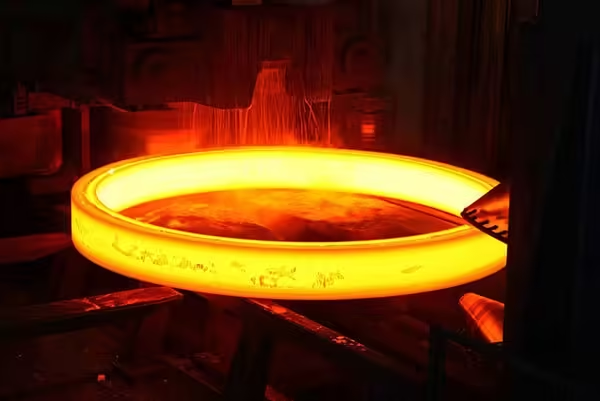
Hammers
Hammers are used in hot forging to strike the metal and deform it. Hammers can be powered by a variety of sources, such as electricity, hydraulics, or compressed air. Different types of hammers are used depending on the size and complexity of the forging operation. Hammer selection is based on factors such as impact force, stroke length, and production rate.
Presses
Presses are used in hot forging to apply pressure to the metal and deform it. Presses can be hydraulic or mechanical. Presses are generally used for larger forgings and offer more precise control over the deformation process. Press capacity, stroke length, and die space are important considerations when selecting a press.
Furnaces
Furnaces are used in hot forging to heat the metal to the desired temperature. Furnaces can be gas-fired, electric, or oil-fired. Precise temperature control is essential to ensure that the metal reaches the optimal forging temperature without overheating or scaling. Furnace type and size are selected based on the material being forged and the production volume.
Conclusion
Hot forging is a versatile and cost-effective process that is used to create a wide variety of parts for various industries. The process offers several advantages over other metal forming processes, including improved strength and durability, the ability to create complex shapes, and cost-effectiveness. As technology advances, hot forging is likely to become even more efficient and versatile.
FAQ
What is the difference between hot forging and cold forging?
Hot forging is performed at high temperatures, typically above the recrystallization temperature of the metal. Cold forging is performed at room temperature or below. Hot forging is typically used to create larger and more complex parts, while cold forging is typically used to create smaller and simpler parts.
What materials can be hot forged?
A variety of materials can be hot forged, including steel, aluminum, titanium, and copper.
What industries use hot forging?
Hot forging is used in a variety of industries, including automotive, aerospace, construction, agriculture, mining, oil and gas, and power generation.