Shandong Qilu lndustrial Co.,Ltd.

Forging the Shaft: Key Steps in Precision Forging
Welcome to My Blog!
Before we dive into the content, I’d love for you to join me on my social media platforms where I share more insights, engage with the community, and post updates. Here’s how you can connect with me:
Facebook:https://www.facebook.com/profile.php?id=100090903441806
Now, let’s get started on our journey together. I hope you find the content here insightful, engaging, and valuable.
Table of Contents
Introduction
Shafts are critical components in modern engineering, playing a vital role in transmitting torque, supporting loads, and ensuring the smooth operation of machinery in a wide range of industries. The integrity of shafts has a direct impact on the performance and reliability of systems ranging from automotive engines to generators. While there are many different methods of production, precision forging the shaft stands out for its superior mechanical properties and structural integrity.
Qilu specializes in high-quality forged components, including shafts, rings and disks. We have state-of-the-art equipment with load capacities ranging from 200 to 4,000 tons, and can produce metal forgings from 1 piece to over 100,000 pieces. Our advanced manufacturing and testing capabilities ensure that every part meets the highest quality standards. In this blog post, we’ll explore the key steps and benefits of forging the shaft and why this process is the preferred choice for high-performance applications.
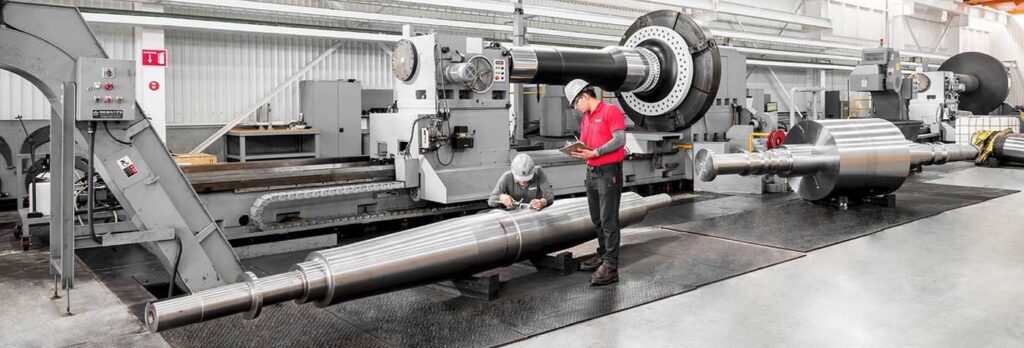
The Fundamentals of Shaft Forging
The forging process improves the material’s properties by refining the internal grain structure and eliminating potential flaws like porosity and voids, which are often present in castings. This results in a superior component with enhanced strength, durability, and resistance to fatigue. Understanding the unique characteristics of a forged shaft is essential for appreciating the precision involved in its creation.
Superior Properties of Forged Shafts
Forged shafts exhibit several distinct advantages over shafts produced by other methods. The compressive forces applied during forging align the internal grain structure of the metal to follow the contour of the shaft. This “grain flow” is a key characteristic of forged components, providing directional strength and significantly increasing the material’s resistance to impact and fatigue.
The resulting shafts have higher tensile strength and yield strength compared to those machined from bar stock or cast. This superior mechanical performance is vital in applications where shafts are subjected to high loads and cyclical stress. The integrity achieved through forging the shaft ensures components can withstand rigorous operating environments for extended periods, reducing the risk of unexpected failure and minimizing downtime.
Comparing Forged Shafts to Other Methods
While machining and casting are viable options for producing shafts, they do not offer the same performance profile as forging. Cast shafts often contain internal defects or porosity, which can act as stress risers and lead to premature failure. Machined shafts, while precise, cut through the inherent grain structure of the bar stock, potentially exposing weak points.
In contrast, forging the shaft optimizes the grain structure, leading to a much stronger and more reliable component. This method provides near-net shape capability, which reduces the need for extensive machining later, minimizing material waste and overall production costs. The process of forging the shaft is an investment in durability and long-term performance.
Preparation and Material Selection
The success of forging the shaft begins long before the actual forging operation. Careful planning, precise material selection, and rigorous preparation of the raw material are essential.
Choosing the Right Steel Grade
Shafts are typically made from various grades of carbon, alloy, and stainless steel, depending on the required application and operating environment. The selection of the steel grade is crucial, as it determines the final properties of the shaft, including its strength, toughness, and corrosion resistance.
For instance, shafts in automotive applications often require high strength and fatigue resistance, favoring alloy steels like 4340 or 4140. In corrosive environments, stainless steel grades are necessary. Understanding the specific metallurgical properties and how they respond to the forging and heat treatment processes is fundamental to successful shaft manufacturing.
Importance of Billet Preparation
The raw material, typically in the form of a billet or bar, must be carefully prepared. This involves cutting the billet to the precise weight required for the final shaft component. This step is critical for minimizing material waste and ensuring the correct volume of material for the forging operation.
The billet must also be thoroughly inspected for surface defects or internal flaws. Any imperfections in the raw material can propagate during the forging process, compromising the integrity of the finished shaft. Proper preparation ensures a clean, sound starting point for forging the shaft.
The Forging Process: Step-by-Step
The forging process for shafts generally involves heating the billet and shaping it using controlled compressive forces. The specific method used often depends on the size, complexity, and required tolerances of the shaft.
Heating the Billet
The billet is heated to a specific temperature range, known as the forging temperature, where the metal becomes ductile enough to be shaped without fracturing but remains strong enough to resist uncontrolled deformation. The heating process must be uniform to ensure consistent flow of the material during forging. Overheating can lead to grain growth and reduced mechanical properties, while underheating can cause cracking. Precision temperature control is paramount when forging the shaft.
Open-Die Forging (Initial Shaping)
Open-die forging, also known as “smith forging” or “blooming,” is often used for large shafts or components with relatively simple geometries. In this process, the heated billet is shaped between two flat or contoured dies without fully enclosing the material. The operator uses hammers or presses to manipulate the billet, gradually shaping it.
This method is highly effective for breaking down the cast structure of the billet, improving the grain structure, and producing a coarse, strong form. It’s particularly useful for creating long, slender shafts or those with complex, multi-diameter profiles. The control and expertise required during open-die forging directly influence the quality of the subsequent steps in forging the shaft.
Closed-Die Forging (Precision Shaping)
Closed-die forging, or impression-die forging, is utilized for higher volumes and components requiring tighter dimensional tolerances and a superior surface finish. The heated billet is placed into a die cavity shaped like the final component. The forging the shaft press forces the dies together, causing the material to flow and fill the cavity.
This process provides excellent control over the shape and grain flow, producing near-net-shape shafts with complex features like flanges, splines, or journals. While the initial tooling costs are higher, the reduced material waste and minimal subsequent machining make it cost-effective for large-scale production. Precision is key when closed-die forging the shaft.
Precision and Quality Control in Forging the Shaft
Maintaining strict quality control throughout the forging process is essential for producing reliable components. Every step, from material selection to the final forging stroke, impacts the shaft’s performance.
Monitoring Temperature and Deformation
Forging is a sensitive process. Temperature control and the rate of deformation are continuously monitored. The material must be deformed at the correct speed to ensure proper grain flow and avoid defects. Too fast, and the material may crack; too slow, and the desired grain structure may not be achieved.
Non-Destructive Testing (NDT)
After the forging process, shafts undergo Non-Destructive Testing (NDT) to check for internal and surface flaws without damaging the component. Common NDT methods include ultrasonic testing (UT) to detect internal voids or cracks, magnetic particle inspection (MPI) for surface and near-surface flaws, and visual inspection. These checks are vital to ensure the structural integrity of the forged shaft.
Dimensional Accuracy and Tolerances
Precision forging aims to produce shafts with minimal deviation from the specified dimensions. Measuring and verifying dimensional accuracy using advanced tools ensures that the forged shaft will fit seamlessly into the final assembly.
Post-Forging Operations
The forging process is only the beginning. Once the shaft is forged, it must undergo several post-forging operations to optimize its mechanical properties and prepare it for its final application.
Heat Treatment
Heat treatment is perhaps the most critical post-forging step. It involves controlled heating and cooling cycles to alter the microstructure of the steel, relieving residual stresses caused by forging and achieving the desired hardness, strength, and toughness.
- Normalization: This process refines the grain structure and improves uniformity.
- Quenching: Rapid cooling to achieve high hardness (often followed by tempering).
- Tempering: Reheating the hardened shaft to a lower temperature to improve toughness and reduce brittleness.
The specific heat treatment regime is carefully tailored to the steel grade and the required performance characteristics of the shaft.
Machining and Finishing
While forging provides a near-net shape, some machining is usually required to achieve the final dimensions, surface finish, and tolerances. This includes turning, milling, drilling, and grinding to create journals, splines, threads, and other features.
The efficiency of the forging process is demonstrated by the minimal amount of material that needs to be removed during machining, leading to reduced production costs and faster turnaround times.
Surface Treatments
Depending on the application, shafts may require additional surface treatments for corrosion resistance, wear resistance, or aesthetic purposes. These can include shot blasting, passivation, or protective coatings.
Comparative Analysis of Forged Shaft Production
Understanding the specific types of shafts and the typical processes used to create them is crucial for effective manufacturing. The following table highlights common forging methods and their typical outcomes for shaft production.
| Forging Method | Typical Shaft Types | Primary Advantages | Typical Applications |
| Open-Die Forging | Large, heavy, multi-diameter shafts | Highly versatile, excellent for grain refinement | Large industrial equipment, power generation |
| Closed-Die Forging | Complex shapes, automotive shafts, connecting rods | High dimensional accuracy, excellent surface finish | Automotive, aerospace, high-volume manufacturing |
| Radial Forging | Long, slender shafts, stepped shafts | Efficient material utilization, high precision | Gear shafts, drive shafts |
| Ring Rolling | Hollow shafts, large diameter rings | Seamless structure, improved mechanical properties | Bearings, power transmission components |
Advanced Techniques in Shaft Forging
Innovation in forging technology has led to advanced methods that offer improved efficiency, precision, and quality when forging the shaft.
Rotary Forging and Radial Forging
Rotary forging involves compressing the material using rotating dies. This method is highly efficient for producing disk-like components or short shafts.
Radial forging, or rotary swaging, is particularly effective for producing long shafts and stepped shafts. This process uses a series of dies that hammer the workpiece simultaneously from multiple angles as it rotates. Radial forging significantly refines the grain structure and is excellent for achieving tight tolerances on long components.
Hot, Warm, and Cold Forging
The temperature at which forging occurs significantly impacts the process and the final properties.
- Hot Forging: Performed above the recrystallization temperature, this is the most common method for shafts, as it allows for large deformation and improves material ductility.
- Warm Forging: Conducted at intermediate temperatures, this offers better dimensional accuracy and reduced scaling compared to hot forging, while still providing good formability.
- Cold Forging: Performed at room temperature, this method offers the highest precision and excellent surface finish, although it requires higher forces and is limited to specific materials.
Selecting the right forging temperature and process is vital for the desired outcome of forging the shaft.
Applications of Forged Shafts
The superior strength and reliability of forged shafts make them essential components in a wide array of demanding industries. The specific requirements of these applications often dictate the precise approach to forging the shaft.
Automotive and Heavy-Duty Vehicles
In the automotive industry, forged shafts are critical components in powertrains, including crankshafts, camshafts, and transmission shafts. Their ability to handle high torque, cyclical loads, and engine vibration is unmatched. Forged shafts contribute to improved fuel efficiency, reduced emissions, and enhanced vehicle longevity.
Aerospace and Defense
The aerospace industry demands components with an exceptional strength-to-weight ratio and guaranteed reliability. Forged shafts are used in aircraft engines, landing gear systems, and control mechanisms. The rigorous quality standards of aerospace applications require meticulous attention to detail during every step of forging the shaft.
Energy and Power Generation
In the energy sector, shafts are integral to turbines, generators, and compressors. These components operate under extreme pressures and temperatures, necessitating the superior mechanical properties offered by forged materials. Forged turbine shafts are fundamental to the reliability of power plants.
Industrial Machinery
Heavy machinery, including pumps, motors, and hydraulic systems, relies on durable shafts to transmit power and support heavy loads. The robust nature of forged shafts ensures the reliability and uptime of industrial equipment in challenging environments.
Qilu’s Expertise in Forged Shaft Manufacturing
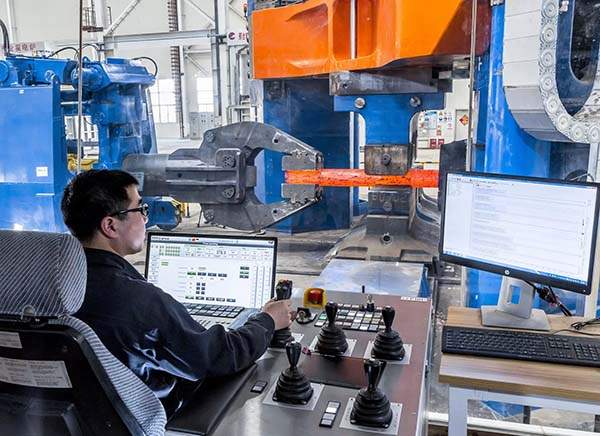
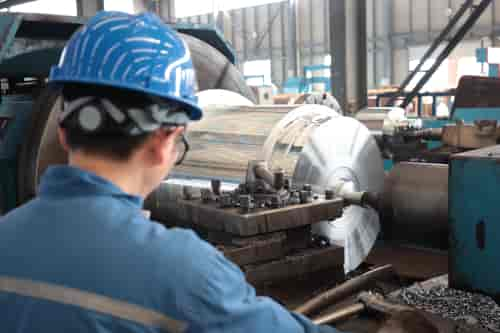
At Qilu, we specialize in delivering precision-engineered forged components that meet the highest industry standards. Our investment in cutting-edge technology and sophisticated manufacturing processes ensures we can tackle the most complex requirements for forging the shaft.
Our capabilities extend across a broad range of materials and sizes, from small, precision-forged components to massive industrial shafts. Our 200 to 4000-ton forging equipment allows us to accommodate diverse project specifications and volumes, whether you need a single prototype or a large-scale production run of 100,000+ pieces.
We understand that time is money. Our commitment to efficient production, coupled with extensive inventory and reliable global distribution, ensures that we can fulfill your orders promptly and accurately. Our rigorous quality control protocols and advanced testing facilities guarantee the integrity and performance of every shaft we produce.
Conclusion
Forging the shaft combines metallurgical science and precision manufacturing to produce components with exceptional strength, durability, and fatigue resistance. From material selection to heat treatment, each step ensures superior performance.
Choosing forged shafts improves the reliability and lifespan of your machinery. At Qilu, we specialize in high-quality, precision-engineered forged components. Contact us today to learn how our expertise can support your forging the shaft needs and help your business succeed.
FAQ
What is the main advantage of forging the shaft compared to machining it from bar stock?
The main advantage is the optimization of the material’s grain structure. When forging the shaft, the grain flow is aligned with the shape of the component, providing superior directional strength and significantly better fatigue resistance compared to shafts machined from bar stock, which cuts through the grain structure.
What is the difference between open-die and closed-die forging the shafts?
Open-die forging is used for larger, simpler shafts and initial shaping, allowing for greater flexibility in manipulating the material. Closed-die forging uses shaped dies to produce near-net-shape components with higher dimensional accuracy and is generally used for complex geometries and higher volume production.
Why is heat treatment important after forging the shaft?
Heat treatment is crucial because it relieves residual stresses from the forging process, refines the microstructure, and achieves the required mechanical properties, such as hardness, toughness, and strength. It ensures the shaft performs optimally in its intended application.
What industries most commonly use forging the shaft?
Forging the shaft are widely used in demanding industries including automotive (crankshafts, camshafts), aerospace (engine shafts), energy (turbine shafts), and heavy industrial machinery, where durability, strength, and reliability are paramount.