Shandong Qilu lndustrial Co.,Ltd.

Forged Rings: Types and Material Options
Welcome to My Blog!
Before we dive into the content, I’d love for you to join me on my social media platforms where I share more insights, engage with the community, and post updates. Here’s how you can connect with me:
Facebook:https://www.facebook.com/profile.php?id=100090903441806
Now, let’s get started on our journey together. I hope you find the content here insightful, engaging, and valuable.
Table of Contents
Introduction
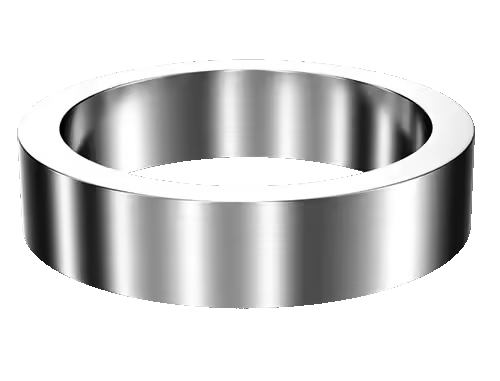
Forged rings are essential components in industries requiring high-performance, durable, and reliable parts. These rings are manufactured through a forging process that involves shaping metal under extreme pressure, resulting in superior mechanical properties. Whether used in aerospace, oil and gas, or heavy machinery, forged rings play a critical role in ensuring structural integrity and performance.
This comprehensive guide explores the various types of forged rings, the materials used in their production, and key factors to consider when choosing the right forged rings for your needs. With an emphasis on professional insights, this article will help you make informed decisions about forged rings, enhancing efficiency and reliability in your applications.
Understanding Forged Rings
What Are Forged Rings?
Forged rings are circular metal components created through the process of forging, which involves compressing and shaping metal using hydraulic or mechanical presses. This manufacturing method imparts exceptional strength, ductility, and fatigue resistance to the rings.
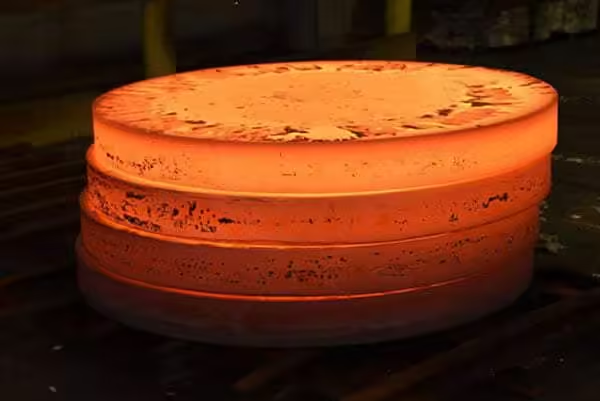
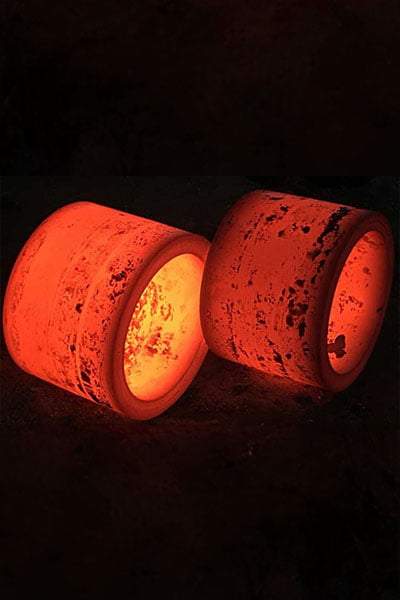
The Forging Process for Rings
- Heating: The metal is heated to its forging temperature, making it malleable.
- Shaping: A blank or billet is shaped into a ring using a mandrel and dies.
- Cooling: The forged ring is cooled gradually to prevent internal stresses.
- Machining: Precision machining ensures dimensional accuracy.
Types of Forged Rings
Seamless Rolled Rings
Seamless rolled rings are manufactured by punching a hole in a metal billet and rolling it into a precise circular shape. This method eliminates seams, enhancing the ring’s strength and durability.
Applications:
- Aerospace components
- Bearings and gear applications
- Heavy industrial machinery
Contoured Rolled Rings
These rings feature specific contours or profiles designed for specialized applications. Their shape is tailored to meet the performance requirements of complex machinery.
Applications:
- Turbines
- Pressure vessels
- Customized machinery
Flange Forged Rings
Flange forged rings are designed with flanges for easy integration into piping systems. These rings provide excellent sealing capabilities and high resistance to stress.
Applications:
- Oil and gas pipelines
- Chemical processing
- Marine systems
Hollow Rings
Hollow rings are forged with a hollow center, making them lighter while maintaining structural integrity.
Applications:
- Automotive industries
- Aerospace parts
- Hydraulic cylinders
Custom Forged Rings
Custom rings are tailored to meet unique specifications and operational requirements. Manufacturers collaborate with clients to design rings that align with their exact needs.
Applications:
- Defense applications
- Medical devices
- Specialty machinery
Material Options for Forged Rings
Selecting the right material is crucial to ensure the forged ring meets the operational demands. Below is an overview of popular material options:
| Material | Properties | Common Applications |
|---|---|---|
| Stainless Steel | Corrosion resistance, durability | Aerospace, medical, food processing |
| Carbon Steel | High strength, cost-effective | Heavy machinery, construction |
| Alloy Steel | Enhanced strength, wear resistance | Oil and gas, automotive |
| Aluminum | Lightweight, corrosion resistance | Aerospace, transportation |
| Titanium | High strength-to-weight ratio | Aerospace, defense, medical |
| Nickel Alloys | Heat and corrosion resistance | Chemical processing, power plants |
Benefits of Forged Rings
Forged rings offer numerous advantages compared to other manufacturing methods:
- Superior Strength: The forging process refines the grain structure, improving strength and toughness.
- High Durability: Forged rings resist fatigue, wear, and corrosion, ensuring long-lasting performance.
- Customizability: Manufacturers can tailor forged rings to specific dimensions and material requirements.
- Cost Efficiency: While the initial investment may be higher, the longevity and reliability of forged rings result in long-term cost savings.
Factors to Consider When Choosing Forged Rings

Application Requirements
Determine the operational conditions, including pressure, temperature, and load, to select a suitable forged ring type and material.
Material Selection
Choose a material that aligns with the environmental conditions and mechanical demands of your application.
Dimensional Accuracy
Ensure the forged ring meets precise dimensions for seamless integration into your system.
Manufacturer Reputation
Partner with reputable manufacturers who adhere to stringent quality standards, ensuring reliable and high-performing forged rings.
Cost vs. Performance
While cost is an important factor, prioritize quality and durability to maximize value over time.
Conclusion
Forged rings are indispensable components in numerous industries, offering unmatched strength, durability, and performance. By understanding the various types of forged rings and the material options available, you can make informed decisions to optimize your system’s efficiency and reliability. Selecting the right forged ring for your specific application ensures long-term success and reduces the risk of operational failures.
FAQ
What is the primary advantage of seamless rolled rings?
Seamless rolled rings eliminate weak points such as seams, offering superior strength and durability compared to other ring types.
How do I select the right material for forged rings?
Consider the operational environment, including temperature, pressure, and exposure to corrosive elements, to choose a material that meets the requirements.
Can forged rings be customized for specific applications?
Yes, custom forged rings can be manufactured to meet unique specifications, including size, shape, and material composition.
What industries commonly use forged rings?
Forged rings are widely used in aerospace, oil and gas, automotive, heavy machinery, and medical industries.
Are forged rings suitable for high-pressure applications?
Yes, forged rings are designed to withstand high-pressure conditions, making them ideal for critical applications in demanding environments.
How does the forging process improve the properties of a ring?
The forging process refines the metal’s grain structure, enhancing strength, ductility, and fatigue resistance.
What is the lifespan of forged rings?
The lifespan of forged rings depends on the material, application, and maintenance. High-quality forged rings can last decades under proper conditions.