Shandong Qilu lndustrial Co.,Ltd.

Dropped Forged Steel: Superior Strength You Can Trust!
Welcome to My Blog!
Before we dive into the content, I’d love for you to join me on my social media platforms where I share more insights, engage with the community, and post updates. Here’s how you can connect with me:
Facebook:https://www.facebook.com/profile.php?id=100090903441806
Now, let’s get started on our journey together. I hope you find the content here insightful, engaging, and valuable.
Table of Contents
Introduction
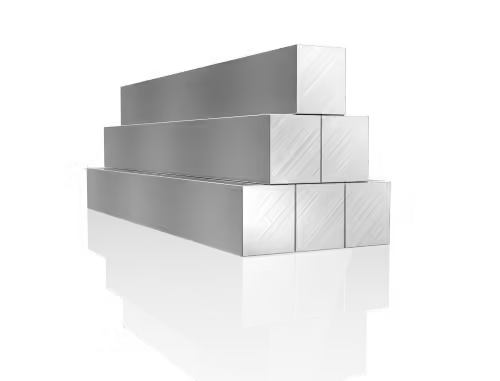
In today’s world of heavy-duty engineering, construction, automotive manufacturing, and tools production, the demand for materials that can endure extreme stress while maintaining reliability is higher than ever. Among the top choices, dropped forged steel stands out as one of the most trusted materials for strength, durability, and consistency. With its superior mechanical properties and exceptional fatigue resistance, dropped forged steel continues to be the material of choice across multiple industries. This blog will delve deep into what makes dropped forged steel superior, its applications, benefits, and more.
What Is Dropped Forged Steel?
Dropped forged steel refers to steel components shaped using a drop forging process. This involves hammering a heated steel billet between two dies, forcing the material into the desired shape under extreme pressure. The process refines the grain structure, aligns the grain flow with the component’s shape, and eliminates defects often found in cast or machined parts.
This method not only enhances the mechanical properties of the steel but also ensures exceptional consistency, making forged steel dropped ideal for critical applications in various industries such as aerospace, mining, construction, agriculture, and transportation.
The Manufacturing Process of Dropped Forged Steel
The drop forging process is both art and science. Here’s a step-by-step overview of how forged steel dropped components are typically made:
- Material Selection: The steel type is selected based on the desired application (e.g., carbon steel, alloy steel, stainless steel).
- Heating: The billet is heated to a temperature where it becomes malleable.
- Forging: A mechanical or hydraulic press hammers the heated steel into a die.
- Trimming: Excess material is trimmed off.
- Heat Treatment: Enhances strength, toughness, and hardness.
- Surface Finishing: Optional coatings or surface treatments to resist corrosion and wear.
Each step is meticulously controlled to produce forged steel dropped parts that exceed performance expectations in the harshest environments.
Advantages of Using Dropped Forged Steel
Dropped forged steel offers a host of benefits that make it superior to other forming methods like casting or machining:
High Strength and Durability
The forging process compresses and aligns the internal grain structure to the shape of the part, significantly increasing tensile strength and load-bearing capacity. Dropped forged steel components are able to endure extreme mechanical stress without deformation. This makes them ideal for heavy-duty applications where safety and performance are critical.
Superior Fatigue Resistance
Dropped forged steel parts are engineered to endure millions of load cycles without developing cracks or failures, even under fluctuating stresses. This high fatigue resistance greatly extends the service life of components. Industries like aerospace and automotive rely on it to ensure long-term, trouble-free operation.
Enhanced Toughness
Forged steel exhibits outstanding toughness, meaning it can absorb significant energy without fracturing. This resilience makes forged steel dropped particularly effective in environments where sudden shocks, heavy impacts, or vibration loads occur. It ensures that the component remains functional under severe operating conditions.
Improved Reliability
Uniform grain flow and density achieved during forging eliminate common defects like voids and inclusions found in other manufacturing methods. This consistency leads to predictable and reliable performance even in critical, high-risk environments. Dropped forged steel components deliver long-term stability and peace of mind.
Better Metallurgical Properties
The forging process enhances the internal microstructure of steel, reducing imperfections such as porosity and improving overall density. As a result, forged steel dropped parts offer superior mechanical properties like higher ductility, toughness, and tensile strength. These metallurgical improvements directly translate into better performance and durability.
Applications of Dropped Forged Steel in Various Industries
Dropped forged steel is indispensable in sectors where strength, reliability, and precision are crucial:
Automotive
Dropped forged steel is extensively used in critical automotive components such as crankshafts, connecting rods, axle beams, and steering arms. These parts demand high strength, fatigue resistance, and durability to ensure vehicle safety and performance. Forged steel guarantees the reliability needed for both everyday driving and extreme conditions.
Aerospace
In the aerospace industry, forged steel dropped is vital for landing gear systems, engine mounts, and key structural components. These parts must endure high stress, temperature fluctuations, and impact loads without failure. Forging ensures the superior mechanical properties necessary for safe and efficient flight operations.
Construction
The construction sector relies heavily on forged steel dropped for manufacturing hooks, shackles, lifting gears, and structural supports. These components often bear massive loads and face harsh working environments. Forged steel provides the necessary strength, resilience, and safety standards critical to construction site operations.
Agriculture
Agricultural machinery like plows, harrows, and tractors use forged steel dropped parts to withstand abrasive soil, heavy impacts, and constant mechanical stress. Farming equipment operates in tough and unpredictable conditions, making the durability and toughness of forged steel indispensable for reliability and long-term performance.
Oil and Gas
In the oil and gas industry, forged steel dropped is used for drilling equipment, high-pressure valves, rigging hardware, and subsea components. These parts must endure intense pressure, corrosive environments, and extreme operational stresses. Forged steel’s enhanced toughness and corrosion resistance make it the material of choice.
Table: Key Properties of Dropped Forged Steel vs. Other Steel Types
| Property | Dropped Forged Steel | Cast Steel | Machined Steel |
|---|---|---|---|
| Grain Structure | Aligned, refined | Random, coarse | Disrupted by cuts |
| Tensile Strength | High | Moderate | Moderate |
| Fatigue Resistance | Excellent | Low | Moderate |
| Impact Toughness | Excellent | Low | Moderate |
| Manufacturing Waste | Low | Moderate | High |
| Cost-Effectiveness (Long-term) | High | Medium | Low |
| Dimensional Precision | High with tooling | Moderate | High |
| Common Applications | Heavy-duty components | Decorative parts | Precision tools |
Comparing Drop Forging with Other Manufacturing Methods
To truly understand the value of forged steel dropped, it’s important to compare it with alternative metal-forming techniques.
Drop Forging vs. Casting
- Strength: Dropped forged steel is significantly stronger due to grain alignment.
- Defect Rate: Casting is prone to porosity, inclusions, and shrinkage.
- Durability: Forged components last longer under cyclic loads.
Drop Forging vs. Machining
- Material Waste: Drop forging uses less material since the shape is formed rather than cut.
- Cost Efficiency: Though tooling is expensive upfront, large batches of forged parts reduce long-term costs.
- Performance: Machined parts can lack the strength and toughness of forged steel.
How to Identify Quality Dropped Forged Steel
Not all forged steel dropped is created equal. Here are some markers of quality:
- Certifications: Look for ISO, ASTM, or ASME certifications.
- Material Traceability: Reliable suppliers offer full traceability for each batch.
- Testing: Non-destructive testing (NDT), ultrasonic inspection, and hardness testing ensure integrity.
- Finish and Tolerance: A well-forged part should have minimal flash, consistent surface finish, and tight tolerances.
Environmental Benefits of Dropped Forged Steel
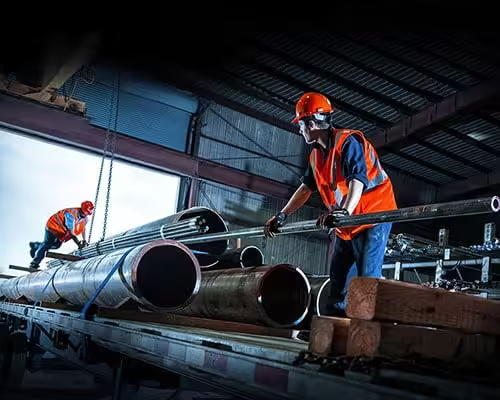
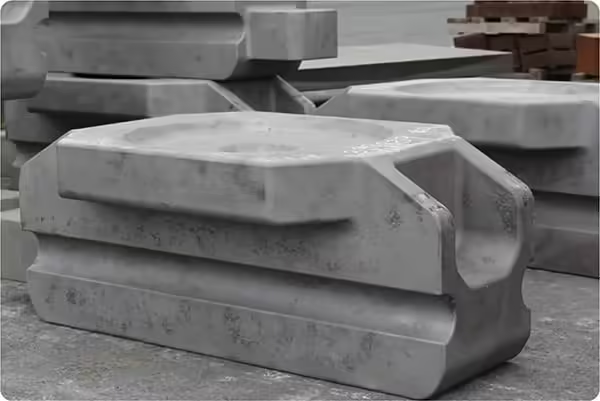
Dropped forged steel is not only a durable option but also an environmentally conscious one:
- Less Material Waste: Minimal scrap compared to machining.
- Recyclable: Forged steel components can be recycled and reused.
- Energy Efficient in Mass Production: Once tooling is set, forging consumes less energy per part compared to casting or machining.
Conclusion
Dropped forged steel has proven time and again that it is the ultimate choice for applications demanding strength, durability, and reliability. Whether in a crane lifting tons of weight or a jetliner flying thousands of feet above ground, forged steel dropped ensures safety, performance, and longevity.
Looking to source premium forged steel dropped parts for your business or project? Contact us today to discuss your specific needs and receive expert guidance on the best solutions available. Don’t settle for less when superior strength is within reach—trust dropped forged steel.
FAQ
What is dropped forged steel best used for?
Dropped forged steel is ideal for parts that will experience high stress, impact, or fatigue—like automotive suspensions, heavy lifting hooks, or aerospace components.
Is dropped forged steel better than cast steel?
Yes, dropped forged steel generally has superior mechanical properties, such as higher tensile strength, better fatigue resistance, and improved impact performance.
Can dropped forged steel rust?
Like any steel, it can rust if not properly treated. However, many forged steel dropped parts receive surface coatings or treatments to enhance corrosion resistance.