Shandong Qilu lndustrial Co.,Ltd.

Avoid These Mistakes When Buying Cheap Forged Irons
Welcome to My Blog!
Before we dive into the content, I’d love for you to join me on my social media platforms where I share more insights, engage with the community, and post updates. Here’s how you can connect with me:
Facebook:https://www.facebook.com/profile.php?id=100090903441806
Now, let’s get started on our journey together. I hope you find the content here insightful, engaging, and valuable.
Table of Contents
Introduction
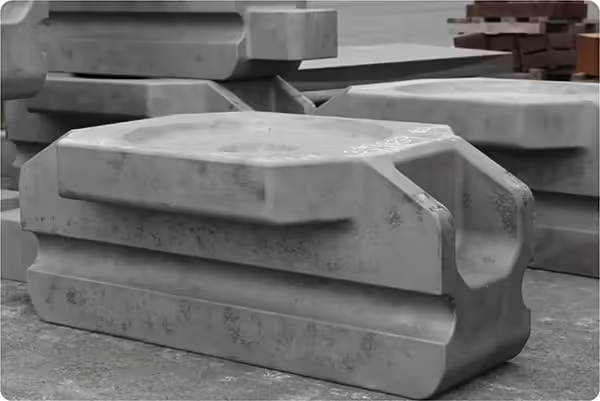
When it comes to buying forged irons, golfers often find themselves caught between the allure of a great deal and the potential downsides of cheaper options. While “cheap” might sound like a bargain, buying low-cost forged irons without considering key factors can lead to disappointing performance on the course. In this guide, we’ll help you identify and avoid common mistakes when purchasing cheap forged irons, ensuring you get the best value for your money.
Price Does Not Always Reflect Quality
While it’s true that price is often a strong indicator of quality in many products, this assumption doesn’t always hold up when it comes to buying cheap forged irons. Many golfers make the mistake of thinking that the higher the price tag, the better the performance, but this is not always the case with forged irons.
One of the main reasons why price can be misleading in this context is due to the fact that the cost of manufacturing forged irons is influenced by several factors, including the materials used, the forging technique, and the brand reputation. It’s important to keep in mind that a higher price doesn’t necessarily guarantee a better playing experience or greater durability. There are cheaper forged irons available that provide excellent performance if they are made with the right materials and the right manufacturing process.
A common issue with low-cost forged irons is that manufacturers might cut corners in the production process, using lower-grade steel or alloys that don’t perform as well over time. This might mean you get a set of irons that look good on the surface but don’t deliver the same feel, feedback, or consistency as higher-end models. On the other hand, some lesser-known brands may offer affordable options with excellent craftsmanship and materials but don’t carry the same price tag due to their lack of brand recognition.
The key to finding a good deal in cheap forged irons lies in understanding what makes a good iron, beyond just the price. You should consider the quality of the material used in construction (such as carbon steel or stainless steel), the forging process (more on that below), and how well the iron is designed to suit your playing style. By focusing on these aspects, you may be able to find a set of forged irons that offer superior performance at a fraction of the cost.
The Importance of the Forging Process
One of the defining characteristics of forged irons is the forging process itself, which is often what separates them from cast irons in terms of feel and performance. The forging process involves taking a single piece of steel and shaping it under extreme pressure, which results in a denser, more consistent iron with better feedback and a superior feel compared to cast models.
However, not all forging techniques are created equal, and this is where many cheap forged irons fall short. While the process may still be termed “forging,” the quality of the materials and the precision of the craftsmanship can vary widely between brands and price points. Some budget-friendly manufacturers may use basic or less refined forging techniques that fail to create the same level of consistency and precision as higher-end models. This can result in irons that feel less responsive, deliver inconsistent shots, and fail to provide the desired feedback.
On the flip side, some affordable brands invest in more advanced, consistent forging methods that can produce remarkably well-crafted irons without the premium price tag. These irons may feature a more uniform grain structure and a greater level of precision, leading to improved performance and a better overall feel.
It’s crucial to do your research on how the irons you’re considering are forged and whether the manufacturer uses high-quality materials and a precision forging process. This will have a significant impact on the playability of the irons. If you’re buying cheap forged irons, make sure the forging process is of a high enough standard to ensure consistent performance and a great feel.
Don’t Overlook Club Fitting
While the quality of the irons themselves is important, another often overlooked aspect when purchasing cheap forged irons is the fitting of the clubs. Many golfers assume that off-the-shelf irons will work fine, especially if they are more affordable, but club fitting can drastically improve performance—regardless of the price.
Club fitting involves adjusting the length, lie angle, shaft type, and grip size of the irons to suit your individual swing characteristics. Even if you find a set of cheap forged irons that seem like a good deal, if they aren’t fitted to your specific needs, you may not be able to get the full benefit of their design. Improperly fitted clubs can lead to inconsistent ball striking, less accuracy, and reduced distance, all of which can affect your game negatively.
For example, if the lie angle of the iron is too flat or too upright for your swing, it can cause the ball to miss its target. Similarly, using the wrong shaft flex can lead to poor trajectory and shot dispersion. Even the grip size matters; if the grip doesn’t fit your hand size, it could lead to discomfort and less control over your shots.
While custom fitting can seem like an added cost, it’s worth investing in because it can unlock the true potential of the cheap forged irons you purchase. Many golf stores offer fitting services at a reasonable price, and some manufacturers even offer irons that can be custom-fitted for a small additional fee. This ensures that even an affordable set of forged irons can perform at their highest level.
Ultimately, the most important thing to remember is that irons that are not properly fitted to your swing will never perform at their best. Even with the best materials and manufacturing, the best forged irons won’t help you if they don’t match your playing style and body mechanics. So, when considering a set of cheap forged irons, don’t forget to factor in the cost of professional club fitting to ensure you get the most out of your investment.
Material Matters: What to Look for in Cheap Forged Irons
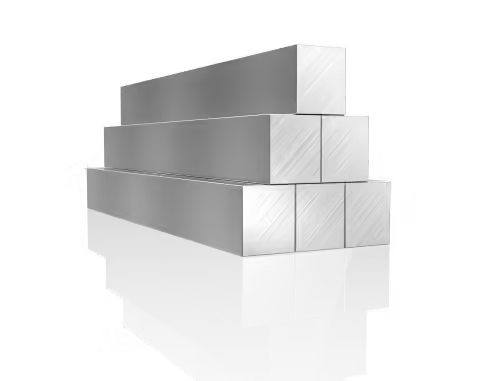
When purchasing cheap forged irons, the material is one of the most important factors that affects durability and playability. While high-end forged irons often use premium materials like carbon or stainless steel, lower-cost models may use less durable alloys, which can wear out faster or lack the same level of performance.
Key Materials to Look for:
- Carbon Steel: Offers great feel and feedback, making it popular for high-end forged irons. However, it can rust if not maintained properly.
- Stainless Steel: More durable and resistant to rust but may feel less responsive compared to carbon steel. Some cheap forged irons blend both for a balance of durability and feel.
- Mild Steel: Typically softer and more affordable, but can wear out quickly and might not deliver the same consistency in feel or performance.
When shopping for affordable forged irons, ensure you’re not compromising on quality by checking the materials used. It’s important to look for reputable brands that offer good craftsmanship with reliable materials like high-quality carbon or stainless steel.
Matching Irons to Your Playing Style
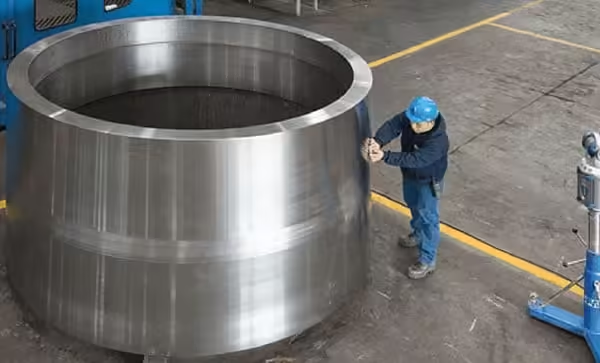
Your playing style should guide the choice of cheap forged irons. Whether you’re a beginner or an experienced golfer, it’s crucial to select clubs that match your swing.
Consider These Factors:
- Swing Speed: Slower swing speeds benefit from irons with larger sweet spots and more forgiveness, while faster swing speeds may prefer irons that provide more control.
- Forgiveness: If you struggle with consistency, look for irons that help correct off-center hits. Some affordable forged irons have features designed for added forgiveness.
- Experience Level: Beginners should prioritize ease of use, while experienced players can opt for irons that offer more precision and feel.
- Shaft Flexibility: Make sure the shaft matches your swing speed for optimal performance. A more flexible shaft helps slower swingers, while stiffer shafts are better for faster swings.
- Grip Size: Ensure the grip fits your hand size for better comfort and control.
By matching cheap forged irons to your specific playing style, you’ll get the most out of your purchase without compromising on performance.
Comparison Table
| Feature | Cheap Forged Irons | Premium Forged Irons |
|---|---|---|
| Material Quality | Lower-grade steel or alloys | High-quality carbon steel/alloys |
| Forging Process | Basic or inconsistent | Advanced, precise forging process |
| Feel and Feedback | Less consistent | Exceptional feel and control |
| Longevity | May wear out faster | Highly durable and long-lasting |
| Customization Options | Limited or none | Fully customizable for fit and performance |
Conclusion
Buying cheap forged irons can be a wise decision if done thoughtfully. By avoiding the common mistakes discussed in this guide—such as overlooking the importance of the forging process, ignoring proper fitting, and not considering the materials used—you can make a more informed decision and find a set of irons that deliver great value without sacrificing performance.
FAQ
Are cheap forged irons worth buying?
Yes, cheap forged irons can provide excellent value if you understand the key factors such as material, forging process, and fitting. However, you should be aware of potential trade-offs in terms of durability and performance.
How do I know if the cheap forged irons are the right fit for me?
Getting your irons properly fitted by a professional club fitter ensures that they match your swing characteristics and playing style, which is essential for maximizing performance, even with cheaper models.
Can cheap forged irons last as long as more expensive options?
While they may not last as long as premium forged irons, cheap forged irons made with quality materials and proper craftsmanship can still be durable and serve you well for years.
What’s the biggest mistake to avoid when buying cheap forged irons?
The most common mistake is ignoring the importance of the forging process and material quality. Cutting corners here can affect performance and lead to disappointment on the course.
How can I differentiate good cheap forged irons from poor ones?
Look for indications of good craftsmanship, such as a well-executed forging process and high-quality materials. Test the feel and feedback, and consider whether the irons align with your specific needs and preferences.