Shandong Qilu lndustrial Co.,Ltd.

Understanding the Aluminum Forging Process: A Comprehensive Guide
Table of Contents
The aluminum forging process is an essential manufacturing method used to create parts and components with superior strength and durability. This process involves shaping aluminum alloys under high pressure, resulting in products that are often stronger and lighter than cast or machined alternatives. Whether you’re working in aerospace, automotive, or construction, understanding how the aluminum forging process works is critical to making informed decisions about material choice and production methods. In this article, we will break down the aluminum forging process, explaining its importance, steps, and applications in a way that’s easy to understand.
What Is the Aluminum Forging Process?
At its core, the aluminum forging process involves shaping a piece of aluminum by applying force to it while it’s in a malleable state, typically when it’s heated to a specific temperature. This process is used to create parts that require high strength, such as engine components, aerospace parts, and structural elements. Unlike casting, where the material is poured into molds, forging involves compressing the material to shape it.
The aluminum forging process can take various forms depending on the requirements of the final product. There are two main types of aluminum forging: hot forging and cold forging. The key difference lies in the temperature at which the material is worked, with hot forging taking place at higher temperatures to allow the material to be more malleable, and cold forging occurring at room temperature for smaller, more precise parts.
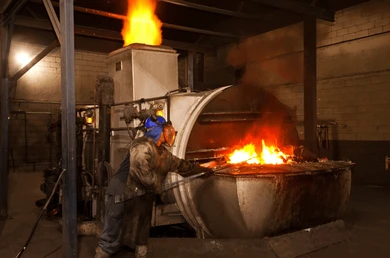
The Key Steps in the Aluminum Forging Process
The aluminum forging process consists of several distinct steps, each designed to ensure that the final product meets the necessary strength, shape, and size specifications.
1.Material Preparation
Before the forging process begins, the aluminum is prepared. This involves selecting the right aluminum alloy based on the intended use of the final part. The material is then cut into billets or ingots of the required size. The billets are often pre-heated to a temperature that makes them easier to manipulate during the forging process.
2.Heating the Aluminum
In hot forging, the aluminum billet is heated to a temperature that makes it more malleable, typically between 300 to 500°C. This heat treatment softens the aluminum, allowing it to be shaped without cracking or losing its integrity. In cold forging, the aluminum is not heated but instead shaped at room temperature, resulting in higher precision but typically for smaller, less complex parts.
3.Shaping the Aluminum
Once the aluminum is at the right temperature, the billet is placed into a die, and pressure is applied using either a hammer or a press. This action forces the aluminum into the shape of the die, creating the basic form of the part. The amount of pressure and the number of strokes or presses depend on the size and complexity of the part being forged.
4.Cooling and Final Shaping
After the forging process, the aluminum part is allowed to cool. Depending on the specific requirements, the part may undergo additional shaping steps, including machining or surface treatment, to achieve the desired final dimensions and finish. In some cases, the part may also undergo heat treatment to enhance its mechanical properties, such as strength and hardness.
Types of Aluminum Forging
The aluminum forging process can be broken down into two main categories: hot forging and cold forging. Both methods have their own advantages and are chosen based on the specific requirements of the part being produced.
1.Hot Forging
Hot forging involves working with aluminum at elevated temperatures, which makes the material more ductile and easier to shape. This method is ideal for creating large, complex parts that require significant force to shape. Hot forging is commonly used for high-strength components used in aerospace, automotive, and construction industries.
Benefits of Hot Forging:
- Better material flow, allowing for more complex shapes
- Increased strength due to grain refinement
- Less wear on the forging dies
2.Cold Forging
Cold forging, on the other hand, is performed at or near room temperature. It is typically used for smaller, more precise parts that require tighter tolerances. Cold forging is ideal for creating parts with high dimensional accuracy and smooth surfaces.
Benefits of Cold Forging:
- Higher precision and tighter tolerances
- Improved surface finish
- No need for heat treatment, which reduces energy consumption
Benefits of the Aluminum Forging Process
The aluminum forging process offers several advantages over other manufacturing methods, such as casting or machining. These benefits make it a popular choice for producing high-performance parts across various industries.
1.Enhanced Strength and Durability
One of the main advantages of the aluminum forging process is that it results in parts that are much stronger and more durable than those made by casting or machining. The process of compressing the aluminum causes its grain structure to align, which improves its mechanical properties, such as strength and toughness.
2.Better Material Utilization
Forging also offers better material utilization compared to casting. Since the material is compressed into the desired shape, there is less waste, which makes the process more efficient.
3.Improved Dimensional Accuracy
The aluminum forging process can produce parts with excellent dimensional accuracy, especially when cold forging is used. This is important in industries where precision is critical, such as aerospace and automotive manufacturing.
Applications of Aluminum Forging
The aluminum forging process is used to produce a wide range of parts across various industries, including:
- Aerospace: Components like turbine blades, aircraft frames, and landing gear.
- Automotive: Engine parts, transmission components, and suspension parts.
- Construction: Structural components, such as beams and supports, that require high strength.
- Marine: Parts that need to withstand harsh environments, such as propellers and hull components.

Conclusion
The aluminum forging process is a critical technique for producing high-strength, durable parts used in a wide range of applications. Whether it’s hot forging or cold forging, each method offers distinct advantages that make it suitable for different types of products. By understanding the process, manufacturers can make informed decisions about which method to use for their specific needs, ensuring high-quality products with minimal waste.
For industries that require strength, precision, and durability, the aluminum forging process remains one of the best options available. Its ability to produce strong, lightweight parts with minimal material waste makes it invaluable in many high-performance applications.