Shandong Qilu lndustrial Co.,Ltd.

Aluminum Forge: How It Impacts Your Manufacturing Success
Table of Contents
Introduction
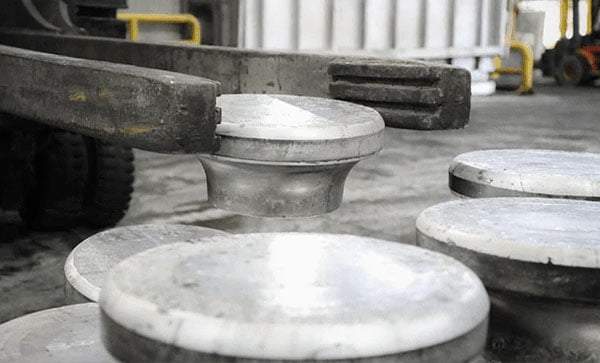
In today’s competitive manufacturing industry, choosing the right materials and processes is critical to the performance and durability of the products you create. For businesses focusing on aluminum-based components, one of the most effective methods for achieving high-strength, durable products is through aluminum forge techniques. As a leading manufacturer of high-quality forgings, Qilu specializes in producing shaft forgings, ring forgings, and disc forgings using cutting-edge technology to meet the highest quality and reliability standards. Our expertise in the aluminum forging process makes us a trusted partner for companies worldwide.
This blog will explore the various advantages of aluminum forging, compare it with other manufacturing processes like casting, and explain why it’s a preferred option for various industries such as automotive, aerospace, and industrial machinery.
What Is Aluminum Forge?
Aluminum forge refers to the process of shaping aluminum alloys by applying controlled pressure or force. This is done through either hammering, pressing, or rolling the aluminum until it achieves the desired shape and structure. The forging process can enhance the mechanical properties of aluminum, making it stronger, more durable, and able to withstand higher stresses than cast alternatives.
Forged aluminum parts are known for their uniform grain structure, which is the result of the compression of metal during the forging process. This leads to improved strength, fatigue resistance, and structural integrity. As such, aluminum forging is widely used in industries where the parts are subjected to high loads or extreme conditions.
Aluminum Forge vs. Aluminum Casting: Key Differences
When considering manufacturing options, it’s essential to understand the key differences between aluminum forge and aluminum casting.
| Property | Aluminum Forging | Aluminum Casting |
|---|---|---|
| Strength | Higher strength and fatigue resistance | Lower strength, more prone to cracking |
| Grain Structure | Uniform, fine-grain structure | Uneven grain structure, more porosity |
| Production Speed | Slower process, more complex | Faster production process, more versatile |
| Tooling & Cost | Requires specialized equipment | Less costly tooling |
| Application | Aerospace, automotive, high-stress applications | General-purpose applications, non-critical parts |
As you can see, while casting is more cost-effective and faster, forging is the superior choice for high-performance applications that require durability and strength.
Why Choose Aluminum Forge for Strength and Durability?
Aluminum forging is often preferred in situations that require superior strength and durability. Here’s why:
- Increased Strength: The forging process aligns the metal’s grain structure, enhancing its overall strength. This makes forged aluminum parts stronger than their cast counterparts, which typically exhibit weaker mechanical properties.
- Fatigue Resistance: Forged aluminum components have better resistance to fatigue and are less likely to fail under repeated stress, making them ideal for automotive, aerospace, and heavy machinery industries.
- Improved Structural Integrity: The compression during forging eliminates voids and porosity, ensuring a higher level of structural integrity than cast parts.
The Impact of Aluminum Forge on Industrial Applications
Aluminum forging has become a critical component in various industries, especially those requiring lightweight and durable parts. Some notable industries that benefit from aluminum forging include:
- Aerospace: Forged aluminum components are widely used in the aerospace industry due to their ability to withstand high stress and extreme temperatures.
- Automotive: Forged parts such as wheels, engine components, and suspension parts are common in the automotive sector, offering better performance and reliability.
- Industrial Equipment: Forged aluminum parts are used in manufacturing equipment, providing the necessary strength and long-lasting performance in harsh working conditions.
The ability of aluminum forging to handle high loads while maintaining a lightweight profile makes it the ideal choice for these industries.
How Does Aluminum Forge Improve Manufacturing Processes?
Aluminum forging can improve manufacturing processes in several ways:
- Cost-Effective for High-Volume Production: While the upfront cost of forging equipment may be higher, forging becomes cost-effective in the long run, especially for high-volume production runs, thanks to its high yield and minimal material waste.
- Increased Precision: Forging allows for tighter tolerances and higher precision compared to other manufacturing methods, which can result in fewer post-production machining steps.
- Better Quality Control: Since the forging process involves extreme pressure, the resulting parts are more homogeneous, reducing the risk of defects or failures in end-use applications.
Common Applications of Aluminum Forge

Aluminum Forgings
Compared to castings, aluminum forgings offer maximum impact strength, superior internal integrity, and the ability to eliminate internal voids. This is particularly useful in harsh environments or where speed and energy efficiency are critical, such as aerospace components and mechanical parts subjected to high pressure.
Aluminum forging is used in a variety of high-performance applications. Some common examples include:
- Aerospace Components: Forged aluminum is used in critical aerospace applications like landing gear components, turbine blades, and structural parts.
- Automotive Parts: High-performance vehicles rely on forged aluminum parts for components such as wheels, crankshafts, and suspension systems.
- Heavy Machinery: Forged aluminum is commonly used in industrial machinery to provide strength while keeping the weight low.
Conclusion
In conclusion, aluminum forge stands out as an ideal solution for industries that require high-strength, durable, and lightweight components. Whether you’re in aerospace, automotive, or manufacturing, understanding the advantages of aluminum forging can help you make informed decisions for your business.
At Qilu, we specialize in providing high-quality forged components tailored to meet your specific needs. Whether you’re looking for custom designs or high-volume production, our team is here to support you.
Contact us today to learn how our aluminum forging services can help improve your manufacturing processes and ensure the highest quality for your products!
FAQ
How does aluminum forge improve part performance?
Aluminum forging enhances the strength, fatigue resistance, and durability of the parts. It eliminates internal defects like porosity and air pockets, resulting in components that can handle higher stress.
Can aluminum forge be used for custom designs?
Yes, aluminum forging can accommodate complex and custom designs. However, it’s essential to work closely with the manufacturer to ensure that the design is compatible with the forging process.
What are the benefits of forged aluminum over cast aluminum?
Forged aluminum typically offers higher strength, better fatigue resistance, and improved overall durability compared to cast aluminum. It is ideal for high-performance applications.
How does the forging process impact the cost?
While the initial tooling costs for aluminum forging may be higher, it becomes more cost-effective in large-scale production due to its minimal waste and higher precision.