Shandong Qilu lndustrial Co.,Ltd.

Alloy Steel vs Carbon Steel in Automotive Forgings: Microstructure and Lifecycle Impacts
Table of Contents
Alloy Steel vs Carbon Steel in Automotive Forgings is a core question for every forging manufacturer and OEM specifying safety-critical components. Choosing between these families affects forgeability, heat treatment windows, fatigue life and final part cost.
Why the comparison matters for forgings
When specifying forgings, engineers and buyers must weigh metallurgical behavior against production realities. Alloy Steel vs Carbon Steel in Automotive Forgings centers on whether to prioritize simple chemistry and cost or enhanced hardenability and toughness.
Chemistry and metallurgical effects
At a basic level, carbon controls strength and hardenability while additional alloying elements (Cr, Mo, Ni, V) tune properties. The debate — Alloy Steel vs Carbon Steel in Automotive Forgings — therefore becomes a tradeoff between predictable microstructure in carbon steels and extended performance envelopes in alloys. (See ASM Handbook discussion on alloying effects.)
Forgeability and process windows
Forging plants favor steels that deform predictably at forging temperatures. For many applications, Alloy Steel vs Carbon Steel in Automotive Forgings means assessing hot flow stress, recrystallization behavior and risk of cracking. Carbide-forming elements improve high-temperature strength but may constrain forging temperature ranges.
Heat treatment implications
A central theme in Alloy Steel vs Carbon Steel in Automotive Forgings is heat treatment: alloy steels often require more controlled austenitizing and slower cool rates to avoid retained austenite or excessive hardness gradients. Carbon steels simplify quench/temper steps but may lack the hardenability for large cross-sections.
Fatigue life and microstructure control
Fatigue performance depends on inclusion content, grain structure and core toughness. In comparisons of Alloy Steel vs Carbon Steel in Automotive Forgings, alloys typically offer better through-hardening and fatigue resistance in large sections, while carbon steels can perform well in smaller parts with strict cleanliness controls. (Relevant studies in Journal of Materials Processing Technology.)
Cost, supply and production yield
Budget decisions often drive the Alloy Steel vs Carbon Steel in Automotive Forgings choice. Carbon steels are lower cost and widely available; alloy steels increase material cost and sometimes scrap risk if processing is not optimized. Forging manufacturers must model purchase price vs lifetime performance.
Application examples
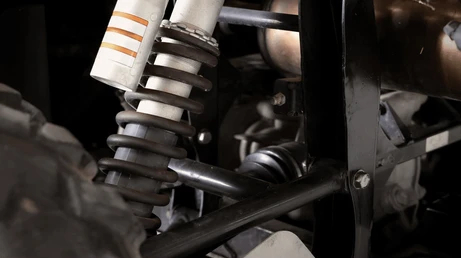
Crankshafts and high-stress drive components often lean toward alloy steels, while many suspension brackets and less stressed parts can be made from carbon steel. The practical decision tree — Alloy Steel vs Carbon Steel in Automotive Forgings — should start with a load case, then check section size, required surface treatments and end-use environment.
Welding and repairability
Repair procedures differ: Alloy Steel vs Carbon Steel in Automotive Forgings influences preheat requirements and PWHT. Higher alloy content often imposes stricter welding controls to avoid cracking and altered microstructure.
Surface engineering and case hardening
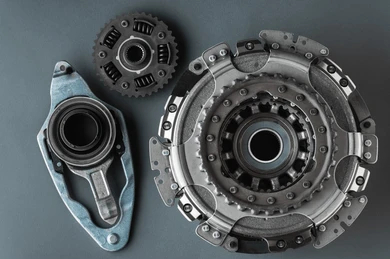
For wear-prone parts, surface processes (carburizing, nitriding, induction hardening) change the calculus in Alloy Steel vs Carbon Steel in Automotive Forgings. Case hardening steels blend low core carbon with surface potential, offering a hybrid approach for many gear and pin applications.
Quality assurance and traceability
In forging supply chains the Alloy Steel vs Carbon Steel in Automotive Forgings decision is tracked via mill certificates, chemical analysis and NDT. For critical parts, require compositional windows and inclusion limits up front to reduce downstream failure risk. (See industry QA guidance at SAE.)
Practical checklist for manufacturers
- Define load and fatigue requirements.
- Verify section size and hardenability needs.
- Request mill certificates and micrographs.
- Align heat treatment with material choice.
- Plan for NDT and traceability.
This checklist turns Alloy Steel vs Carbon Steel in Automotive Forgings from theory into actionable procurement criteria.
Final takeaway
For forging manufacturers and OEMs, the question Alloy Steel vs Carbon Steel in Automotive Forgings is not binary — it is a systems decision. Consider metallurgy, process capability, cost and lifecycle in an integrated way to select the right material for each application.
For more detailed information, please click here.