Shandong Qilu lndustrial Co.,Ltd.

Monobloc Forgings: Achieving Ultimate Integrity in Nuclear Pressure Components
When designing a nuclear power plant, engineers face a fundamental question: which components demand infinite safety margins? The answer lies in the reactor’s primary pressure boundary. Here, compromise is not an option. Monobloc forgings—massive, seamless steel components—are the singular choice for this role. They are not mere parts; they are the physical embodiment of a 60-year safety promise. This article explores why this forging method is the non-negotiable standard in nuclear safety philosophy, ensuring integrity for generations.
Table of Contents
Why Nuclear Safety Rejects Compromise: The Weld as a Weakness
The operating environment of a nuclear reactor is uniquely severe. Components must withstand decades of exposure to high temperatures, immense pressure, neutron radiation, and repeated thermal cycling.
Traditional manufacturing methods, such as welding multiple sections together, introduce inherent risks into this setting. Over a plant’s 60+ year lifespan, welds can become potential initiation points for fatigue cracks or stress corrosion.
This is precisely where the value of monobloc forgings becomes undeniable. Their “one-piece” construction eliminates the primary longitudinal welds in critical vessels. This removes the most vulnerable links in the safety chain, serving as a preemptive strike against failure.
While generic forged steel blocks serve as raw material for many industries, a nuclear-grade monobloc forging is engineered from the outset. Its geometry, grain flow, and mechanical properties are meticulously optimized for a specific, irreplaceable function within the nuclear island.
From Ingot to Indispensable Component: The Creation of a Monobloc Forging
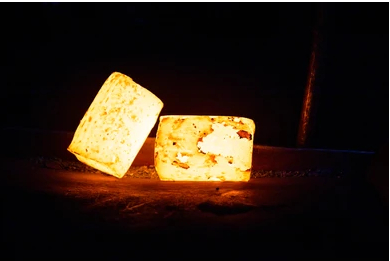
The journey to create a nuclear-grade monobloc forging is a symphony of metallurgy and force. It begins with the melting of ultra-pure steel, alloyed to exacting nuclear specifications. This large ingot is then heated and subjected to transformative forces under a mega-ton press. The process is crucial:
- Multi-Directional Forging: The press works the steel from multiple angles, thoroughly breaking down the as-cast structure and ensuring uniformity from the core to the surface.
- Precision Shaping: The steel is gradually formed into a shape approximating the final component, such as a reactor vessel shell or flange.
- Controlled Heat Treatment: A carefully orchestrated thermal cycle tempers the steel, achieving the required combination of strength and, most critically, fracture toughness.
This rigorous transformation results in a monobloc forging with superior homogeneity and isotropic properties—meaning its strength is consistent in all directions. This is a fundamental advantage that defines every reliable monobloc forging used in safety-critical applications.
Integrity You Cannot See: The Invisible Quality Mandate
The true value of a monobloc forging lies beneath the surface. The forging process itself refines the steel’s internal microstructure, creating a uniform and fine grain pattern.
This refined structure directly translates to exceptional performance. It provides superior resistance to crack propagation and fatigue, which is absolutely essential for components facing constant, high-level stress over decades.
To verify this internal perfection, the industry relies on exhaustive nondestructive testing (NDT). Each monobloc forging undergoes full-body ultrasonic testing—a procedure akin to a high-resolution CT scan for metal. This process identifies any minute internal discontinuity, ensuring the component is flawless before it moves to the next stage.
Furthermore, nuclear-grade monobloc forgings are subject to complete traceability. A full documentary trail is maintained from the original heat number of the melt to every subsequent test report. This level of accountability, mandated by standards like ASME Section III, is as vital to safety and reliability as the quality of the material itself.
Guardians of the Nuclear Island: Critical Applications
The reliance on monobloc forgings is most evident in the heart of the power plant. These components form the backbone of safety:
- Reactor Pressure Vessel (RPV): The cylindrical shell, dome heads, and massive flange that contains the reactor core are all manufactured from monobloc forgings. Their seamless construction is the primary barrier against radiation release.
- Steam Generators: The lower heads and thick tube sheets, which must withstand extreme thermal gradients and pressure differentials, are sourced from these ultra-reliable forgings.
- Pressurizers and Primary Pump Housings: Other key pressure-retaining components in the primary coolant loop depend on the integrity of monobloc forgings.
In each case, the choice of a monobloc forging is a direct investment in mitigating risk. The consistent performance of these monobloc forgings across the global nuclear fleet underscores their reliability.
Selecting a Partner: A Strategic Risk Management Decision
Choosing a supplier for monobloc forgings is a long-term strategic decision, not a simple procurement. It involves a rigorous evaluation of the manufacturer’s entire ecosystem. Key considerations include:
- Technical Capability: Does the supplier possess the press capacity, furnace size, and machining expertise to produce the required dimensions?
- Quality Assurance Culture: Is there a deeply ingrained, certified quality system (e.g., ASME N-stamp) governing every step?
- Proven Heritage: Can the supplier demonstrate a successful track record with reference projects?
- Technical Partnership: Will they engage in early-stage engineering collaboration to optimize the forging design?

The goal is to find a partner whose commitment to excellence matches the critical nature of the monobloc forgings they produce. Their process must ensure that every monobloc forging shipped is a monument to quality.
Conclusion: The Ultimate Investment in Assurance
In nuclear energy, monobloc forgings represent the pinnacle where material science meets an uncompromising safety ethos. They are the silent, steadfast guardians within the reactor, their value measured in decades of uneventful operation. Opting for a premium monobloc forging transcends material cost; it is an investment in the plant’s entire lifecycle and in the public’s unshakable trust. It is the clear choice for those who define safety as the ultimate performance metric.