Shandong Qilu lndustrial Co.,Ltd.

5 Reasons Cold Forging Aluminum Is a Game Changer
Table of Contents
Introduction

As industries push for better performance, efficiency, and sustainability, cold forging aluminum is gaining attention as a modern alternative to traditional hot forging. Known for its strength, precision, and energy efficiency, this near-room-temperature process offers clear advantages for producing lightweight, corrosion-resistant aluminum components used in critical applications.
At Qilu, we specialize in high-quality forgings such as shafts, rings, and discs. With advanced equipment ranging from 200 to 4000 tons, we can handle forgings from 1 to over 100,000 pieces. Our strong production capacity, in-house testing, and global supply network ensure fast, reliable delivery that keeps your projects on track.
The Transformative Power of Cold Forging Aluminum
Cold forging, by definition, is a metal forming process where the metal is shaped at or near room temperature, significantly below its recrystallization temperature. This contrasts sharply with hot forging, which requires heating the material to high temperatures. While hot forging improves ductility and reduces the force needed for deformation, cold forging aluminum offers unique metallurgical and economic benefits that make it an increasingly attractive option for precise and high-performance components.
1. Superior Mechanical Properties and Strength
One of the most compelling advantages of cold forging aluminum is the significant enhancement of the material’s mechanical properties. When aluminum is cold forged, its grain structure is refined and elongated in the direction of the material flow. This process, known as work hardening or strain hardening, increases the aluminum’s tensile strength, yield strength, and hardness. Unlike hot forging, where high temperatures can lead to grain growth and potential scaling, cold forging maintains a fine grain structure, which contributes directly to the overall strength and durability of the component.
This means that components made through cold forging aluminum can withstand higher operational stresses and loads, making them ideal for critical applications in industries where strength-to-weight ratios are paramount, such as automotive suspension parts, aerospace structural components, or electronic housings. The resulting components are inherently stronger and more resistant to fatigue and wear, leading to a longer service life and greater reliability in demanding environments.
2. Exceptional Surface Finish and Dimensional Accuracy
Precision is a hallmark of cold forging aluminum. Because the process occurs at lower temperatures, there is no formation of oxide scales (scaling) on the surface of the aluminum, which is common in hot forging. This eliminates the need for expensive descaling operations and results in a much smoother, cleaner surface finish directly from the forging process. The improved surface integrity not only enhances the aesthetic appeal of the component but also minimizes surface defects that could act as stress concentrators.
Furthermore, the absence of thermal expansion and contraction associated with high temperatures allows for much tighter dimensional tolerances. Components produced via cold forging aluminum often require minimal, if any, secondary machining. This near-net-shape capability drastically reduces machining time, material waste, and overall production costs, leading to highly precise and consistent parts that are ready for assembly with little additional finishing. The dimensional accuracy achieved is often superior to hot forged parts, which can warp or distort upon cooling.
3. Excellent Material Utilization and Reduced Waste
Cold forging aluminum is inherently an efficient manufacturing process in terms of material utilization. Due to the near-net-shape capabilities and the ability to achieve complex geometries in a single or few forging steps, there is significantly less material waste compared to subtractive manufacturing methods like machining from bar stock or plates. While machining generates considerable chips and scrap, cold forging reshapes the material, making highly efficient use of the raw aluminum.
This efficiency not only reduces material costs but also contributes to environmental sustainability by minimizing waste generation. The consistent quality and reduced need for rework also cut down on material loss from rejected parts. For high-volume production, these material savings accumulate to substantial cost reductions, making cold forging aluminum a highly economical choice for various applications.
4. Improved Grain Structure and Fatigue Life
The plastic deformation during cold forging aluminum refines the internal grain structure and aligns the grain flow in a continuous pattern that follows the contours of the forged part. This optimized grain flow is a critical factor in improving the component’s fatigue life. In demanding applications, components are constantly subjected to cyclic loading, which can lead to fatigue cracks and eventual failure. The uniform and elongated grain structure produced by cold forging significantly enhances the material’s resistance to crack initiation and propagation.
This means that cold forged aluminum components can endure a greater number of stress cycles before showing signs of fatigue, thereby extending their operational lifespan and contributing to the overall reliability of the system they are a part of. This enhanced fatigue resistance is a key reason why cold forging aluminum is increasingly adopted for safety-critical components in industries like aerospace and automotive, where component longevity is paramount.
5. Energy Efficiency and Environmental Benefits
Compared to hot forging, cold forging aluminum is a significantly more energy-efficient process. The primary reason is the elimination of the energy-intensive heating phase. Heating large billets of aluminum to high temperatures requires substantial energy, typically from electricity or natural gas. By performing the forging operation at or near room temperature, the energy consumption for heating is drastically reduced, leading to lower operating costs and a smaller carbon footprint.
Furthermore, the reduced material waste associated with near-net-shape production also lessens the environmental impact by conserving raw materials and reducing the energy required for recycling scrap. The absence of scaling, which often requires chemical cleaning, also contributes to a cleaner manufacturing process. These environmental benefits, coupled with cost savings from lower energy consumption, make cold forging aluminum a more sustainable manufacturing choice in today’s environmentally conscious industrial landscape.
The Cold Forging Process: A Detailed Look
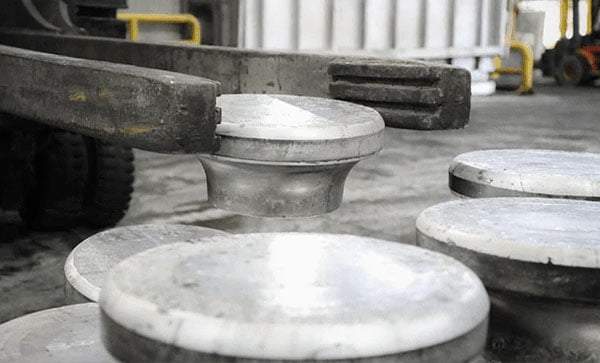
Understanding the steps involved in cold forging aluminum sheds light on how its unique benefits are achieved. This precision process requires careful control at every stage.
Material Selection and Preparation
The journey begins with selecting the appropriate aluminum alloy. Unlike hot forging, where billets can be relatively rough, the raw material for cold forging (often in the form of slugs or pre-formed blanks) must be precisely cut and meticulously cleaned to ensure optimal surface finish and to prevent defects. Lubrication is also critical at this stage; a specialized lubricant is applied to the blank and/or dies to reduce friction, prevent sticking, and promote smooth material flow during deformation. This ensures the integrity of the aluminum surface during cold forging aluminum.
The Forging Operation
The prepared aluminum blank is placed into a die cavity at room temperature. A punch then applies immense compressive force, forcing the material to flow and fill the die. This can be a single-stage process for simpler components or a multi-stage progressive process for more complex geometries, where the part moves through a series of dies to gradually achieve its final shape. Each stage incrementally deforms the aluminum, refining its grain structure and densifying the material. The precision of the dies is paramount, as they directly dictate the final part’s dimensions and surface finish during cold forging aluminum.
Post-Forging Operations
While cold forging aluminum produces near-net-shape parts with excellent surface finish, some post-forging operations may still be necessary to achieve final specifications or enhance properties.
- Annealing: Sometimes, intermediate annealing steps are required during multi-stage cold forging processes to relieve work hardening and restore ductility, allowing for further deformation without cracking. A final anneal might also be performed if the application requires specific ductility.
- Heat Treatment: While cold forging work hardens the material, some aluminum alloys can still benefit from subsequent solution treatment and aging (precipitation hardening) to further enhance strength and hardness beyond what cold working alone can provide.
- Trimming and Deburring: Excess material (flash) that flows out of the die cavity during forging is trimmed away. Any sharp edges or burrs are removed to ensure safe handling and proper fit in assemblies.
- Cleaning: Final cleaning processes may be used to remove residual lubricants or any minor contaminants from the surface of the cold forged aluminum component.
- Inspection: Rigorous quality control inspections, including dimensional checks, visual inspection, and potentially non-destructive testing (NDT) like eddy current testing for surface defects, are performed to ensure the components meet all specifications.
Cold Forging Aluminum vs. Other Manufacturing Methods: A Comparison
To highlight the unique position of cold forging aluminum, let’s compare it with other common methods for producing aluminum components.
| Feature / Method | Cold Forging Aluminum | Hot Forging Aluminum |
| Operating Temp. | Room Temp. | High Temp. (400-550°C) |
| Strength (Tensile/Yield) | Superior (Work Hardened) | Excellent (Grain Refined) |
| Surface Finish | Excellent (No Scale) | Good (Some Scale) |
| Dimensional Accuracy | Very High (Tight Tolerances) | High (Some Distortion) |
| Grain Structure | Refined, Aligned, Work Hardened | Refined, Aligned |
| Material Utilization | Very High (Near-Net) | High (Near-Net) |
| Fatigue Resistance | Excellent | Excellent |
| Energy Consumption | Lower (No heating) | Higher (Heating) |
| Tooling Cost | High | High |
| Typical Applications | Precision parts, high-strength brackets, automotive components, heat sinks | Large structural parts, complex shapes, aerospace components |
Industries Revolutionized by Cold Forging Aluminum
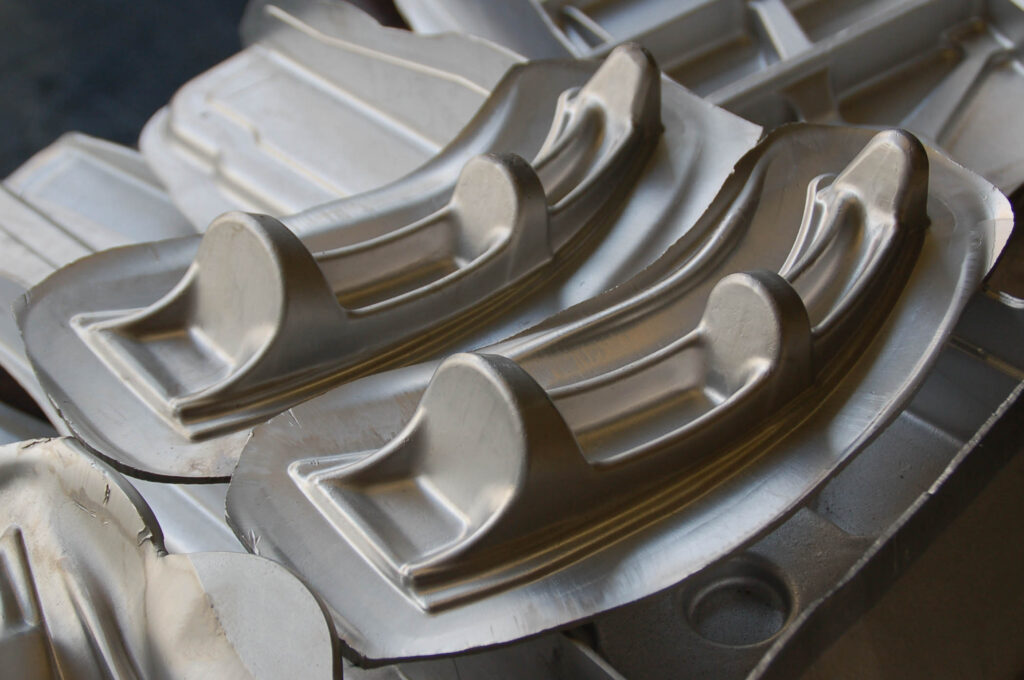
The distinct advantages of cold forging aluminum are proving transformative across various high-tech and demanding industries.
Automotive Industry
In the automotive sector, the drive for lightweighting to improve fuel efficiency and reduce emissions is relentless. Cold forging aluminum is ideal for producing components like suspension parts, brake system components, steering knuckles, and certain engine parts. The superior strength-to-weight ratio and enhanced fatigue resistance directly contribute to vehicle performance, safety, and longevity, while the near-net shape production helps reduce manufacturing costs.
Aerospace and Defense
While hot forging is prevalent for large aerospace components, cold forging aluminum is gaining traction for smaller, high-precision parts where dimensional accuracy and superior surface finish are crucial. These can include brackets, fittings, and electronic housings. The work-hardened strength and excellent fatigue resistance are vital for components operating under extreme conditions where reliability is non-negotiable. The inherent consistency of cold forged parts also aids in stringent quality control.
Electronics and Consumer Goods
The consumer electronics industry benefits greatly from the precision and excellent surface finish offered by cold forging aluminum. Components like heat sinks for high-performance processors, structural frames for smartphones, and various connectors can be produced with intricate details and tight tolerances. The lightweight nature of aluminum combined with the structural integrity from cold forging makes it suitable for portable and durable devices. The absence of scale also means less post-processing.
Medical Devices
For medical device manufacturing, sterility, precision, and biocompatibility are paramount. Cold forging aluminum can produce instrument handles, specialized casings, and structural components with the required precision and excellent surface quality. The ability to achieve complex shapes with superior material properties is a significant advantage in this highly regulated field.
LED Lighting and Heat Management
The demand for efficient heat dissipation in LED lighting fixtures and other electronic devices has made aluminum heat sinks a crucial component. Cold forging aluminum is an excellent method for producing complex heat sink geometries with high fin density, improving thermal conductivity and overall efficiency. The ability to create intricate designs at room temperature without thermal distortion is a key benefit for this application.
Qilu’s Commitment to Advanced Forging Technologies
At Qilu, our commitment to staying at the forefront of forging technology is unwavering. We recognize the profound benefits that advanced processes like cold forging aluminum offer our clients. Our substantial investments in state-of-the-art forging presses, ranging from 200 tons to 4000 tons, are designed to provide us with the versatility and capacity required to meet the most demanding specifications. We are equipped to handle a vast spectrum of project sizes, from intricate small parts weighing just 1 kilogram to massive industrial forgings exceeding 100,000 kilograms per piece. This extensive range ensures we can support diverse project scales and specifications, from prototypes to high-volume production runs.
Our dedication to unparalleled quality is embedded in every stage of our manufacturing process. We uphold rigorous quality control protocols, supported by advanced testing facilities that ensure every product consistently meets and often surpasses the highest industry standards for mechanical properties, dimensional accuracy, and structural integrity. At Qilu, we prioritize transparent and robust communication, ensuring our clients are fully informed and confident throughout their project lifecycle. With ample stock of various aluminum alloys and a highly efficient global distribution network, we pride ourselves on our ability to deliver orders swiftly and reliably, helping you to maintain your project schedules and remain within budget. Partnering with Qilu means choosing a supplier dedicated to precision, reliability, and delivering long-term value through cutting-edge forging solutions, including cold forging aluminum.
Conclusion
Cold forging aluminum is transforming modern manufacturing. It delivers superior strength, precision, surface finish, material efficiency, and fatigue resistance—all at room temperature. This makes it ideal for producing high-performance aluminum components across demanding industries.
Choosing an experienced cold forging partner is key to better product quality and a real competitive edge. Qilu offers precision-forged aluminum parts built to your exact needs. Contact us to see how our cold forging expertise can benefit your next project.
FAQ
What is the main difference between cold forging and hot forging aluminum?
The main difference lies in the temperature at which the process occurs. Cold forging aluminum is performed at or near room temperature, while hot forging involves heating the aluminum to high temperatures.Cold forging results in work hardening and a superior surface finish without scaling, while hot forging allows for greater deformation with less force.
How does cold forging aluminum improve mechanical properties?
Cold forging aluminum improves mechanical properties primarily through work hardening (strain hardening). The plastic deformation at lower temperatures refines and elongates the grain structure, increasing the aluminum’s tensile strength, yield strength, and hardness, leading to a stronger and more durable component.
Does cold forging aluminum always result in a perfect surface finish?
Cold forging aluminum generally produces an excellent surface finish due to the absence of oxide scale formation (which occurs at high temperatures) and the high precision of the dies. While it’s often ready for assembly, minor post-forging operations like deburring or cleaning might still be required depending on the specific application’s requirements.
Is cold forging aluminum suitable for all types of aluminum alloys?
While many aluminum alloys can be cold forged, some are more suitable than others due to their ductility and work-hardening characteristics. Specific alloy selection depends on the desired final properties and formability requirements.
Can Qilu provide custom cold forged aluminum components?
Yes, Qilu specializes in manufacturing high-quality custom forgings, including those produced through advanced processes like cold forging aluminum. Our extensive range of forging equipment (200 tons to 4000 tons) and production capacity (1 to over 100,000 pieces) enable us to produce precision-engineered components tailored to highly specific designs, material requirements, and performance needs for diverse applications.