Shandong Qilu lndustrial Co.,Ltd.

Choosing Quality Carbon Steel Forgings for Your Projects
Welcome to My Blog!
Before we dive into the content, I’d love for you to join me on my social media platforms where I share more insights, engage with the community, and post updates. Here’s how you can connect with me:
Facebook:https://www.facebook.com/profile.php?id=100090903441806
Now, let’s get started on our journey together. I hope you find the content here insightful, engaging, and valuable.
Table of Contents
Introduction
With so many choices out there, how can you be sure you’re picking the best carbon steel forgings for your project? In today’s tough manufacturing world, getting the right materials is key to a project’s success and lifespan. Carbon steel forgings are known for their incredible strength, durability, and flexibility, making them a top choice. No matter if you’re making car parts, heavy machinery, or building structures, using high-quality carbon steel forgings can really boost how well your products perform and how long they last.
This guide will help engineers, buyers, and project managers understand what to look for when choosing carbon steel forgings, covering material types, forging methods, quality rules, and different uses to help you make smart decisions for great results.
What Are Carbon Steel Forgings?
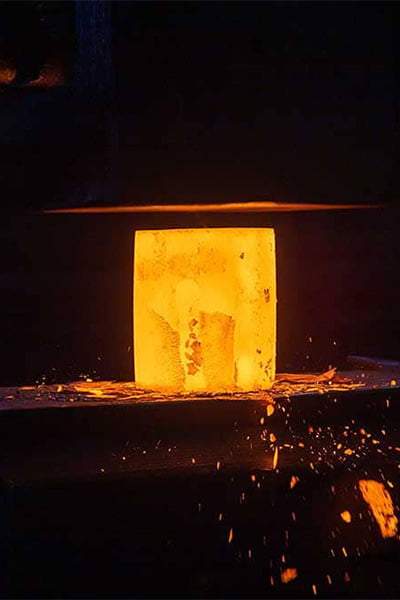
Carbon steel forgings are metal components formed by deforming carbon steel under high pressure, usually through hammering or pressing. This process refines the grain structure of the steel, improving its mechanical properties, such as strength, toughness, and fatigue resistance. Unlike castings or machined parts, forgings have superior structural integrity due to their dense, uniform grain flow.
Benefits of Carbon Steel Forgings
- Enhanced mechanical strength and toughness
- Improved fatigue resistance and durability
- Superior dimensional stability and reliability
- Greater impact resistance and reduced porosity
Key Factors to Consider When Choosing Carbon Steel Forgings
Choosing the right carbon steel forging requires attention to several critical factors:
1. Material Grade and Composition
Carbon steel comes in various grades depending on carbon content and alloying elements. Common grades used in forgings include low carbon steel (e.g., AISI 1018), medium carbon steel (e.g., AISI 1045), and high carbon steel (e.g., AISI 1095). The choice depends on your application requirements:
- Low Carbon Steel: Excellent machinability and weldability, ideal for components needing moderate strength.
- Medium Carbon Steel: Balanced strength and toughness, suited for shafts and gears.
- High Carbon Steel: High hardness and wear resistance, used for cutting tools and heavy-duty parts.
2. Forging Process Type
Different forging methods affect the final product’s characteristics:
- Open Die Forging: Flexible and economical for large, simple shapes.
- Closed Die Forging: Offers precision and repeatability for complex shapes.
- Ring Rolling: Produces seamless rings with excellent structural integrity.
3. Heat Treatment
Proper heat treatment enhances mechanical properties. Processes such as annealing, quenching, and tempering can be tailored to improve hardness, ductility, or toughness, depending on project demands.
4. Quality Standards and Certifications
Ensure your supplier adheres to relevant quality standards like ASTM, ISO, or API. Certifications guarantee that the forgings meet industry benchmarks for chemical composition, mechanical properties, and inspection protocols.
Common Applications of Carbon Steel Forgings
Carbon steel forgings find use in diverse industries due to their strength and reliability:
- Automotive and aerospace components
- Oil and gas pipeline flanges and fittings
- Heavy machinery parts like shafts and gears
- Construction and infrastructure elements
Understanding your application helps in choosing the correct forging type and material grade for optimal performance.
Comparison of Forging Methods and Their Features
To better understand which forging method suits your project, refer to the table below summarizing common forging processes and their characteristics:
| Forging Method | Typical Product Shapes | Advantages | Ideal Applications | Cost Implications |
|---|---|---|---|---|
| Open Die Forging | Simple shapes like bars, rods | Flexible for large parts, low tooling cost | Large shafts, basic components | Moderate cost, suitable for low volume |
| Closed Die Forging | Complex shapes like gears, flanges | High precision, repeatability | Automotive parts, aerospace components | Higher tooling cost, good for mass production |
| Ring Rolling | Seamless rings and flanges | Superior strength and grain flow | Pipeline flanges, bearing rings | Higher production cost, specialized |
This comparison helps you match your project needs with the most suitable forging method, balancing performance, complexity, and cost.
Why Choose Qilu for Your Carbon Steel Forgings?

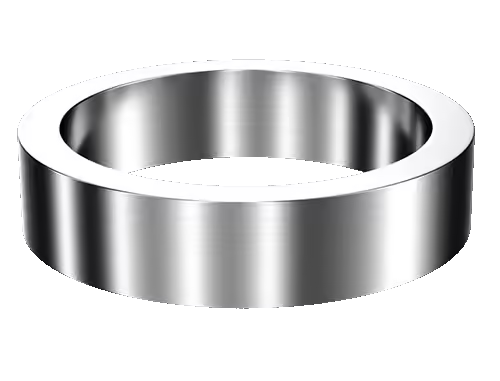
At Qilu, we bring decades of expertise in producing high-quality carbon steel forgings tailored to demanding applications. Our investment in advanced forging presses from 200 tons to 4000 tons allows us to manufacture everything from small precision shaft forgings to large, heavy-duty ring forgings and disc forgings.
Our stringent quality assurance processes, including material testing, dimensional inspection, and metallurgical analysis, ensure every piece meets or exceeds international standards. Additionally, our extensive inventory and global distribution network mean your orders can be delivered swiftly, supporting your project timelines without compromise.
Conclusion
Selecting the right carbon steel forgings ensures your components meet high-performance demands with lasting reliability. Qilu supports this with advanced technology, strict quality standards, and responsive service—making us a dependable partner for your forging solutions.
Contact us today to discuss your project requirements and experience the difference of working with a leading carbon steel forgings manufacturer. Let Qilu help you build stronger, more durable products that stand the test of time.
FAQ
What is the difference between forged carbon steel and cast steel?
Forged carbon steel is produced by deforming steel under pressure, leading to a refined grain structure and superior mechanical properties. Cast steel is formed by pouring molten metal into molds and cooling it, which can result in porosity and less uniformity.
How do I select the right carbon steel grade for my forging?
Consider the mechanical properties required for your application, such as strength, toughness, and wear resistance. Low carbon steel is good for weldability and machining, while medium and high carbon steels offer higher strength and hardness.
Can Qilu handle custom forging specifications?
Yes, Qilu specializes in custom forgings including shaft forgings, ring forgings, and disc forgings tailored to your project needs. We offer comprehensive support from design to delivery.
What quality standards does Qilu follow?
We adhere to ASTM, ISO, and API standards among others, ensuring our products meet international benchmarks for quality and reliability.