Shandong Qilu lndustrial Co.,Ltd.

How to Choose the Right Steel Pipe Flanges
Welcome to My Blog!
Before we dive into the content, I’d love for you to join me on my social media platforms where I share more insights, engage with the community, and post updates. Here’s how you can connect with me:
Facebook:https://www.facebook.com/profile.php?id=100090903441806
Now, let’s get started on our journey together. I hope you find the content here insightful, engaging, and valuable.
Table of Contents
Introduction
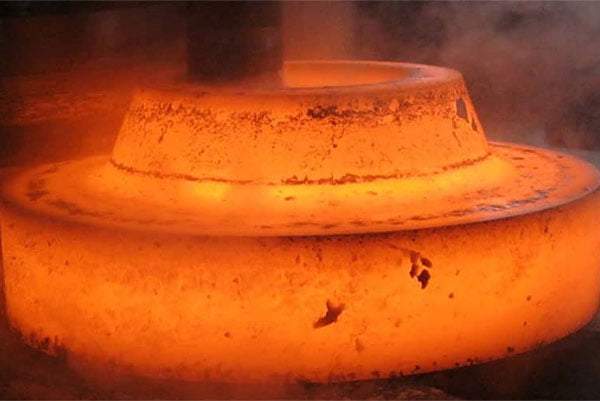
Steel pipe flanges are critical components in a wide range of industries—oil and gas, chemical processing, power generation, shipbuilding, and heavy machinery to name just a few. But not all steel pipe flanges are created equal. Selecting the right flange is essential for ensuring the long-term strength, safety, and efficiency of your piping system. The wrong choice could lead to leakage, pressure failure, or costly downtime.
In this guide, you’ll learn how to properly select steel pipe flanges that meet your project’s demands while guaranteeing durability and reliability. Whether you’re sourcing flanges for high-pressure applications or general-purpose pipelines, this article is designed to help you make an informed decision.
Understanding Steel Pipe Flanges: What They Are and Why They Matter
Before diving into selection tips, let’s start with the basics. Steel pipe flanges are forged components used to connect pipes, valves, pumps, and other equipment. These flanges create sealed joints that can handle both low- and high-pressure flows.
Flanges are made from high-quality forged steel through processes like open die forging, ring rolling, and upset forging to ensure superior strength and toughness. A reliable flange should exhibit excellent mechanical performance, corrosion resistance, and dimensional stability.
Key Functions of Steel Pipe Flanges:
- Connection: Allowing pipes and components to be assembled and disassembled with ease.
- Strengthening: Providing structural support in high-pressure environments.
- Sealing: Ensuring tight, leak-proof joints that maintain system integrity.
- Alignment: Enabling precise connection and orientation of pipeline components.
Factors to Consider When Selecting Steel Pipe Flanges
Choosing the right steel pipe flanges requires careful consideration of several factors that affect performance, reliability, and safety. Below are the most important elements to guide your selection process.
1. Material Grade of Steel Pipe Flanges
The material composition of the flange is crucial. Different environments—like corrosive chemical plants or offshore oil platforms—demand different steel grades such as carbon steel, stainless steel, or alloy steel. Each offers unique benefits in strength, corrosion resistance, and temperature tolerance.
- Carbon Steel Flanges: Suitable for moderate-temperature, non-corrosive environments.
- Stainless Steel Flanges: Ideal for corrosive or high-temperature applications.
- Alloy Steel Flanges: Used in highly demanding conditions such as high-pressure or extreme temperatures.
2. Flange Types Based on Application
Steel pipe flanges come in various designs, each tailored to specific pipeline needs:
- Weld Neck Flanges: Excellent for high-pressure applications.
- Slip-On Flanges: Easy to install, ideal for low-pressure systems.
- Blind Flanges: Used to seal pipe ends.
- Socket Weld Flanges: Best for small-diameter, high-pressure piping.
- Threaded Flanges: Suitable for low-pressure applications where welding isn’t possible.
3. Pressure Class Ratings for Steel Pipe Flanges
Each steel pipe flange is rated according to its pressure handling capacity (measured in classes like 150, 300, 600, 900, etc.). Choosing the correct class ensures safety and prevents system failures.
| Flange Type | Material Options | Pressure Class (Common) | Best Application |
|---|---|---|---|
| Weld Neck | Carbon, Stainless, Alloy | 150, 300, 600, 900, 1500 | High-pressure, high-temperature pipelines |
| Slip-On | Carbon, Stainless | 150, 300 | Low-pressure pipelines |
| Blind | Carbon, Stainless, Alloy | 150, 300, 600, 900 | Pipe termination, inspection points |
| Socket Weld | Carbon, Alloy | 300, 600, 900 | Small pipe diameters, high pressure |
| Threaded | Carbon, Stainless | 150, 300 | Low-pressure, no-weld applications |
4. Dimensional Accuracy and Tolerance
Precision matters. Reliable steel pipe flanges must meet exact dimensional tolerances to ensure seamless connection and avoid stress concentration points that could lead to cracking or leakage. Always verify flange dimensions as per relevant standards such as ASME, DIN, or JIS.
5. Surface Finish and Coating
A high-quality surface finish enhances corrosion resistance and reduces the risk of flange face damage during installation. Some applications require additional coatings (like zinc or anti-corrosion paints) for extended service life.
Importance of Quality Forging in Steel Pipe Flanges
Why emphasize forging quality? The forging process directly impacts the mechanical properties of steel pipe flanges. High-quality forged flanges exhibit:
- Superior Grain Flow: Enhances tensile strength and fatigue resistance.
- Uniform Density: Prevents internal voids or cracks.
- Consistent Metallurgical Properties: Critical for high-stress environments.
- Improved Toughness: Necessary for shock or vibration-heavy applications.
Always select flanges produced with controlled forging techniques such as open die forging or ring rolling to ensure these benefits.
Common Mistakes to Avoid When Choosing Steel Pipe Flanges
Even seasoned engineers make mistakes when selecting steel pipe flanges. Avoid these pitfalls:
- Overlooking Pressure Class Ratings: Using a lower-class flange in a high-pressure system risks failure.
- Ignoring Material Compatibility: Mismatched materials can cause galvanic corrosion.
- Neglecting Dimensional Verification: Leads to improper fitting and leaks.
- Choosing Based on Price Alone: Lower-cost flanges may compromise on quality, risking safety and reliability.
- Disregarding Forging Standards: Poor forging results in weak mechanical properties and potential system breakdown.
How to Verify the Quality of Steel Pipe Flanges
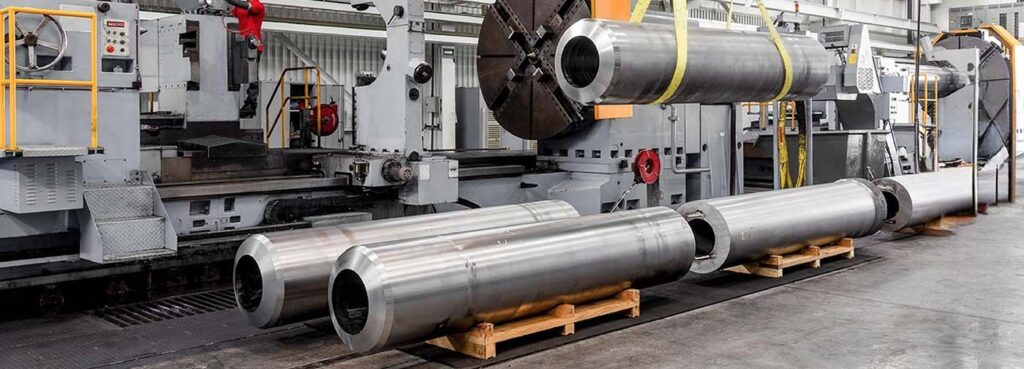
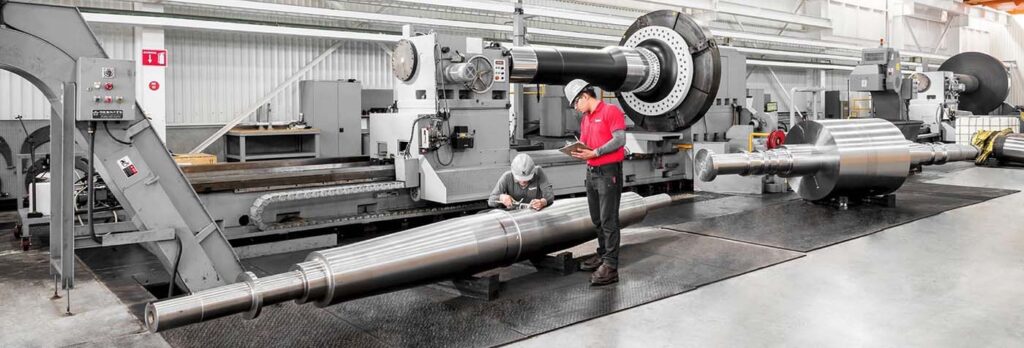
It’s not enough to trust the label. Here’s how to confirm you’re getting the right quality:
- Check Material Test Certificates (MTC): Ensure full traceability.
- Inspect Forging Quality: Look for uniform grain structure and absence of surface cracks.
- Verify Compliance with International Standards: ASME B16.5, DIN EN 1092-1, JIS B2220, etc.
- Request Dimensional Inspection Reports: Confirm tolerances are within allowable limits.
- Ensure NDT (Non-Destructive Testing) Reports are Available: Detect internal flaws.
Conclusion
Steel pipe flanges are more than simple connectors—they are crucial for the efficiency, safety, and durability of your piping systems. Whether you’re dealing with extreme temperatures, high pressures, or corrosive environments, making an informed choice will save you time, cost, and potential system failure.
Remember to focus on key factors like material grade, flange type, pressure class, forging quality, and dimensional accuracy. Cutting corners on any of these can seriously compromise your entire system’s performance. By following this guide, you’ll be better equipped to select steel pipe flanges that deliver lasting reliability and safety.
FAQ
What is the most commonly used type of steel pipe flange?
Weld neck flanges are among the most widely used due to their strength and ability to handle high-pressure applications. Slip-on flanges are popular for less demanding systems.
How do I determine the correct pressure class for steel pipe flanges?
The pressure class depends on the maximum operating pressure and temperature of your system. Always refer to relevant piping standards and consult with your engineer.
Can I mix different types of steel pipe flanges in the same system?
It is technically possible but generally not recommended unless designed by a qualified engineer. Different flanges have varied stress-handling capacities and dimensional characteristics.
What role does forging play in steel pipe flange quality?
Forging ensures superior grain structure, mechanical strength, and resistance to fatigue and impact. High-quality forging is essential for reliable and safe flange performance.