Shandong Qilu lndustrial Co.,Ltd.

Cost-Effective Upset Forging Solutions
Welcome to My Blog!
Before we dive into the content, I’d love for you to join me on my social media platforms where I share more insights, engage with the community, and post updates. Here’s how you can connect with me:
Facebook:https://www.facebook.com/profile.php?id=100090903441806
Now, let’s get started on our journey together. I hope you find the content here insightful, engaging, and valuable.
Table of Contents
Introduction
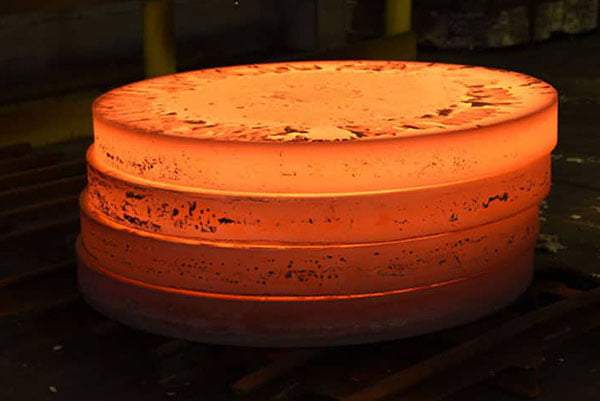
In today’s fast-paced industrial world, reliability, strength, and cost-efficiency are critical when selecting forged components. Whether you’re building shafts, rings, or discs for heavy machinery or precision parts for specialized applications, one process stands out for delivering exceptional results — upset forging.
But what exactly is upset forging? How does it provide a competitive edge in quality and performance without breaking your budget? This guide will walk you through everything you need to know about upset forging solutions, from the basics to its unmatched benefits in forging production.
What is Upset Forging? A Simple Yet Powerful Technique
At its core, precision forging is a specialized metal forming process where the length of the metal part is reduced while its cross-section is increased by applying compressive force. This process is commonly used to create high-strength parts such as shafts, bolts, rings, and discs — all essential in industries demanding extreme performance and durability.
The beauty of precision forging lies in its simplicity and versatility. By focusing the deformation in specific areas, manufacturers can create custom geometries that suit various applications without the material waste typical in other metal forming methods.
Key Benefits of precision forging:
- Improved Material Strength: The process aligns the grain structure, significantly enhancing fatigue resistance.
- Cost Savings: Minimal material waste compared to machining or casting methods.
- Design Flexibility: Suitable for producing parts in various sizes, from small precision components to large industrial forgings.
- Superior Reliability: Ensures consistent quality and dimensional accuracy.
How Upset Forging Enhances Quality and Reliability
1. Grain Flow Optimization
Upset forging naturally refines the metal’s internal grain structure. Unlike welding or casting, where grains can break or misalign, precision forging preserves the material’s integrity. This results in components with increased mechanical strength and excellent resistance to stress and impact — perfect for critical applications where failure is not an option.
2. Dimensional Precision
The process enables precise control over the part’s geometry, offering exceptional dimensional stability, which is vital for complex designs such as stepped shafts or thick-walled rings. Advanced CNC-controlled upset forging machines ensure consistent results across both small and large production batches.
3. Fatigue and Wear Resistance
Upset forged components outperform others in applications subjected to cyclical loads, thanks to their improved fatigue strength. This makes precision forging ideal for parts like axle shafts, spindles, and connecting rods — all expected to withstand millions of stress cycles without degradation.
Applications of precision forging Across Industries
Upset forging is not limited to a single sector. Its flexibility and reliability make it the preferred method for producing components across multiple industries:
- Automotive: Steering knuckles, crankshafts, axle shafts.
- Aerospace: Landing gear shafts, fasteners.
- Construction: Heavy-duty machine parts, hydraulic cylinders.
- Energy: Turbine shafts, pipeline connectors.
- Agricultural Machinery: Spindles, rotary shafts.
Whether the need is for high-load endurance or complex geometrical shapes, precision forging offers consistent, cost-effective results that meet stringent industrial demands.
Upset Forging vs. Other Forging Techniques: A Quick Comparison
Here’s a comparative look at how precision forging measures up against other common forging processes:
| Feature | Upset Forging | Open Die Forging | Closed Die Forging | Casting |
|---|---|---|---|---|
| Material Utilization | High | Medium | High | Low |
| Dimensional Accuracy | Excellent | Moderate | Excellent | Poor |
| Grain Structure Optimization | Superior | Good | Good | Poor |
| Suitable for Complex Geometries | Very Good | Limited | Very Good | Excellent |
| Production Speed | Fast | Slow | Fast | Moderate |
| Best For | Shafts, Discs, Rings | Large Simple Parts | Small Complex Parts | Non-critical Parts |
As seen in the table, precision forging balances speed, precision, and cost better than most other metal-forming methods, especially when shaft or disc-type components are required.
The Role of Advanced Equipment in precision forging Quality
A critical factor in the success of precision forging is the availability of advanced machinery capable of delivering consistent force and precision. Forging presses ranging from 200 tons to 4000 tons enable manufacturers to handle a vast size range — from tiny bolts to large industrial shafts.
Moreover, high-end inspection facilities like ultrasonic testing, hardness testing, and dimensional verification ensure each part meets international quality standards before delivery. This comprehensive approach eliminates defects, reduces failure rates, and enhances customer confidence.
Factors to Consider When Choosing Upset Forging for Your Project
When considering precision forging for your components, keep these crucial points in mind:
1. Material Selection
Certain metals respond better to precision forging — carbon steels, alloy steels, stainless steels, and some non-ferrous alloys are especially suited.
2. Size and Shape Requirements
Upset forging excels at producing symmetrical parts, such as shafts and rings. However, extremely intricate parts may benefit more from closed die forging.
3. Production Volume
For high-volume orders, precision forging offers significant cost savings per piece, making it an excellent solution for both mass production and prototyping.
Why Upset Forging Is a Cost-Effective Solution
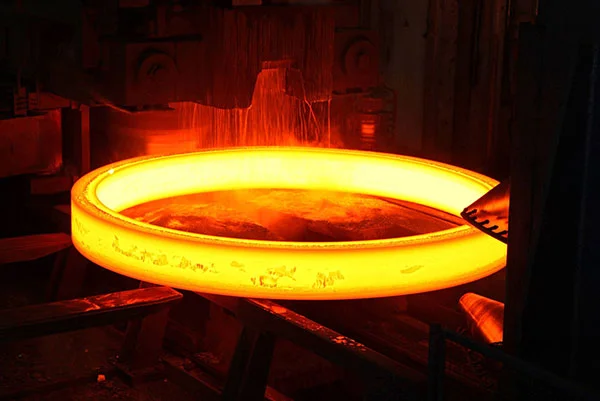
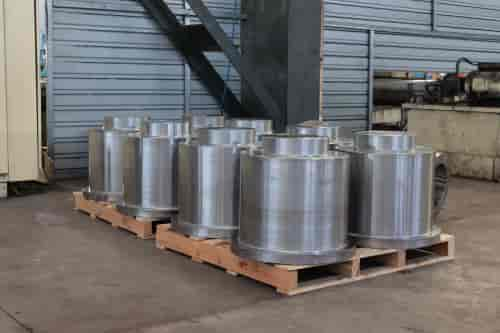
If cost reduction without sacrificing quality is your goal, precision forging is a smart choice. The process reduces material waste, lowers machining time, and ensures parts last longer in operation, thus cutting replacement and maintenance costs over time. When the total lifecycle of a part is considered — not just its upfront manufacturing cost — upset forging often proves to be the most economical method.
Conclusion
In an era where performance, reliability, and efficiency are king, upset forging offers manufacturers a powerful tool to meet rising demands. Its unmatched ability to produce strong, precise, and cost-effective metal components ensures it remains a cornerstone of modern metal forming technologies.
If your project requires forged components that must meet rigorous standards of durability and reliability — all without unnecessary expenses — upset forging stands out as the ideal solution.
FAQ
What materials are best suited for upset forging?
Carbon steel, alloy steel, stainless steel, and some aluminum and copper alloys perform exceptionally well in precision forging processes.
Can upset forging handle large-sized components?
Yes, precision forging can produce parts ranging from small bolts to large shafts, depending on the tonnage of the forging equipment used.
Is upset forging more cost-effective than machining from solid bar?
Absolutely. precision forging reduces material waste, machining time, and energy consumption compared to full bar machining, making it a more affordable option in the long run.
What industries most commonly use upset forged parts?
Automotive, aerospace, construction, energy, and agricultural machinery industries frequently rely on upset forged components for their critical strength and durability needs.