Shandong Qilu lndustrial Co.,Ltd.

Precision Forging: Forging Temperature of Steel
Welcome to My Blog!
Before we dive into the content, I’d love for you to join me on my social media platforms where I share more insights, engage with the community, and post updates. Here’s how you can connect with me:
Facebook:https://www.facebook.com/profile.php?id=100090903441806
Now, let’s get started on our journey together. I hope you find the content here insightful, engaging, and valuable.
Table of Contents
Introduction

For anyone in metal forging, understanding the forging temperature of steel is critical. Precise temperature control during the forging process is essential for producing reliable, durable, and high-performance components. Steel’s behavior and the resulting mechanical properties of forged parts, from shafts to custom shapes, are profoundly influenced by its temperature during forging.
This comprehensive guide will explore why temperature matters, detail ideal forging temperature ranges for various steel types, discuss how these temperatures impact mechanical properties, and provide practical considerations for those working with steel forgings.
Why Forging Temperature of Steel is Crucial in Precision Forging
Temperature is the heart of forging. Why? Because the forging temperature of steel directly influences:
- Grain structure
- Mechanical strength
- Surface integrity
- Dimensional accuracy
- Tool life and wear
Steel that is forged at the wrong temperature can crack, warp, or suffer from internal defects that dramatically reduce its reliability and lifespan. For industries demanding the highest quality—like aerospace, oil & gas, automotive, and heavy machinery—getting this temperature right is non-negotiable.
Let’s break down how temperature plays a role in the forging of various steel types.
Forging Temperature Ranges for Different Steel Grades
Each steel type has an optimal forging temperature range. These ranges ensure the metal remains ductile enough for deformation without losing its strength or developing flaws.
Here is a detailed table for reference:
| Steel Grade | Recommended Forging Temperature Range (°C) | Special Notes |
|---|---|---|
| Carbon Steel (Low) | 1150–1250 | Cool below 850°C to avoid cracking. |
| Medium Carbon Steel | 1100–1200 | Requires gradual heating and cooling. |
| High Carbon Steel | 1050–1150 | Risk of cracking if overcooled too fast. |
| Alloy Steel | 1050–1200 | Ensure uniform heating to prevent grain growth. |
| Stainless Steel (Austenitic) | 1100–1250 | High temperatures needed to maintain ductility. |
| Tool Steel | 950–1100 | Controlled cooling essential to avoid distortion. |
Notes:
- Preheating is important to prevent thermal shock.
- Post-forging cooling (normalizing, annealing) affects final properties.
- Avoid forging below the recrystallization temperature to prevent cold working effects.
Knowing these ranges helps ensure that every shaft, ring, or disc forging maintains its intended mechanical properties.
Factors Affecting the Forging Temperature of Steel
Several factors influence the forging temperature of steel, even beyond the grade itself. If you want consistent quality, here’s what to consider:
1. Steel Composition
The chemical makeup of the steel dictates its forging behavior. For example, alloy elements like chromium, molybdenum, and vanadium increase the temperature requirements due to their effect on hardenability.
2. Workpiece Size and Shape
Larger or more complex forgings (such as heavy rings or intricate shafts) may need higher or more controlled temperatures to ensure even heat distribution.
3. Equipment Capability
Hydraulic presses, hammers, and forging machines must be capable of maintaining temperature consistency. Insufficient heating power or uneven thermal gradients lead to defects such as improper grain flow or voids.
4. Forging Method
- Open Die Forging: Requires tight temperature control to ensure grain flow.
- Closed Die Forging: Needs precise temperature ranges for dimensional accuracy.
5. Cooling Rate Post-Forging
Cooling steel too quickly or too slowly alters its hardness, brittleness, and strength. The right balance ensures that forged shafts, rings, or discs meet required specifications.
Common Mistakes to Avoid in Steel Forging Temperature Control
Even experienced forgers can slip up when it comes to temperature management. Avoid these pitfalls:
1. Overheating the Steel
Going beyond the recommended forging temperature of steel leads to excessive grain growth, resulting in brittleness and reduced fatigue strength.
2. Insufficient Preheating
Forging steel below the lower temperature limit causes cracking, work hardening, and even complete rejection of forged parts.
3. Uneven Heating
Especially with large forgings, temperature variation across the workpiece can create internal stresses and dimensional inaccuracies.
4. Ignoring Reheating Needs
For long forging processes, reheating between stages is necessary to keep the material within the forging temperature window.
Best Practices for Maintaining Optimal Forging Temperature of Steel
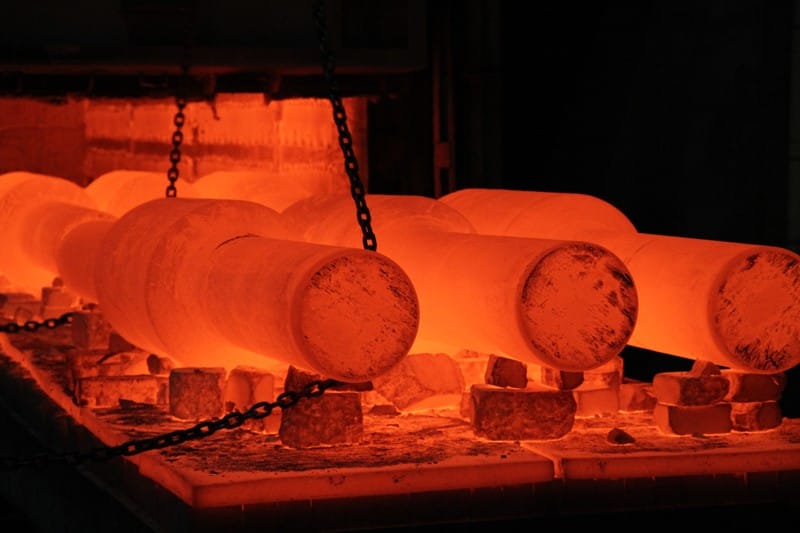
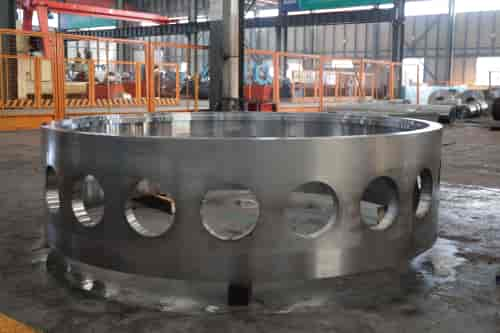
To produce consistent, high-quality forgings such as shafts, discs, and rings, it’s essential to follow these professional best practices:
- Use advanced temperature monitoring systems (e.g., thermocouples, infrared sensors).
- Apply controlled, gradual heating to avoid thermal shock.
- Employ uniform heating in furnaces to eliminate cold zones.
- Schedule timely re-heats for multi-stage forging operations.
- Adopt post-forging heat treatments like normalizing, quenching, or tempering based on end-use requirements.
Following these measures ensures that your steel forgings meet or exceed mechanical and dimensional standards.
Conclusion
Mastering the forging temperature of steel is crucial for producing high-quality, reliable forged components like shafts, rings, and discs. Temperature consistency directly ensures optimal mechanical performance and structural integrity. Ignoring or mishandling these temperatures can lead to costly defects and part failures.
By investing in proper equipment, training, and robust quality control, you can easily minimize these risks. Understanding and controlling forging temperatures will significantly pay off in terms of superior product performance, enhanced customer satisfaction, and sustained long-term business success.
Ready to elevate your forging process? Contact us today to explore solutions that ensure precise temperature control and unmatched product quality!
FAQ
Why is controlling the forging temperature of steel so important?
It ensures steel stays ductile and deformable while preventing defects such as cracking, warping, or undesirable grain growth. Quality forgings depend on precise temperature management.
Can different steel grades be forged at the same temperature?
No. Each steel grade requires its own temperature range based on its chemical composition and intended mechanical properties. Always refer to specific material guidelines.
What happens if steel is forged below its recommended temperature?
The steel may become brittle, crack during deformation, or exhibit poor mechanical properties in the final part.
Is post-forging heat treatment necessary for all steel forgings?
Yes, in most cases. Processes like annealing or tempering help relieve internal stresses and fine-tune hardness, toughness, and strength characteristics.
How can I monitor the forging temperature of steel effectively during production?
Use contact or non-contact sensors (like thermocouples or infrared devices) along with modern furnace control systems to ensure consistent and accurate temperature management.