Shandong Qilu lndustrial Co.,Ltd.

Manufacturer’s Choice: Cast vs Forged Steel
Welcome to My Blog!
Before we dive into the content, I’d love for you to join me on my social media platforms where I share more insights, engage with the community, and post updates. Here’s how you can connect with me:
Facebook:https://www.facebook.com/profile.php?id=100090903441806
Now, let’s get started on our journey together. I hope you find the content here insightful, engaging, and valuable.
Table of Contents
Introduction
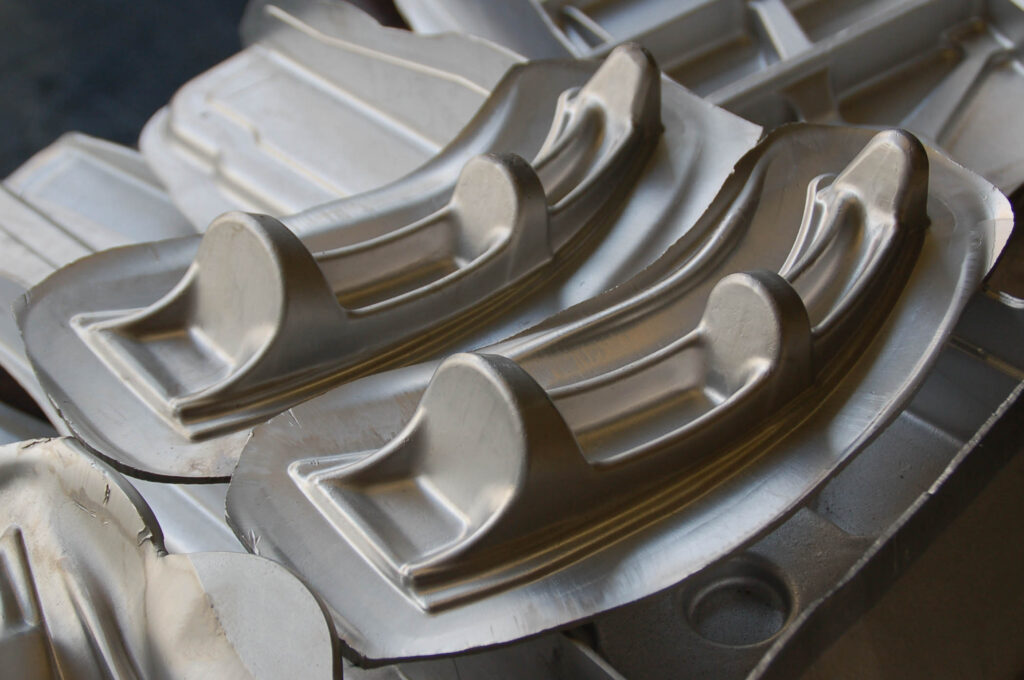
If you’re in the metalworking, manufacturing, or heavy equipment industries, you’ve probably faced the classic dilemma: cast vs forged steel—which is better for your application?
Understanding the differences isn’t just academic—it directly impacts the performance, durability, and reliability of your components. Whether you’re sourcing components like shafts, rings, or discs, making the right decision betweencast vs forged steel can save you from costly downtime and safety risks.
In this guide, we’ll break down the technical, mechanical, and practical aspects of cast vs forged steel. We’ll help you make informed decisions, with a clear breakdown of when and why to choose one over the other. Let’s get into it.
What is Cast Steel?
The Casting Process: Strengths and Limitations
Cast steel is produced by melting steel and pouring it into molds, where it cools and solidifies into shape. This allows manufacturers to create complex geometries with tight dimensional tolerances.
Advantages of cast steel:
- Ideal for intricate shapes and designs
- Lower tooling costs for short runs
- Excellent wear resistance with alloy modifications
- Suitable for components with low to moderate mechanical stress
Common uses: pump housings, valve bodies, gearboxes, decorative components
However, casting comes with certain drawbacks. Impurities, shrinkage cavities, and porosity are common issues that can impact fatigue strength. Additionally, the grain structure in cast steel is less refined compared to forged steel, reducing overall toughness.
What is Forged Steel?
The Forging Process: Precision and Power
Forged steel is created by applying compressive force to a heated billet or ingot, shaping it into the desired form through hammering, pressing, or rolling. This mechanical working refines the grain structure and aligns it with the shape of the part.
Advantages of forged steel:
- Superior strength and fatigue resistance
- Excellent impact toughness
- Dense, defect-free microstructure
- Uniform grain flow increases reliability under stress
Common uses: crankshafts, spindles, gear blanks, axles, ring components
Forging is especially suited for parts exposed to dynamic loads, high pressure, or extreme environments. While it can be more costly for complex geometries, it offers unmatched durability.
Cast vs Forged Steel: Key Differences and Applications
Let’s look at a side-by-side comparison to highlight the differences that matter most to manufacturers and engineers:
| Feature | Cast Steel | Forged Steel |
|---|---|---|
| Manufacturing Process | Melting and pouring into molds | Heated and shaped by compression |
| Grain Structure | Random, less refined | Aligned, continuous grain flow |
| Mechanical Strength | Moderate | High |
| Fatigue Resistance | Lower | Superior |
| Dimensional Complexity | Excellent for complex shapes | Limited without machining |
| Toughness and Impact Strength | Lower, more brittle | High resistance to shock and stress |
| Defect Risk (Porosity, Voids) | Higher risk | Very low |
| Tooling Costs (Short Run) | Lower | Higher |
| Material Utilization | Better for small batch precision parts | Better for mass production durability |
| Common Uses | Housings, valves, aesthetic parts | Shafts, rings, structural load parts |
Mechanical Properties Comparison
When you’re comparing cast vs forged steel from a mechanical standpoint, the most notable differences lie in tensile strength, ductility, and fatigue life.
- Tensile strength: Forged steel components typically exhibit higher tensile strength due to the continuous grain flow and absence of porosity.
- Fatigue life: Forging greatly enhances fatigue resistance—critical for rotating and load-bearing components.
- Ductility: While cast steel can be more ductile in specific alloy compositions, forging generally improves both ductility and toughness.
These factors are especially important in sectors like automotive, aerospace, and heavy machinery where failure isn’t an option.
When Should You Choose Forged Steel?
You should consider forged steel if your part will:
- Experience high mechanical loads or dynamic stress
- Be used in critical safety applications
- Require high impact resistance and long service life
- Be produced in high volumes where strength and durability outweigh design complexity
Forged steel excels in reliability. Shafts, spindles, rings, discs—any part that will be under constant stress—benefit significantly from the forging process.
When Should You Choose Forged Steel?
You should consider forged steel if your part will:
- Experience high mechanical loads or dynamic stress
- Be used in critical safety applications
- Require high impact resistance and long service life
- Be produced in high volumes where strength and durability outweigh design complexity
Forged steel excels in reliability. Shafts, spindles, rings, discs—any part that will be under constant stress—benefit significantly from the forging process.
Misconceptions About Cast vs Forged Steel
Some assume casting is outdated or always inferior—but that’s a simplification. Modern casting techniques have improved dramatically, allowing for tighter control over metallurgical quality. That said, forging still holds the upper hand in high-performance applications.
Another myth is that forged parts are always more expensive. While initial tooling costs may be higher, forged steel’s longevity often offsets the cost in total life cycle value.
Testing, Certification, and Quality Control
For critical industries, traceability and quality assurance are essential. Forged steel components typically undergo:
- Ultrasonic testing (UT)
- Magnetic particle inspection (MPI)
- Tensile and impact testing
While casting also requires NDT (Non-Destructive Testing), forged components are less prone to internal defects, making inspections more straightforward and predictable.
Whether forging or casting, certification standards such as ISO, ASTM, and ASME ensure component compliance with global quality benchmarks.
Environmental and Economic Considerations
Forging processes often result in less material waste and a lower carbon footprint over time due to longer part life. That said, casting can be more energy-efficient in low-volume production. The choice between cast vs forged steel isn’t just about performance—it also involves considering long-term sustainability and total cost of ownership.
Conclusion
So—cast vs forged steel, who wins?
It depends.
If your priority is mechanical strength, fatigue resistance, and long-term durability, forged steel is the better choice. For components with complex geometries, moderate mechanical demand, and precision detail, cast steel can be the more efficient route.
There’s no universal answer, but there is a best fit for your application. Consider performance requirements, production volume, cost, and lifecycle expectations before making your decision.
FAQ
Is forged steel always stronger than cast steel?
Yes, forged steel generally has higher tensile strength, impact resistance, and fatigue life due to its refined grain structure.
Can cast vs forged steel be used for load-bearing parts?
Yes, but it must be carefully designed and inspected. For high-stress or safety-critical components, forged steel is typically preferred.
Which is more cost-effective, cast vs forged steel?
It depends on the quantity and complexity of the part. Casting may be more cost-effective for small runs and intricate shapes; forging pays off in performance and lifecycle for high-stress parts.
Are there quality differences between modern cast vs forged steel?
Yes. While modern casting has improved, forging still offers better consistency in mechanical properties and fewer internal defects.
How do I decide which method is right for my application?
Evaluate your needs in terms of strength, geometry, volume, and reliability. Consult with your metal component supplier to choose the optimal process.