Shandong Qilu lndustrial Co.,Ltd.

High-Performance Aerospace Forgings Guide
Welcome to My Blog!
Before we dive into the content, I’d love for you to join me on my social media platforms where I share more insights, engage with the community, and post updates. Here’s how you can connect with me:
Facebook:https://www.facebook.com/profile.php?id=100090903441806
Now, let’s get started on our journey together. I hope you find the content here insightful, engaging, and valuable.
Table of Contents
Introduction
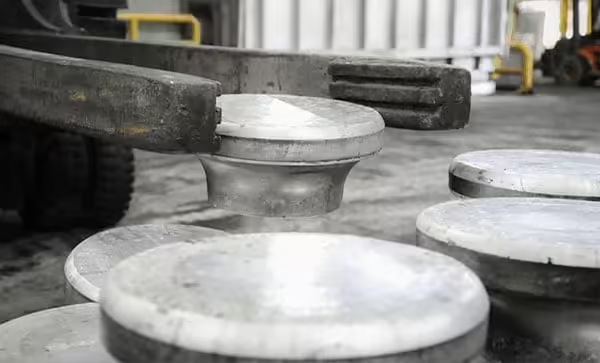
Aerospace forgings are critical components in the aviation and aerospace industries, designed to withstand extreme conditions while ensuring safety and performance. These specialized metal parts, such as shafts, rings, and discs, are manufactured through forging processes that enhance their strength, durability, and resistance to fatigue. At Qilu, we specialize in producing high-quality aerospace forgings, including shaft forgings, ring forgings, and disc forgings.
Our significant investment in advanced production equipment and testing facilities ensures that our products meet the highest standards of quality and reliability. With forging equipment ranging from 200 to 4,000 tons, we can produce metal forgings in quantities from 1 to over 100,000 pieces. Our extensive inventory and global distribution services allow us to deliver orders swiftly, meeting the demanding needs of aerospace applications.
This guide explores the world of aerospace forgings, covering their importance, manufacturing processes, material selection, and applications. Whether you’re an engineer, procurement specialist, or industry enthusiast, this comprehensive resource will provide valuable insights into how aerospace forging contribute to high-performance aircraft and spacecraft.
The Importance of Aerospace Forgings in Aviation
Aerospace forging play a pivotal role in ensuring the structural integrity of aircraft and spacecraft. These components are used in critical areas such as engines, landing gear, and airframes, where strength and precision are non-negotiable. The forging process aligns the metal’s grain structure, resulting in parts that are stronger and more resistant to wear than those produced by casting or machining. This makes aerospace forgings ideal for applications requiring high strength-to-weight ratios, a key factor in aerospace engineering.
The ability to produce forgings that can endure high temperatures, intense pressures, and repetitive stress cycles is essential for modern aerospace systems. For instance, turbine blades and landing gear components rely on aerospace forging to maintain performance under extreme conditions. At Qilu, our forgings are engineered to meet stringent industry standards, ensuring reliability in even the most demanding environments.
Types of Aerospace Forging
Aerospace forgings come in various forms, each tailored to specific applications within aircraft and spacecraft. The most common types include:
Shaft Forgings
Shaft forgings are cylindrical components used in rotating parts, such as engine shafts and propeller systems. These forgings are designed to handle high torque and rotational stresses, making them essential for power transmission in aerospace systems.
Ring Forgings
Ring forgings are circular components often used in engine assemblies and structural supports. Their seamless design provides exceptional strength and resistance to deformation, making them ideal for high-pressure environments like jet engines.
Disc Forgings
Disc forgings are used in turbine engines and other high-load applications. These components are engineered to withstand extreme temperatures and mechanical stresses, ensuring long-term reliability in critical systems.
At Qilu, our advanced forging equipment allows us to produce these types of aerospace forging with precision and consistency, meeting the diverse needs of our clients.
Manufacturing Process of Aerospace Forgings
The production of aerospace forging involves a series of precise steps to ensure quality and performance. The process begins with selecting high-grade raw materials, such as titanium, aluminum, or nickel-based alloys. These materials are heated to specific temperatures and shaped using forging presses or hammers. The forging process can be performed using open-die, closed-die, or ring-rolling techniques, depending on the desired shape and properties.
After forging, the components undergo heat treatment to enhance their mechanical properties, such as hardness and toughness. Precision machining is then applied to achieve tight tolerances and smooth surface finishes. Finally, rigorous testing, including non-destructive inspections like ultrasonic testing and X-ray analysis, ensures that the aerospace forgings meet industry standards. Qilu’s state-of-the-art facilities, including forging presses ranging from 200 to 4,000 tons, enable us to produce high-quality forgings in large quantities with exceptional accuracy.
Materials Used in Aerospace Forging
The choice of material is critical in the production of aerospace forgings, as it directly impacts the component’s performance. Common materials include:
- Titanium Alloys: Known for their high strength-to-weight ratio and corrosion resistance, titanium alloys are widely used in aerospace forgings for components like landing gear and turbine blades.
- Aluminum Alloys: Lightweight and durable, aluminum forgings are ideal for airframe components where weight reduction is a priority.
- Nickel-Based Alloys: These alloys offer excellent heat resistance, making them suitable for engine components exposed to extreme temperatures.
- Stainless Steel: Used in applications requiring high strength and corrosion resistance, stainless steel forgings are common in structural components.
Each material is selected based on the specific requirements of the aerospace application, ensuring optimal performance and longevity. At Qilu, we maintain a robust inventory of these materials to support rapid production and delivery.
Table: Common Applications of Aerospace Forgings
| Component Type | Application | Material | Key Properties |
|---|---|---|---|
| Shaft Forgings | Engine shafts, propeller systems | Titanium, Stainless Steel | High torque resistance, durability |
| Ring Forgings | Jet engine casings, structural rings | Nickel-Based Alloys, Aluminum | Seamless strength, heat resistance |
| Disc Forgings | Turbine discs, compressor discs | Titanium, Nickel-Based Alloys | High-temperature performance, fatigue resistance |
| Structural Forgings | Airframe supports, landing gear | Aluminum, Stainless Steel | Lightweight, high strength |
This table highlights the versatility of aerospace forgings across various applications, showcasing their critical role in aerospace systems. By leveraging advanced materials and manufacturing techniques, Qilu ensures that our forgings meet the specific needs of each application.
Quality Control in Aerospace Forging
Quality control is paramount in the production of aerospace forging, as even minor defects can compromise safety and performance. Manufacturers like Qilu employ rigorous testing protocols to ensure that every forging meets industry standards, such as AS9100 and NADCAP certifications. Non-destructive testing methods, including ultrasonic, magnetic particle, and radiographic inspections, are used to detect internal and surface defects.
In addition to testing, traceability is a key aspect of quality control. Each aerospace forging is documented with details about its material batch, production process, and testing results, ensuring full transparency. Qilu’s advanced testing facilities and commitment to quality enable us to deliver aerospace forging that consistently meet or exceed client expectations.
Applications of Aerospace Forgings in Modern Aircraft
Aerospace forgings are integral to a wide range of aircraft systems, from commercial airliners to military jets and spacecraft. Some key applications include:
- Engines: Turbine blades, compressor discs, and engine casings rely on aerospace forgings for their ability to withstand high temperatures and stresses.
- Landing Gear: Forged components in landing gear provide the strength and durability needed to handle the impact of takeoff and landing.
- Airframes: Structural forgings, such as bulkheads and wing supports, ensure the aircraft’s structural integrity while minimizing weight.
- Spacecraft: Aerospace forgings are used in rocket engines and structural components, where reliability in extreme conditions is critical.
These applications demonstrate the versatility and importance of aerospace forgings in modern aerospace engineering. Qilu’s ability to produce forgings in quantities ranging from 1 to over 100,000 pieces ensures that we can meet the demands of both small-scale and large-scale projects.
Challenges in Producing Aerospace Forgings
Producing aerospace forgings presents several challenges, including achieving tight tolerances, managing material costs, and meeting stringent regulatory requirements. The forging process requires precise control over temperature, pressure, and timing to ensure consistent quality. Additionally, the high cost of raw materials like titanium and nickel-based alloys can impact production budgets.
To address these challenges, manufacturers invest in advanced equipment and skilled personnel. At Qilu, our forging presses, ranging from 200 to 4,000 tons, and our experienced team allow us to overcome these challenges while maintaining cost-effectiveness and quality. Our global distribution network further ensures that clients receive their orders promptly, regardless of project scale.
Future Trends in Aerospace Forgings
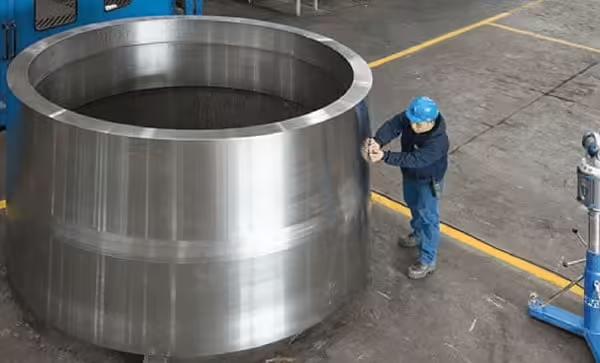
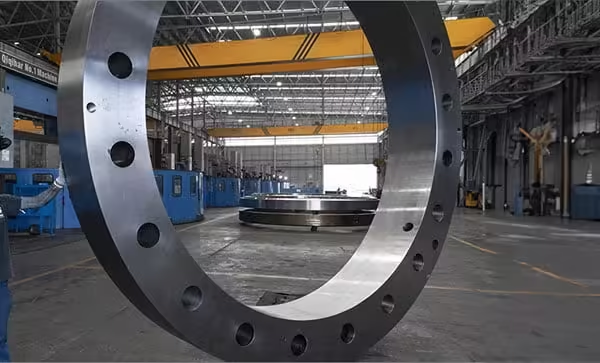
The aerospace forging industry is evolving rapidly, driven by advancements in materials, manufacturing technologies, and sustainability initiatives. Some key trends include:
- Additive Manufacturing Integration: Combining forging with additive manufacturing techniques allows for more complex geometries and reduced material waste.
- Lightweight Materials: The development of new alloys, such as advanced titanium and composite materials, is enabling lighter and stronger aerospace forgings.
- Automation and AI: Automated forging processes and AI-driven quality control systems are improving efficiency and precision in production.
- Sustainability: Manufacturers are adopting eco-friendly practices, such as recycling scrap metal and optimizing energy use, to reduce the environmental impact of forging.
These trends are shaping the future of aerospace forgings, ensuring that the industry continues to meet the evolving needs of aerospace engineering.
Conclusion
Aerospace forgings are the backbone of modern aviation and space exploration, providing the strength, durability, and precision required for critical applications. From shaft forgings to ring and disc forgings, these components are essential for ensuring the safety and performance of aircraft and spacecraft. At Qilu, our commitment to quality, advanced equipment, and global distribution capabilities make us a trusted partner for aerospace forging needs. Whether you require a single component or large-scale production, our extensive inventory and expertise ensure timely delivery and exceptional quality.
Ready to elevate your aerospace projects with high-performance forgings? Contact us today to discuss your needs and discover how Qilu can deliver the solutions you require.
FAQ
What are aerospace forgings?
Aerospace forgings are metal components shaped through forging processes, designed for use in aircraft and spacecraft. They offer superior strength and durability compared to cast or machined parts.
Why are aerospace forgings important?
Aerospace forgings provide the strength, reliability, and lightweight properties needed for critical applications like engines, landing gear, and airframes, ensuring safety and performance.
What materials are used in aerospace forgings?
Common materials include titanium alloys, aluminum alloys, nickel-based alloys, and stainless steel, each chosen for specific properties like strength, weight, and heat resistance.
How are aerospace forgings tested for quality?
Aerospace forgings undergo non-destructive testing, such as ultrasonic and radiographic inspections, to detect defects and ensure compliance with industry standards like AS9100.
Can Qilu produce large quantities of aerospace forgings?
Yes, Qilu’s forging equipment, ranging from 200 to 4,000 tons, allows us to produce aerospace forgings in quantities from 1 to over 100,000 pieces, with rapid delivery worldwide.
What industries use aerospace forgings?
Aerospace forgings are primarily used in aviation (commercial and military aircraft) and space exploration (rockets and spacecraft), as well as related industries requiring high-performance components.
How does Qilu ensure fast delivery?
Our extensive inventory and global distribution network enable us to deliver aerospace forgings quickly, meeting the tight timelines of aerospace projects.