Shandong Qilu lndustrial Co.,Ltd.

Applications of Versatile Forged Iron Products
Welcome to My Blog!
Before we dive into the content, I’d love for you to join me on my social media platforms where I share more insights, engage with the community, and post updates. Here’s how you can connect with me:
Facebook:https://www.facebook.com/profile.php?id=100090903441806
Now, let’s get started on our journey together. I hope you find the content here insightful, engaging, and valuable.
Table of Contents
Introduction
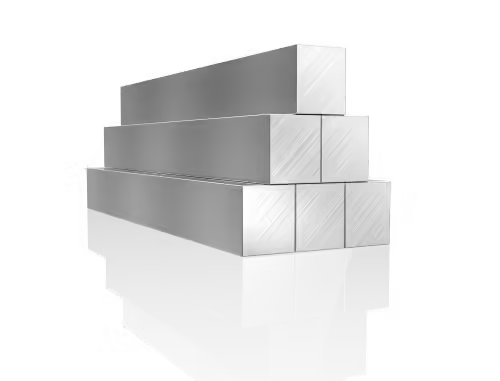
Forged iron has long been a cornerstone in industrial manufacturing, offering unmatched strength, durability, and adaptability. In today’s rapidly evolving markets, the demand for high-quality forged iron components continues to grow across various sectors. Qilu stands at the forefront of this industry, specializing in the production of superior forged products such as shafts, rings, and discs. With state-of-the-art forging equipment ranging from 200 to 4000 tons and a robust global distribution network, we ensure timely delivery and exceptional quality for our clients worldwide.
Automotive Industry: Enhancing Performance with Forged Iron Components
The automotive sector relies heavily on forged iron parts to ensure vehicle safety, performance, and longevity. Key components such as crankshafts, connecting rods, and gears are commonly forged to withstand high stress and fatigue. The superior mechanical properties of forged iron make it ideal for critical applications where reliability is paramount.
Aerospace Applications: Meeting the Demands of High-Stress Environments
In aerospace engineering, forged iron components are essential due to their high strength-to-weight ratio and resistance to extreme conditions. Applications include aircraft engine parts, landing gear components, and structural elements that must endure significant stress and temperature variations. The precision and durability of forged iron ensure the safety and efficiency of aerospace systems.
Construction and Infrastructure: Building with Strength and Reliability
Forged iron plays a vital role in construction and infrastructure projects, providing the necessary strength and resilience for structural components. From bridge supports to building frameworks, forged iron ensures stability and longevity. Its resistance to environmental factors and mechanical stress makes it a preferred material for engineers and architects.
Agricultural Machinery: Ensuring Durability in Demanding Conditions
Agricultural equipment must operate reliably under harsh conditions, and forged iron components are integral to this performance. Parts such as plowshares, harrow discs, and tractor components benefit from the toughness and wear resistance of forged iron, leading to longer service life and reduced maintenance.
Oil and Gas Industry: Withstanding Extreme Pressures and Temperatures
The oil and gas sector demands materials that can endure high pressures, temperatures, and corrosive environments. Forged iron components like flanges, valve bodies, and drill bits are engineered to meet these challenges, ensuring operational safety and efficiency in exploration and production activities.
Mining and Heavy Equipment: Delivering Strength for Rigorous Operations
Mining operations and heavy machinery require components that can handle substantial loads and abrasive conditions. Forged iron parts such as gears, shafts, and crusher components provide the necessary durability and strength, contributing to the reliability and productivity of mining equipment.
Marine and Shipbuilding: Navigating with Confidence
In the marine industry, forged iron is utilized for critical components like propeller shafts, rudders, and structural supports. Its corrosion resistance and mechanical strength are essential for vessels operating in challenging marine environments, ensuring safety and performance over long service periods.
Railways: Maintaining Safety and Efficiency on the Tracks
Railway systems depend on forged iron components for their robustness and reliability. Applications include wheel hubs, axles, and coupling systems that must withstand continuous stress and varying loads. The use of iron forging in these components enhances the safety and efficiency of rail transportation.
Defense and Military Applications: Meeting the Highest Standards
The defense sector requires components that meet stringent standards for strength and durability. Forged iron is employed in the manufacturing of weapon systems, armored vehicles, and support equipment, providing the necessary performance in critical applications.
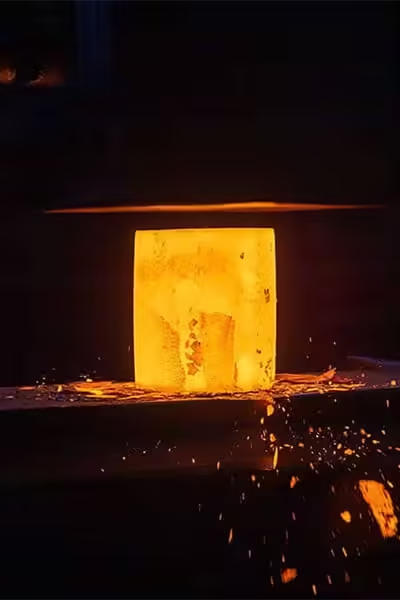
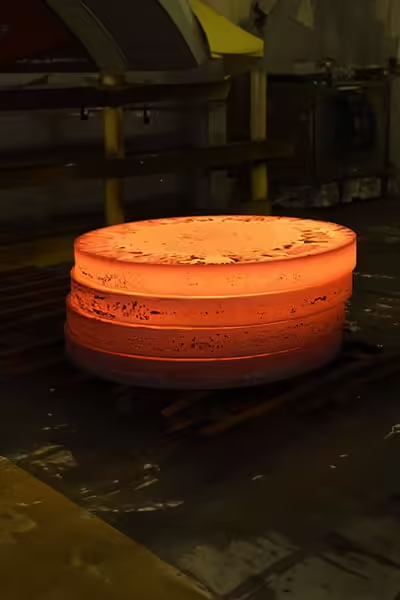
Table: Common Applications of Forged Iron Across Industries
| Industry | Applications |
|---|---|
| Automotive | Crankshafts, connecting rods, gears |
| Aerospace | Engine components, landing gear, structural elements |
| Construction | Structural supports, bridge components, building frameworks |
| Agriculture | Plowshares, harrow discs, tractor parts |
| Oil and Gas | Flanges, valve bodies, drill bits |
| Mining | Gears, shafts, crusher components |
| Marine | Propeller shafts, rudders, structural supports |
| Railways | Wheel hubs, axles, coupling systems |
| Defense | Weapon systems, armored vehicle components, support equipment |
Conclusion
Forged iron‘s versatility and strength make it indispensable across various industries. At Qilu, we are committed to delivering high-quality iron forging products that meet your specific requirements. Our advanced manufacturing capabilities and global distribution ensure that you receive the best products promptly.
Contact us today to learn how our iron forging solutions can enhance your operations.
FAQ
What distinguishes forged iron from other materials?
Forged iron offers superior strength, durability, and resistance to fatigue compared to cast or machined components, making it ideal for high-stress applications.
Can Qilu provide custom-forged components?
Yes, we specialize in producing custom-forged parts tailored to your specific design and performance requirements.
What industries benefit most from iron forging products?
Industries such as automotive, aerospace, construction, agriculture, oil and gas, mining, marine, railways, and defense extensively utilize iron forging components.
How does Qilu ensure the quality of its forged products?
We invest in advanced production equipment and rigorous testing facilities to ensure our products meet the highest standards of quality and reliability.