Shandong Qilu lndustrial Co.,Ltd.

5 Shocking Myths About Billet vs Forged
Welcome to My Blog!
Before we dive into the content, I’d love for you to join me on my social media platforms where I share more insights, engage with the community, and post updates. Here’s how you can connect with me:
Facebook:https://www.facebook.com/profile.php?id=100090903441806
Now, let’s get started on our journey together. I hope you find the content here insightful, engaging, and valuable.
Table of Contents
Introduction
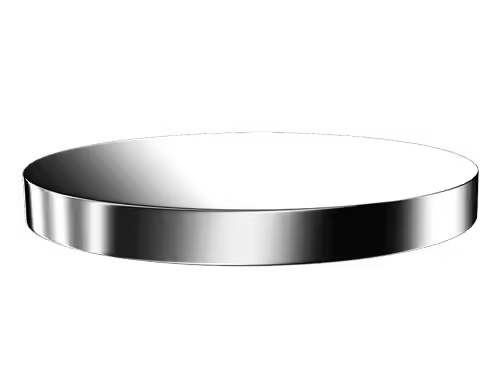
When it comes to manufacturing metal components, the debate between billet vs forged has sparked many misconceptions. Whether you’re choosing parts for an automotive build, industrial machinery, or aerospace applications, understanding the real differences between these two processes is crucial. In this blog, we will debunk five shocking myths about billet vs forged materials, helping you make an informed decision for your needs.
Understanding Billet vs Forged Manufacturing
Before diving into the myths, it’s essential to understand what these two manufacturing methods entail.
What Is Billet Manufacturing?
Billet manufacturing involves cutting a solid piece of metal from a pre-formed block and shaping it through precise machining processes. This method allows for high precision and flexibility in design.
What Is Forged Manufacturing?
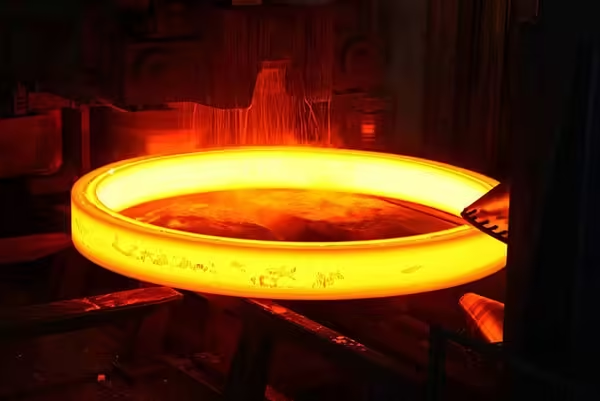
Forged manufacturing involves heating metal until it becomes malleable and then shaping it using extreme pressure. This process enhances the material’s internal structure, making it stronger and more resistant to stress.
The Truth Behind Billet vs Forged
Myth 1: Billet Is Always Stronger Than Forged
One of the most common misconceptions is that billet components are inherently stronger than forged ones. While billet parts can have excellent precision and uniformity, they lack the enhanced grain structure that forging provides. Forging refines the internal grain flow of the metal, increasing its strength and durability under high-stress conditions.
Myth 2: Forged Components Are Heavier Than Billet Components
Many believe that forged parts are always heavier than billet components. In reality, weight differences depend on design and material selection rather than the manufacturing process itself. Forged components can be designed to optimize weight while maintaining superior strength.
Myth 3: Billet Parts Have a Better Finish Than Forged Parts
While it is true that billet components often have a smoother finish due to CNC machining, modern forging techniques have evolved to produce high-quality surfaces. With post-forging machining and treatments, forged parts can achieve the same level of finish as billet parts.
Myth 4: Forged Components Are Less Precise Than Billet Components
Precision is often associated with billet manufacturing due to CNC machining, but forged parts can also be machined to exact specifications. Many high-performance industries, including aerospace and motorsports, rely on forged components with tight tolerances.
Myth 5: Billet and Forged Materials Perform the Same in All Applications
While both manufacturing processes create strong components, their performance varies depending on the application. Forged parts excel in high-stress environments like automotive engines and aerospace structures, while billet parts are better suited for complex geometries requiring precise machining.
Comparing Billet vs Forged Components
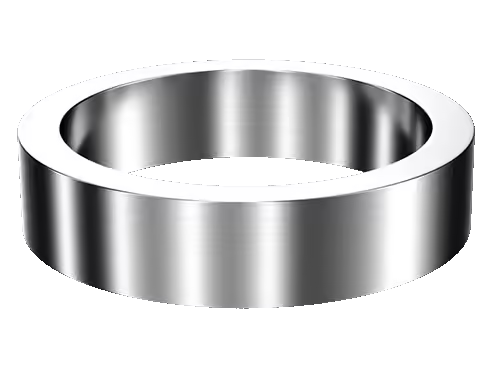
To further illustrate the key differences, here’s a comparison of the two manufacturing methods:
Key Differences Between Billet and Forged Components
| Aspect | Billet Manufacturing | Forged Manufacturing |
|---|---|---|
| Strength | Good but lacks internal grain reinforcement | Superior due to refined grain structure |
| Precision | High precision with CNC machining | Can achieve high precision with post-forging machining |
| Weight | Can be optimized, but lacks internal strength reinforcement | Stronger and can be optimized for weight |
| Finish | Smooth finish due to machining | Can achieve similar finish with post-processing |
| Durability | Suitable for moderate loads and applications | Excellent for high-stress environments |
Choosing the Right Option for Your Needs
When deciding between billet vs forged components, consider the following factors:
Application Requirements
If the component will experience extreme stress, forging is the better choice due to its superior strength. However, if intricate detailing and high precision are necessary, billet machining may be the preferred option.
Budget Considerations
Billet components often require more machining time, increasing costs. Forged parts, while initially more expensive, provide long-term durability, reducing replacement costs.
Industry Standards
Industries such as aerospace and motorsports often favor forged components due to their high performance under extreme conditions, while billet parts are commonly used in precision-driven applications like custom automotive builds.
Conclusion
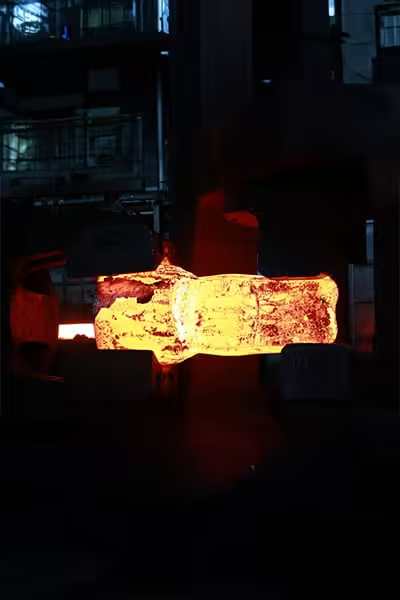
The debate between billet vs forged is fueled by myths that can mislead buyers. Understanding the real differences between these manufacturing processes helps in making informed purchasing decisions. Whether you prioritize strength, precision, or durability, choosing the right option depends on your specific needs. If you’re looking for high-quality metal components, explore our selection today!
What is stronger, billet or forged?
Forged components are generally stronger due to their refined grain structure, making them ideal for high-stress applications.
Are billet parts better for precision?
Yes, billet components are often machined to high precision, making them ideal for applications requiring intricate detailing.
Do forged components always cost more than billet components?
Not necessarily. While forging can be more expensive initially, its durability often leads to long-term cost savings.
Can forged parts have the same finish as billet parts?
Yes, with modern machining and finishing techniques, forged parts can achieve a similar level of surface finish as billet parts.
Which is better for automotive applications, billet or forged?
It depends on the application. Forged components are better for high-stress engine and drivetrain parts, while billet parts are commonly used for custom and aesthetic components.