Shandong Qilu lndustrial Co.,Ltd.

How to Choose the Steel Forging Temperature
Welcome to My Blog!
Before we dive into the content, I’d love for you to join me on my social media platforms where I share more insights, engage with the community, and post updates. Here’s how you can connect with me:
Facebook:https://www.facebook.com/profile.php?id=100090903441806
Now, let’s get started on our journey together. I hope you find the content here insightful, engaging, and valuable.
Table of Contents
Introduction
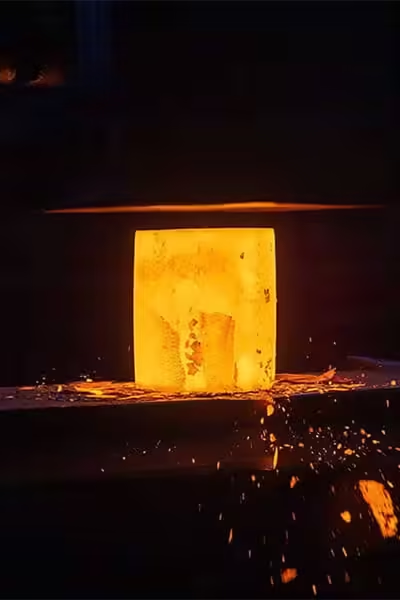
Choosing the right steel forging temperature is essential for achieving high-quality forged components. The correct temperature ensures optimal material properties, improves workability, and enhances the durability of the final product. Whether forging carbon steel, alloy steel, or stainless steel, understanding the appropriate temperature range is crucial. This guide explores the key factors in selecting the right steel forging temperature and how it affects the forging process.
Understanding Steel Forging Temperature
Steel forging involves heating the metal until it becomes malleable and then shaping it under pressure. The temperature must be carefully controlled to avoid defects and ensure the strength and durability of the forged part. If the temperature is too low, the metal becomes too hard and brittle, making it difficult to shape and increasing the risk of cracks. On the other hand, excessive heat can cause oxidation, grain coarsening, and material degradation.
The optimal steel forging temperature depends on the type of steel being forged. Carbon steel, alloy steel, stainless steel, and tool steel each have specific temperature ranges that must be maintained during forging. These temperatures ensure that the metal remains workable while preserving its mechanical properties.
Factors That Influence Steel Forging Temperature
The steel composition is a primary factor in determining the ideal forging temperature. Each steel grade has a unique melting and forging point, requiring different heating conditions. The forging method used, such as open-die or closed-die forging, also affects the required temperature range. Open-die forging typically involves higher temperatures since the metal is exposed to the environment, while closed-die forging allows for more controlled heating.
The cooling rate after forging plays a crucial role in maintaining the steel’s strength and grain structure. Rapid cooling can introduce stress and hardness variations, while slow cooling helps achieve uniformity. Additionally, the intended application of the forged component determines the required temperature control. Automotive parts, construction materials, and aerospace components all have specific forging conditions that must be met to ensure durability and performance.
Optimal Temperature Ranges for Different Steel Types
Different types of steel require specific forging temperature ranges to maintain their integrity and performance. The following table provides a general guideline for steel forging temperatures:
Steel Forging Temperature Guide
| Steel Type | Low Forging Temperature (°C) | High Forging Temperature (°C) | Common Applications |
|---|---|---|---|
| Carbon Steel | 1,150 | 1,250 | Construction, machinery |
| Alloy Steel | 1,100 | 1,200 | Automotive, aerospace |
| Stainless Steel | 1,000 | 1,200 | Medical, food processing |
| Tool Steel | 900 | 1,100 | Cutting tools, molds |
Maintaining these temperature ranges ensures that the steel remains workable without compromising its mechanical properties. Forging at temperatures outside these ranges can lead to defects such as surface cracks, poor grain structure, and reduced mechanical strength.
Techniques for Controlling Steel Forging Temperature
Achieving the perfect steel forging temperature requires precise control over the heating process. Several methods are commonly used to maintain the correct temperature. Induction heating provides rapid and uniform heating with minimal oxidation, making it ideal for precision forging. Furnace heating is often used for larger batches, ensuring consistent temperature distribution. In smaller-scale forging, torch heating is a viable option for localized heat application.
Monitoring temperature accurately is crucial to preventing defects. Infrared pyrometers allow for non-contact temperature measurement, enabling real-time adjustments. Thermocouples provide embedded sensors for precise internal temperature readings, ensuring that the metal reaches the required forging temperature. In traditional forging, experienced blacksmiths often determine temperature by observing color changes in the heated steel.
Effects of Incorrect Steel Forging Temperature
Failure to maintain the right steel forging temperature can lead to several material defects. Overheating can cause grain coarsening, which weakens the material’s structure and increases brittleness. Excessive oxidation may lead to scaling and surface imperfections, reducing the component’s lifespan. Underheating results in increased work hardening, making the metal difficult to shape and more prone to cracking. These issues emphasize the importance of accurate temperature control throughout the forging process.
Controlling steel forging temperature correctly enhances the strength and durability of the final product. Whether manufacturing industrial components or high-precision tools, maintaining the right temperature ensures superior performance and longevity.
Conclusion
Selecting the correct steel forging temperature is essential for producing strong, durable, and high-quality forged components. By understanding steel types, temperature ranges, and heating methods, manufacturers can optimize their forging processes for better efficiency and performance. If you need high-quality forged steel products, consult an expert today to find the best solution for your application.
What happens if steel is forged at the wrong temperature?
Forging steel at incorrect temperatures can lead to defects such as grain coarsening, oxidation, and cracking, reducing the material’s strength and durability.
How do I determine the best steel forging temperature for my application?
The best temperature depends on the type of steel, forging method, and intended use. Referencing a steel forging temperature chart can help guide your decision.
What tools can be used to measure steel forging temperature?
Common tools include infrared pyrometers, thermocouples, and traditional color-matching techniques used by experienced blacksmiths.
Can steel be forged at too high a temperature?
Yes, excessive temperatures can cause grain growth, oxidation, and reduced mechanical properties, negatively affecting the final product.
Why is temperature control important in steel forging?
Precise temperature control ensures optimal workability, structural integrity, and performance of forged steel components.