Shandong Qilu lndustrial Co.,Ltd.

What Is Forged Steel? 5 Shocking Facts to Know
Welcome to My Blog!
Before we dive into the content, I’d love for you to join me on my social media platforms where I share more insights, engage with the community, and post updates. Here’s how you can connect with me:
Facebook:https://www.facebook.com/profile.php?id=100090903441806
Now, let’s get started on our journey together. I hope you find the content here insightful, engaging, and valuable.
Table of Contents
Introduction
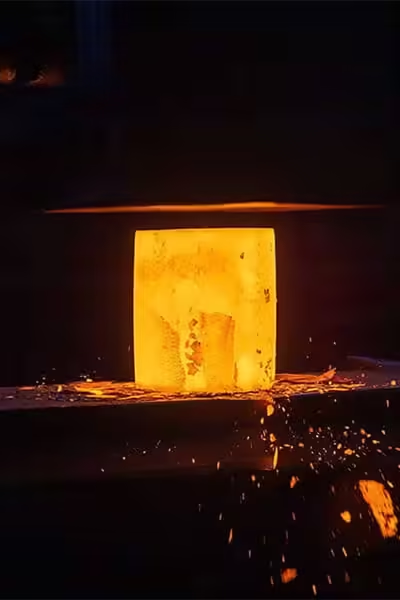
Forged steel is a key material used in many industries, from automotive to construction and aerospace. It is known for its strength, durability, and versatility. But what exactly is forged steel, and why does it hold such importance? What is forged steel and how does it differ from other types of steel?
In this article, we’ll explore the details of what is forged steel, its manufacturing process, and why it is considered superior to other types of steel. We’ll also uncover five shocking facts about forged steel that might change the way you think about this incredible material. By the end, you’ll have a clearer understanding of what is forged steel and why it’s an essential component in many high-performance applications.
What Is Forged Steel?
Forged steel, also known as what is forged steel, is a type of steel that has undergone a process of shaping and hardening through compressive force, often at high temperatures. This process enhances the steel’s mechanical properties, making it stronger, more durable, and resistant to wear. Unlike cast steel, which is poured into molds, forged steel is physically manipulated to improve its structural integrity.
What is forged steel? Forging involves heating steel to a specific temperature and then applying force to mold it into the desired shape. The process can be done either manually or using automated machinery, and it results in a product that has a refined grain structure. This structure contributes to improved strength and resistance to impact and fatigue. Forged steel is widely used for manufacturing tools, machinery parts, and structural components.
The Forging Process: From Raw Steel to Final Product
The process of forging steel starts with selecting the right raw material. Steel billets or bars are heated to a specific temperature, often over 2,000°F (1,100°C), making the metal soft enough to be shaped under pressure. The steel is then hammered or pressed into the desired shape. Afterward, it’s cooled and heat-treated to reach its final hardness and strength.
Open-Die Forging
This is a simpler method where the metal is hammered between two flat dies. It is typically used for larger parts like crankshafts and aircraft components.
Closed-Die Forging
In this process, the metal is placed between two dies that have a cavity in the shape of the final part. This method is used for producing more complex and precise components.
The Benefits of Forged Steel
Forged steel has a number of benefits that make it superior to other types of steel in certain applications. Some of the most notable advantages include:
- Superior Strength: The forging process aligns the steel’s grain structure, which enhances its strength and makes it resistant to fracture.
- Improved Durability: Forged steel parts are often more durable and wear-resistant compared to cast steel components.
- Better Impact Resistance: Due to its dense, uniform grain structure, forged steel is less likely to break under heavy stress.
- Customization: The forging process can be adapted to produce a wide variety of shapes and sizes, making it a versatile option for many industries.
5 Shocking Facts About Forged Steel
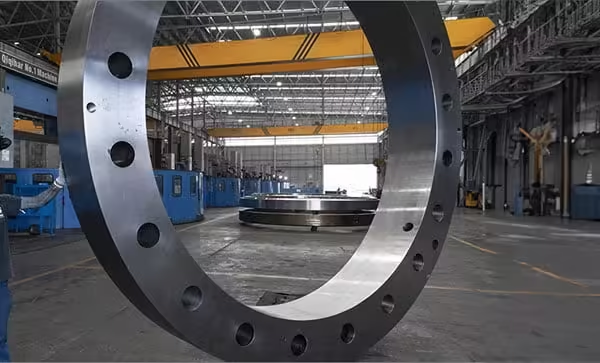
Forged Steel Is Stronger Than Cast Steel
While cast steel is made by pouring molten steel into molds, forged steel undergoes a physical process that refines its grain structure, making it far stronger and more resilient to stress and wear. This is one of the main reasons why forged steel is preferred in critical applications, such as aerospace and automotive industries.
It Can Be Shaped into Complex Geometries
Forged steel isn’t limited to simple shapes. The forging process allows for the creation of complex geometries and intricate designs, making it an ideal material for custom parts. From gears to turbine blades, forged steel can be shaped into virtually any form, which gives manufacturers greater flexibility in their designs.
Forged Steel Is Highly Resistant to Fatigue
Fatigue resistance is one of the most important qualities of forged steel. Thanks to the process of continuous compression, the material has a uniform grain structure that resists the formation of cracks and fatigue over time. This is why forged steel is often used in parts that undergo repeated stress, such as engine components.
It Requires High Energy Consumption
Forging steel requires a significant amount of energy to heat the material and shape it under pressure. The process can be costly, but the resulting high-quality material justifies the expense. Due to its strength and durability, forged steel often proves to be more cost-effective in the long run, as it reduces the need for replacements and repairs.
Forged Steel Can Be Used for a Wide Range of Applications
From tools to automotive components, forged steel is incredibly versatile. Its high strength-to-weight ratio makes it ideal for critical components, including gears, shafts, and valves. It’s also used in industries like oil and gas, mining, and construction, where durability and reliability are paramount.
Table: Key Properties of Forged Steel
| Property | Forged Steel | Cast Steel |
|---|---|---|
| Strength | Higher due to refined grain structure | Lower compared to forged steel |
| Impact Resistance | Excellent resistance to impact | Moderate resistance |
| Durability | More durable and wear-resistant | Less durable, prone to cracking |
| Fatigue Resistance | Excellent resistance to fatigue | Poorer resistance |
| Customization | Can be customized into complex shapes | Limited customization options |
Conclusion
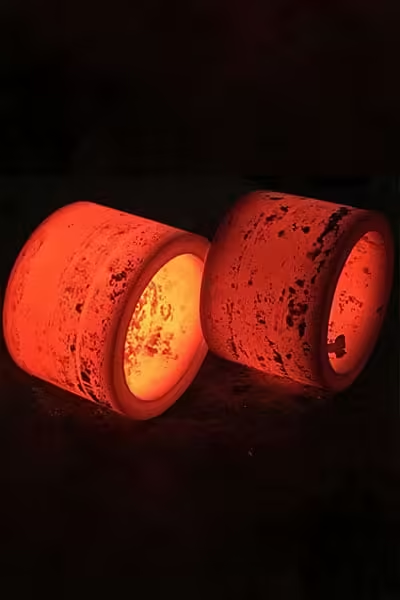
In conclusion, forged steel offers numerous benefits that make it the material of choice in many industries. Whether you’re working with automotive, aerospace, or industrial equipment, understanding what forged steel is and how it’s made can help you make better decisions when selecting materials for your projects.
Ready to use forged steel in your next project? Explore its potential today!
FAQ
What is the difference between forged steel and cast steel?
The main difference lies in the manufacturing process. Forged steel is shaped through compressive force, which refines the material’s grain structure and enhances its strength, while cast steel is made by pouring molten steel into molds.
Is forged steel more expensive than cast steel?
Yes, the forging process requires high energy consumption and skilled labor, which can make forged steel more expensive. However, its superior strength and durability often make it a more cost-effective option in the long run.
Can forged steel be used for all applications?
Forged steel is ideal for high-stress applications, but it may not always be necessary for less demanding projects. It is particularly suited for automotive, aerospace, and heavy machinery components.
Is forged steel stronger than other types of steel?
Yes, forged steel is generally stronger than cast steel, wrought iron, and other types of steel due to its refined grain structure and the compressive forces applied during the forging process.
How long does forged steel last?
Forged steel is highly durable and resistant to wear, making it suitable for long-lasting applications. Its lifespan depends on the specific conditions in which it is used, but it typically outlasts other types of steel.