Shandong Qilu lndustrial Co.,Ltd.

Why Casting Forge is Essential for Quality
Welcome to My Blog!
Before we dive into the content, I’d love for you to join me on my social media platforms where I share more insights, engage with the community, and post updates. Here’s how you can connect with me:
Facebook:https://www.facebook.com/profile.php?id=100090903441806
Now, let’s get started on our journey together. I hope you find the content here insightful, engaging, and valuable.
Table of Contents
Introduction
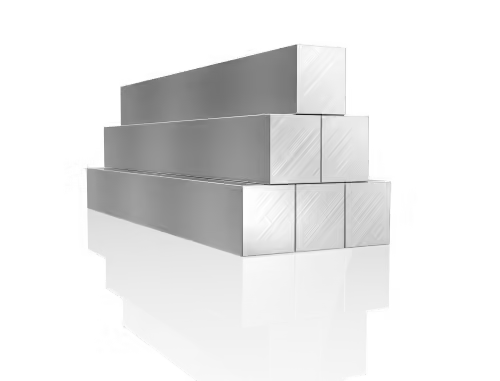
Casting forge is an integral process in the manufacturing of high-quality metal products. This technique, often overlooked, plays a crucial role in shaping the strength, durability, and overall integrity of a wide range of items, from tools to machinery components. The casting forge process involves heating metals to high temperatures and then shaping them into desired forms, often by pouring the molten metal into molds. This process ensures that the final product meets specific requirements for its intended application. In this blog, we will explore why casting forge is essential for ensuring quality in manufacturing, the advantages it offers, and how it impacts the final product’s performance.
What is it?
Casting forge refers to the method of creating metal parts by pouring molten metal into molds and allowing it to solidify. This process is typically used for creating intricate shapes and detailed components that would be difficult or impossible to produce through traditional forging methods. The casting forge technique involves several stages: preparing the metal, heating it to the right temperature, pouring it into the mold, and then allowing it to cool and solidify. This ensures that the resulting products maintain their strength, precision, and structural integrity.
Key Benefits of it in Manufacturing
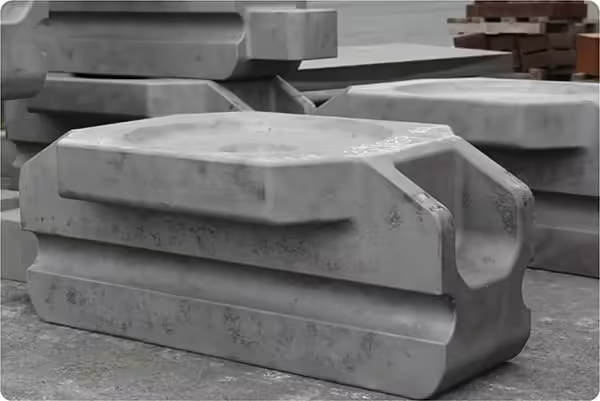
The casting forge process provides numerous benefits that make it a preferred method for creating high-quality metal parts.
Improved Strength and Durability
One of the most significant advantages of casting forge is its ability to produce parts with superior strength. The high temperatures and controlled cooling in the process allow for a more even distribution of materials, reducing the risk of weak spots. The result is a product that can withstand the stresses and strains it will face during use.
Precision and Detail
Casting forge allows for the creation of complex shapes and detailed designs. The molds used in the process can be made to very tight tolerances, ensuring that the final product meets specific dimensional requirements. This precision is especially important in industries like aerospace, automotive, and construction, where even small deviations in dimensions can lead to significant issues.
Versatility and Material Compatibility
Casting forge can be used with a variety of metals, including iron, steel, and alloys. This versatility makes it a suitable choice for many different industries and applications. Whether you need a lightweight component or a heavy-duty part, casting forge can accommodate a wide range of materials to suit your needs.
Cost Efficiency
While the initial setup for casting forge may be higher than other manufacturing processes, it can be more cost-effective in the long run. The ability to produce complex parts without additional machining or processing reduces overall production costs. Additionally, the process can be scaled up for high-volume production, further driving down costs per unit.
Casting Forge vs. Other Manufacturing Processes
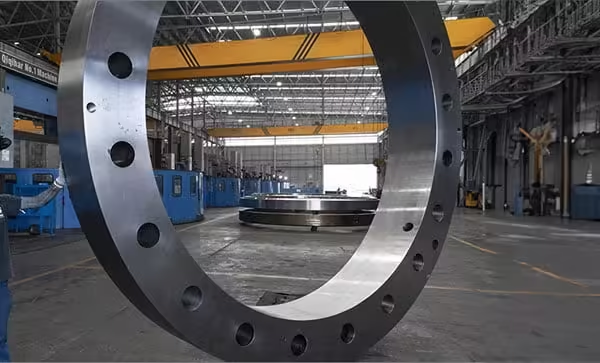
While casting forge is an excellent choice for producing high-quality parts, it’s essential to understand how it compares to other manufacturing techniques like traditional forging, machining, or welding.
vs. Traditional Forging
Traditional forging involves shaping metal by hammering or pressing it into shape while it is still solid. While traditional forging can produce strong parts, it is limited in terms of complexity and precision. Casting forge, on the other hand, can create much more intricate shapes with higher precision, making it ideal for parts that need to be highly detailed.
vs. Machining
Machining involves removing material from a larger piece to achieve the desired shape. While machining can produce precise parts, it often results in wasted material, making it less efficient for some applications. Casting forge, in contrast, is a more material-efficient process since the shape is formed directly from molten metal, reducing waste.
vs. Welding
Welding involves joining two pieces of metal together, whereas casting forge creates a single, seamless part. While welding is suitable for joining large structures or repairing existing components, casting forge is ideal for producing complex parts that don’t require additional joining.
How does it Impacts Quality
The casting forge process directly affects the quality of the final product. The controlled heating and cooling of the metal ensure that the material maintains its strength and durability. Additionally, the ability to create complex shapes without additional machining or welding means that the final product is often more reliable and precise.
Common Industries That Benefit from Casting Forge
Many industries rely on casting forge to produce high-quality components. Some of the most common industries that benefit from this process include:
Automotive Industry
The automotive industry requires a variety of metal parts, from engine components to suspension systems. Casting forge allows manufacturers to create these parts with high precision and strength, ensuring the durability of the vehicles.
Aerospace Industry
Aerospace components often need to meet strict standards for weight, strength, and durability. Casting forge allows manufacturers to produce parts that meet these requirements while maintaining a high level of precision and consistency.
Construction Industry
From heavy machinery to structural components, the construction industry requires durable and reliable metal parts. Casting forge ensures that these parts are strong enough to withstand the heavy loads and harsh environments often encountered in construction applications.
Energy Sector
The energy sector, particularly in oil and gas, requires high-strength components that can endure extreme conditions. Casting forge is ideal for producing parts that need to withstand high temperatures and pressures, making it a critical process in the energy industry.
it Process: A Step-by-Step Overview
To better understand how casting forge works, let’s take a look at the typical steps involved in the process:
- Preparation of Materials: The first step is selecting the right material, typically a metal or alloy, based on the requirements of the part.
- Heating the Metal: The selected material is then heated to a high temperature, making it molten.
- Creating the Mold: A mold is created in the shape of the desired part. The mold is often made from sand or metal, depending on the material being used.
- Pouring the Molten Metal: The molten metal is carefully poured into the mold, where it begins to solidify and take the shape of the mold.
- Cooling and Solidification: The molten metal is allowed to cool and solidify, forming a solid part.
- Finishing Touches: Once the part has cooled, any excess material is removed, and the part is cleaned up to meet the required specifications.
The Importance of Quality Control in it
Quality control is an essential aspect of the casting forge process. Since the quality of the final product is directly affected by the process, ensuring that each step is carried out correctly is crucial. Manufacturers often employ various quality control measures, such as:
- Temperature Monitoring: Ensuring that the metal reaches the correct temperature is critical to producing a quality part.
- Dimensional Inspection: Parts are often measured and inspected to ensure they meet the required tolerances.
- Material Testing: The metal used in the process is tested for its composition, ensuring it meets the necessary specifications for strength and durability.
Casting Forge: A Comparison Table
| Feature | Casting Forge | Traditional Forging | Machining |
|---|---|---|---|
| Material Efficiency | High | Medium | Low |
| Precision | High | Medium | Very High |
| Strength and Durability | High | High | Medium |
| Complexity of Parts | High | Medium | Low |
| Cost Efficiency | High | Low | Low |
Conclusion
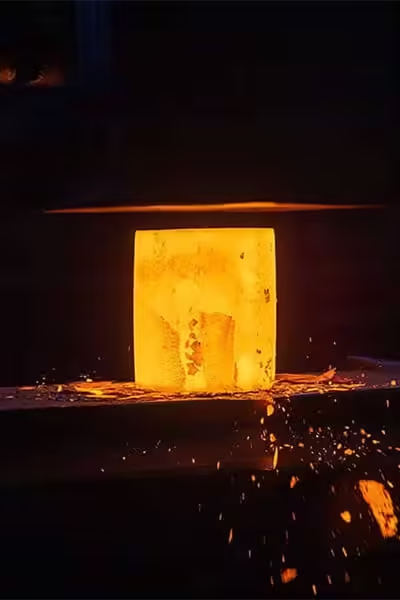
Casting forge is essential for producing high-quality, durable metal parts that meet precise specifications. By offering superior strength, precision, and versatility, it is an invaluable technique in various industries, from automotive to aerospace. If you’re looking to create high-performance components that stand the test of time, consider casting forge for your manufacturing needs.
FAQ
What metals can be used in it?
Casting forge can be used with a variety of metals, including iron, steel, and alloys. The choice of metal depends on the requirements of the final product.
Is it more cost-effective than other manufacturing processes?
While the initial setup for casting forge can be higher, it is often more cost-effective in the long run due to its ability to produce complex parts without additional machining.
How can I ensure the quality of my casting forge products?
Quality control measures such as temperature monitoring, dimensional inspection, and material testing are essential to ensuring the final product meets the required standards.