Shandong Qilu lndustrial Co.,Ltd.

Is Titanium Forging the Future of Industrial Components?
Welcome to My Blog!
Before we dive into the content, I’d love for you to join me on my social media platforms where I share more insights, engage with the community, and post updates. Here’s how you can connect with me:
Facebook:https://www.facebook.com/profile.php?id=100090903441806
Now, let’s get started on our journey together. I hope you find the content here insightful, engaging, and valuable.
Table of Contents
Introduction
Titanium forging has been increasingly recognized as a key solution in the manufacturing of industrial components, due to its unique properties such as strength, lightweight, and resistance to corrosion. As industries continue to demand materials that can withstand extreme conditions, titanium has emerged as a top contender in the race for high-performance materials. This article explores whether titanium forging will become the cornerstone of future industrial components and what its potential benefits and challenges are.
What is Titanium Forging?
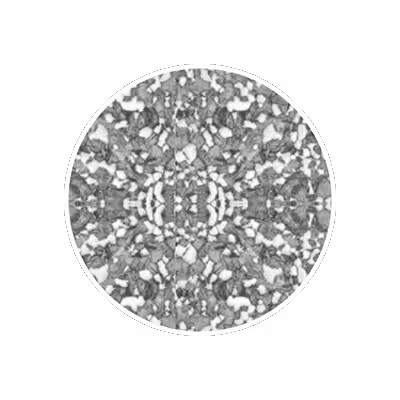
Titanium forging is a manufacturing process that involves shaping titanium alloys using heat and mechanical force. The process transforms raw titanium into precise, high-strength components that are ideal for various industrial applications. Compared to other methods, such as casting or machining, titanium forging offers better material properties, increased reliability, and reduced waste.
The Process of Titanium Forging
The process involves heating the titanium alloy to a high temperature and then applying mechanical force to shape it into the desired form. The forging process increases the density of the material and improves its overall strength, making it ideal for components that need to withstand high levels of stress and extreme environmental conditions.
Why Titanium Forgings Are Gaining Popularity in Industrial Applications
Over the years, titanium has proven to be an invaluable material in numerous industries, particularly those that require durability, strength, and corrosion resistance. Titanium forgings offer several advantages over other metals, such as steel or aluminum. Below are some of the key benefits driving the growth of titanium forgings in industrial applications:
1. Exceptional Strength-to-Weight Ratio
One of the main reasons titanium forgings are gaining popularity is their strength-to-weight ratio. Titanium is significantly stronger than many other metals, yet it is much lighter, making it ideal for industries such as aerospace, automotive, and military, where reducing weight is essential for performance and efficiency.
2. Corrosion Resistance
Titanium is naturally resistant to corrosion, even in harsh environments like seawater or highly acidic conditions. This makes titanium forgings perfect for industries where components are exposed to corrosive elements, such as marine, chemical, and power generation industries.
3. High Temperature Performance
Titanium maintains its strength and stability even at elevated temperatures. This makes it suitable for components that need to perform in high-temperature environments, such as engine parts, turbines, and other heavy machinery.
Applications of Titanium Forgings in Key Industries
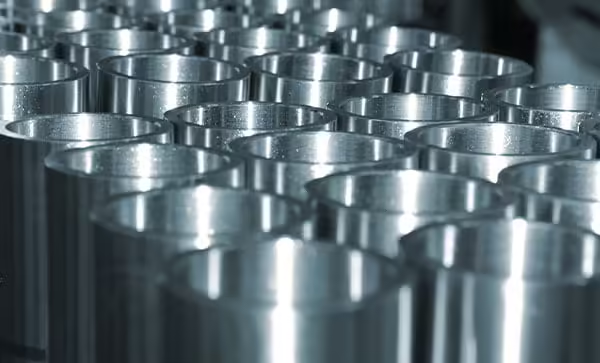
Titanium forgings are used in a wide range of industrial sectors. Below are some of the most common industries that benefit from the unique properties of titanium:
1. Aerospace Industry
The aerospace industry is one of the largest users of titanium forgings. Components such as engine parts, airframes, and landing gears are often made from titanium due to its strength, light weight, and ability to withstand high pressures and temperatures. The aviation industry continues to push the boundaries of performance, making titanium a crucial material for the future.
2. Medical Field
Titanium is biocompatible, which means it is not harmful to living tissue. As a result, titanium forgings are widely used in medical implants, prosthetics, and surgical instruments. The material’s ability to resist corrosion in the human body makes it a preferred choice for these critical applications.
3. Automotive Industry
Titanium forgings are also used in high-performance automotive applications. Components such as exhaust valves, engine components, and suspension parts benefit from the material’s lightweight and strength. As the demand for lightweight, durable materials grows in the automotive sector, titanium forgings are expected to play an increasingly important role.
Challenges of Titanium Forgings
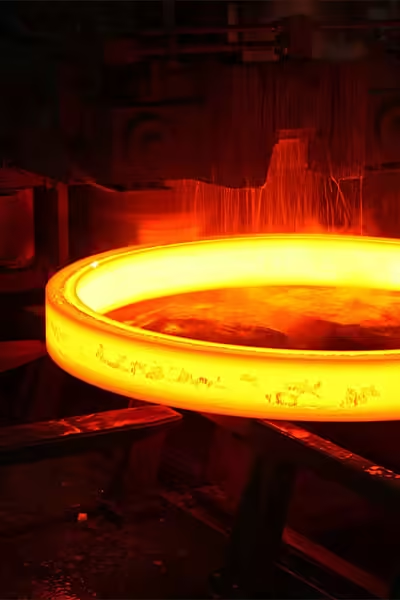
While titanium forgings offer significant benefits, there are still some challenges that manufacturers face when incorporating titanium into their production processes.
1. High Cost of Titanium Material
Titanium is more expensive than other materials such as steel or aluminum. This cost can be prohibitive for some manufacturers, especially in industries where cost efficiency is a top priority. However, as demand for titanium grows and production processes become more streamlined, prices are expected to become more competitive.
2. Difficulties in Forging Process
The forging process for titanium is complex and requires specialized equipment and expertise. Titanium also requires higher temperatures for forging compared to other metals, which can make the process more challenging. Manufacturers need to invest in advanced equipment and skilled labor to produce high-quality titanium forgings.
The Future of Titanium Forging in Industrial Components
Given the increasing demand for high-performance materials across various industries, titanium forging is poised to become a critical part of the future of industrial components. The unique properties of titanium make it an ideal choice for applications requiring strength, lightness, and durability. As technology advances, it’s likely that titanium forging will become more cost-effective and accessible to a wider range of industries.
Titanium Forgings: A Game-Changer for Marine and Aerospace Industries
Titanium has rapidly gained popularity within the marine and aerospace industries, mainly due to its exceptional resistance to corrosion. This makes it the material of choice for critical components exposed to harsh environments, such as seawater and chlorine-rich surroundings. Whether for use in high-performance aerospace parts or corrosion-resistant marine components, titanium’s durability and lightweight properties are unmatched.
Why Titanium is Ideal for Marine and Aerospace Applications
One of titanium’s most important attributes is its outstanding corrosion resistance, which ensures the longevity and reliability of parts even when exposed to extremely challenging environments. In the marine industry, for example, titanium components are frequently used in boat propellers, shafts, and heat exchangers, all of which come into constant contact with seawater. Similarly, aerospace manufacturers rely on titanium for engine parts, airframes, and other vital components that must withstand both high altitudes and the stresses of operation.
Qilu’s Expertise in Titanium Open-Die Forgings
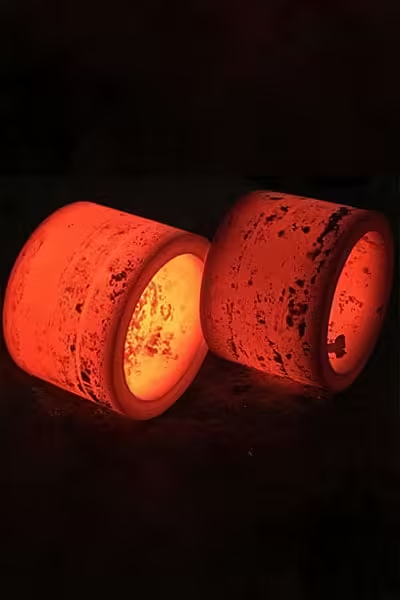
At Qilu, we specialize in manufacturing titanium open-die forgings tailored to meet the precise needs of our clients. Open-die forging allows for superior shaping of titanium alloys, ensuring exceptional strength and flexibility in final products. Whether you need small or large parts, our team has the capability to accommodate large production runs or single-piece orders, with a focus on delivering consistent quality.
Custom Titanium Forgings for Your Specific Needs
Our expertise in open-die forging extends to a wide range of titanium components, including rings, hubs, discs, round bars, flat bars, step shafts, and custom-forged configurations. With our skilled craftsmen, we ensure that each titanium forging is shaped with precision and meets the rigorous standards required in industries such as aerospace, marine, and automotive. This makes Qilu a trusted partner for companies seeking tailored, high-quality titanium parts.
Titanium Forging Grades at Qilu
Qilu offers various grades of titanium forgings, ensuring that each part is made from the best possible material for your application. Some of the grades we specialize in include:
| Grade | UNS Number | DIN | Werkstoff Nr |
|---|---|---|---|
| Ti-6-4 | R56400 | TiAl6V4 | 3.7165 |
| Ti 6-2-4-2 | R54620 | TiAl6Sn2Zr4Mo2 | 3.7145 |
| Ti 21s | R58210 | ||
| Ti 834 | |||
| Ti-407 |
Hollow Tube Forgings: Efficiency and Strength
At Qilu, we also specialize in hollow tube forgings, which offer unique advantages in terms of both efficiency and structural integrity. These forgings feature an inside diameter forged directly into the part, as opposed to being bored from solid bars. This method significantly reduces production time and enhances the overall efficiency of the manufacturing process.
Key Benefits of Hollow Tube Forgings
Hollow tube forgings present several advantages over traditional components like heavy-wall steel pipe and mechanical tubing. These forged tubes offer higher quality and superior strength, making them an excellent choice for a wide range of mechanical and construction applications. Additionally, they provide a viable replacement for centrifugal castings, which often fail to meet the required internal strength and integrity standards.
Some benefits of hollow tube forgings include:
- Reduced Waste: The forging process minimizes material waste compared to machining methods.
- Enhanced Structural Integrity: Forging results in stronger, more durable components that can withstand high stress and pressure.
- Custom Configurations: At Qilu, we can forge hollow tubes with unique geometries, including square shapes with a central hole or hollows with varying sizes on the outer diameter.
These unique configurations and the ability to customize hollow tube forgings make them ideal for a wide array of industries and applications that demand high-strength, lightweight components.
Conclusion
Titanium forgings offer a promising solution for industries seeking high-performance materials. As the demand for stronger, lighter, and more durable components increases, titanium is set to play a vital role in the future of industrial manufacturing. Despite some challenges, the advantages offered by titanium far outweigh the drawbacks, making it a material to watch in the coming years.
FAQ
Why is titanium used in aerospace applications?
Titanium’s high strength-to-weight ratio and resistance to high temperatures and corrosion make it the ideal material for aerospace components, including engines and airframes.
Can titanium forgings be used in the medical field?
Yes, titanium is biocompatible and resistant to corrosion, making it a popular material for medical implants and surgical tools.
What are the main challenges of working with titanium?
The main challenges include its high cost and the complexity of the forging process, which requires specialized equipment and expertise.