Shandong Qilu lndustrial Co.,Ltd.

The 5 Best Practices for Forging Copper: A Must-Read Guide
Welcome to My Blog!
Before we dive into the content, I’d love for you to join me on my social media platforms where I share more insights, engage with the community, and post updates. Here’s how you can connect with me:
Facebook:https://www.facebook.com/profile.php?id=100090903441806
Now, let’s get started on our journey together. I hope you find the content here insightful, engaging, and valuable.
Table of Contents
Introduction

Forging copper is a crucial process in various industries, providing a range of benefits such as improved strength, enhanced ductility, and excellent conductivity. As a metal with unique properties, copper requires specific techniques to ensure that the forging process yields high-quality results. In this comprehensive guide, we will explore the five best practices for forging copper, equipping you with the knowledge to optimize your metalworking operations. From understanding the material properties of copper to implementing effective forging techniques, this guide aims to help both novice and experienced metalworkers achieve success in their projects.
Understanding the Properties of Copper
Before diving into the best practices for forging copper, it’s essential to understand the unique properties of this versatile metal. Copper is known for its excellent electrical and thermal conductivity, corrosion resistance, and malleability. These properties make it an ideal choice for various applications, including electrical wiring, plumbing, and architectural features. However, its malleability can pose challenges during the forging process, necessitating specific techniques to achieve the desired results
NO 1. Selecting the Right Copper Alloy
One of the most critical practices for forging copper is choosing the appropriate alloy for your specific application. Different copper alloys offer varying mechanical properties and corrosion resistance, making it essential to select the right one based on your project’s requirements. Common copper alloys include C11000 (pure copper), C26000 (brass), and C46400 (naval brass). Each alloy has distinct characteristics that can impact the forging process and the final product’s performance.
Benefits of Choosing the Right Alloy
- Enhanced Performance: Selecting the appropriate alloy can significantly improve the performance of the forged product, ensuring it meets the necessary standards for strength and durability.
- Cost-Effectiveness: Using the right alloy can reduce material waste and minimize the need for extensive post-processing, leading to overall cost savings.
- Tailored Properties: Different alloys can be customized to provide specific properties, such as increased corrosion resistance or improved machinability, making them suitable for various applications.
NO 2. Proper Heating Techniques for Forging Copper
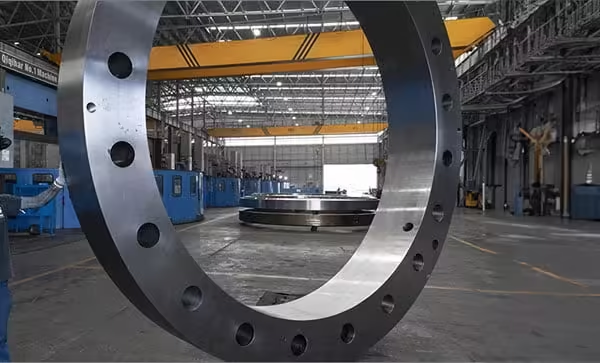
Heating is a critical step in the forging process, as it affects the malleability and workability of copper. Proper heating techniques are essential to ensure that the metal is adequately softened before forging. The ideal temperature range for forging copper is between 700°F and 1,200°F (371°C to 649°C). At these temperatures, copper exhibits excellent plasticity, allowing it to be shaped without cracking or breaking.
Tips for Effective Heating
- Use a Controlled Heating Source: Utilize a furnace or induction heater to maintain consistent temperatures throughout the forging process.
- Avoid Overheating: Overheating copper can lead to oxidation and loss of desirable properties. Monitor temperatures closely to prevent overheating.
- Preheat Tools: Preheating forging tools can help maintain temperature stability during the process, reducing the risk of thermal shock.
NO 3. Utilizing the Right Forging Techniques
Employing the right forging techniques is essential for achieving optimal results when forging copper. Various methods can be used, including open-die forging, closed-die forging, and rotary forging. Each technique has its advantages and is suited for specific applications. Understanding these methods will enable you to select the most appropriate one for your project.
Overview of Forging Techniques
| Forging Technique | Description | Advantages |
|---|---|---|
| Open-Die Forging | The metal is deformed between two flat dies | Versatile and suitable for large parts |
| Closed-Die Forging | The metal is enclosed within a die cavity | High precision and reduced waste |
| Rotary Forging | A continuous process that uses a rotating die | Ideal for cylindrical shapes and reduced cycle time |
NO 4. Implementing Quality Control Measures
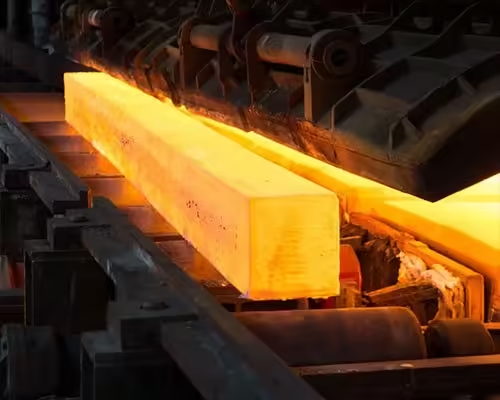
Quality control is a crucial aspect of forging copper, ensuring that the final product meets the required specifications and standards. Implementing robust quality control measures throughout the forging process can help identify defects early and prevent costly rework. Regular inspections, testing, and documentation are vital to maintaining quality in forged products.
Key Quality Control Practices
- Visual Inspection: Conduct regular visual inspections during various stages of the forging process to identify surface defects or inconsistencies.
- Dimensional Testing: Measure critical dimensions of forged components to ensure they adhere to design specifications.
- Material Testing: Perform tests on raw materials and finished products to verify their mechanical properties and composition.
NO 5. Post-Forging Treatment and Finishing
Once the forging process is complete, post-forging treatment and finishing steps are essential to enhance the product’s properties and appearance. Common post-forging treatments for copper include annealing, quenching, and surface finishing. These processes can improve the metal’s mechanical properties, enhance corrosion resistance, and provide a smooth finish.
Benefits of Post-Forging Treatment
- Improved Mechanical Properties: Annealing can relieve internal stresses and improve ductility, making the forged product easier to work with.
- Enhanced Corrosion Resistance: Surface treatments can enhance the corrosion resistance of copper, extending its lifespan in various applications.
- Aesthetic Appeal: Finishing processes can improve the appearance of forged copper products, making them more visually appealing for end users.
Material Grades Overview
Understanding different material grades is crucial for selecting the right material for forging and other applications. Each grade has specific properties and standards that dictate its suitability for various uses. Below, we delve into several common grades, their UNS numbers, DIN specifications, and Werkstoff numbers, along with their typical applications and characteristics.
| Grade | UNS Number | DIN | Werkstoff Nr | Characteristics & Applications |
|---|---|---|---|---|
| A105 | K03504 | C22.8 | 1.0460 | Commonly used for flanges, fittings, and valves in piping systems. Good weldability and moderate strength. |
| 1010 | G10100 | CK10 | 1.1121 | Low carbon steel with excellent formability and machinability. Used in automotive parts and structural applications. |
| 1018 | G10180 | CK15 | 1.1141 | Medium carbon steel known for its toughness and ability to harden. Commonly used in manufacturing components and machine parts. |
| 1020 | G10200 | CK20 | Low carbon steel that offers good weldability and is often used in pipes and tubes, as well as for structural applications. | |
| 1035 | G10350 | CK35 | 1.1181 | Medium carbon steel that provides a good balance of strength and ductility. Suitable for forging and mechanical components. |
| 1045 | G10450 | CK45 | 1.1191 | High strength, medium carbon steel used in high-stress applications such as gears, shafts, and heavy machinery. |
| 1050 | G10500 | CK50 | High carbon steel with good hardness and wear resistance. Often used in cutting tools and dies. | |
| 1080 | G10800 | CK80 | High carbon steel that can achieve a very high hardness, making it suitable for springs and high-strength applications. | |
| 1552 | G15520 | Low alloy steel used in structural applications and automotive components, providing good strength and ductility. | ||
| A350 Grade LF6 | K03011 | Low-temperature carbon steel designed for use in low-temperature environments, often used in valves and fittings. | ||
| A350 Grade LF2 | C22.8 | 1.0460 | Suitable for low-temperature service, often used in industrial applications involving piping and vessels. | |
| A694 | Carbon steel used for high-strength applications, typically in the oil and gas industry for line pipe fittings. | |||
| E355 | 1.0580 | Low-alloy steel known for its good weldability and mechanical properties, often used in machinery and construction. |
Detailed Analysis of Selected Grades
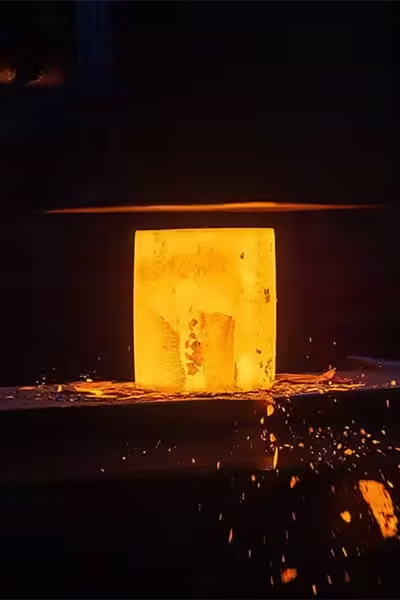
A105
A105 is a common carbon steel grade used in piping systems. Its excellent weldability makes it ideal for manufacturing flanges, fittings, and valves. The material’s moderate strength ensures durability under various operating conditions.
1010 and 1018
These grades are low to medium carbon steels known for their excellent machinability and formability. They are widely used in automotive parts and other structural applications due to their good balance of strength and ductility. Grade 1018 is particularly noted for its toughness, making it suitable for mechanical components.
1045 and 1080
1045 is a high-strength, medium carbon steel ideal for applications requiring high fatigue strength, such as gears and shafts. On the other hand, 1080, being a high carbon steel, can achieve significant hardness, making it suitable for springs and cutting tools.
A350 Grade LF2
This low-temperature carbon steel is designed for use in environments with low service temperatures. It is commonly used in the production of valves and fittings, ensuring reliable performance in challenging conditions.
Conclusion
Forging copper is a complex process that requires careful consideration of various factors to achieve high-quality results. By following the five best practices outlined in this guide—selecting the right copper alloy, employing proper heating techniques, utilizing effective forging methods, implementing quality control measures, and conducting post-forging treatments—manufacturers can optimize their operations and produce superior copper products. Whether you’re a seasoned metalworker or just starting, these practices will help you enhance your forging processes and achieve success in your projects.
FAQ
What is forging copper?
Forging copper is a metalworking process that involves shaping copper through compressive forces, typically using hammers or presses, to produce various forms and components.
Why is the selection of copper alloy important in forging?
Choosing the right copper alloy is crucial because different alloys have varying mechanical properties and corrosion resistance, impacting the final product’s performance and quality.
What are the ideal temperatures for forging copper?
The ideal temperature range for forging copper is between 700°F and 1,200°F (371°C to 649°C), where the metal exhibits excellent plasticity and malleability.
What quality control measures should be implemented in forging?
Key quality control measures include visual inspections, dimensional testing, and material testing to ensure that the forged products meet required specifications.
What are the benefits of post-forging treatment?
Post-forging treatments can improve mechanical properties, enhance corrosion resistance, and provide a better finish, leading to higher quality and more durable products.