Shandong Qilu lndustrial Co.,Ltd.

8 Smart Forge Solutions to Prevent Metal Defects and Waste
Welcome to My Blog!
Before we dive into the content, I’d love for you to join me on my social media platforms where I share more insights, engage with the community, and post updates. Here’s how you can connect with me:
Facebook:https://www.facebook.com/profile.php?id=100090903441806
Now, let’s get started on our journey together. I hope you find the content here insightful, engaging, and valuable.
Table of Contents
Introduction
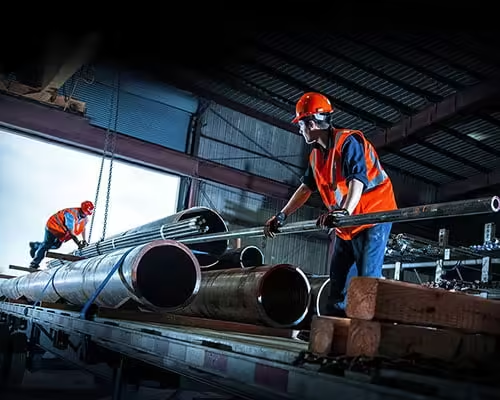
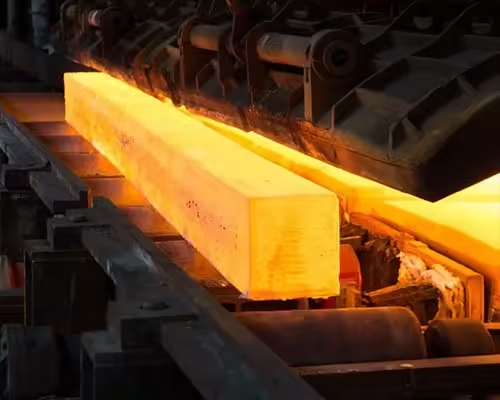
In the world of metalworking, achieving high-quality products is crucial for success. One of the most effective ways to ensure this quality is through the implementation of smart forge solutions. These solutions not only enhance the production process but also significantly reduce defects and waste, ultimately leading to improved efficiency and cost savings. In this blog, we will explore eight smart forge solutions that can help you optimize your operations and deliver superior metal products.
Understanding Forge Solutions
Forge solutions encompass a wide range of techniques, tools, and processes aimed at improving the metal forging industry. By leveraging advanced technology and best practices, manufacturers can address common challenges, such as defects in metal components and excessive waste during production. Understanding these solutions is essential for any organization looking to enhance its manufacturing capabilities.
NO 1. Implementing Advanced Monitoring Systems
One of the primary forge solutions to prevent metal defects is the use of advanced monitoring systems. These systems utilize sensors and data analytics to track the forging process in real-time. By monitoring temperature, pressure, and material flow, manufacturers can identify potential issues before they escalate into defects. This proactive approach enables timely adjustments, reducing the likelihood of waste and ensuring high-quality output.
NO 2. Utilizing High-Quality Raw Materials
The quality of raw materials directly impacts the final product. By investing in high-quality materials, manufacturers can significantly reduce the chances of defects. Forge solutions that prioritize sourcing superior raw materials lead to better mechanical properties and overall performance of the forged products. Conducting thorough supplier assessments and quality control checks is vital to maintaining high standards.
NO 3. Adopting Automated Forging Processes
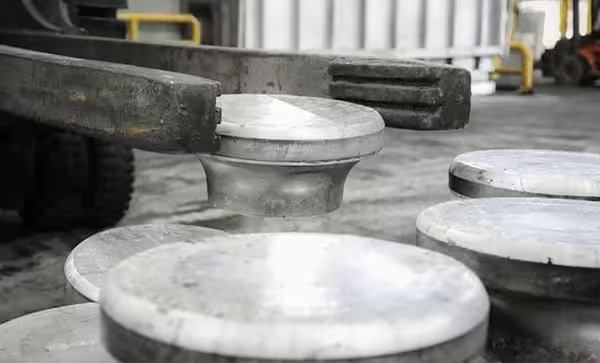
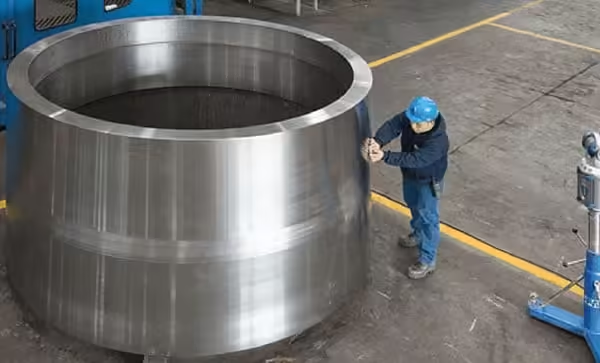
Automation is revolutionizing the forging industry, providing a range of forge solutions that enhance efficiency and reduce human error. Automated forging processes can include robotic arms for precision handling and CNC machines for accurate shaping. By minimizing manual intervention, manufacturers can achieve consistent quality and significantly lower the risk of defects caused by human error.
NO 4. Implementing Quality Control Procedures
Robust quality control procedures are essential for any forging operation. Establishing comprehensive inspection protocols at various stages of production can help identify defects early on. This approach not only minimizes waste but also ensures that only products meeting quality standards proceed to the next phase. Implementing advanced non-destructive testing methods can further enhance the effectiveness of quality control measures.
Table: Key Quality Control Measures in Forge Solutions
| Quality Control Measure | Description | Benefits |
|---|---|---|
| Visual Inspection | Regular visual checks for surface defects | Quick identification of obvious issues |
| Dimensional Inspection | Measuring critical dimensions against specifications | Ensures adherence to design tolerances |
| Non-Destructive Testing | Techniques like ultrasonic or radiographic testing | Detects internal flaws without damaging parts |
| Material Testing | Analyzing material properties before production | Guarantees high-quality raw materials |
| Process Audits | Regular audits of the forging process | Identifies areas for improvement |
NO 5. Continuous Training for Staff
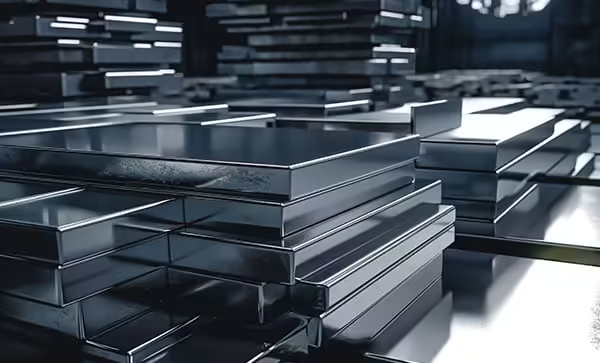
Investing in the continuous training of staff is a smart forge solution that can lead to fewer defects and reduced waste. By ensuring that employees are well-versed in the latest techniques and technologies, manufacturers can foster a culture of quality and accountability. Regular training sessions can cover topics such as proper machine operation, quality standards, and troubleshooting techniques.
NO 6. Emphasizing Design for Manufacturability (DFM)
Design for manufacturability is a critical aspect of forge solutions that focuses on designing products with the manufacturing process in mind. By optimizing designs to reduce complexity and facilitate easier forging, manufacturers can minimize the risk of defects. Collaborative efforts between design and manufacturing teams can lead to innovative solutions that enhance product quality and reduce waste.
NO 7. Investing in Upgraded Forging Equipment
Upgrading forging equipment is a proactive measure that can significantly improve product quality. Modern forging machines come equipped with advanced features that enhance precision and efficiency. Investing in state-of-the-art technology can reduce the occurrence of defects and streamline the production process. Additionally, regular maintenance of existing equipment ensures optimal performance and longevity.
NO 8. Utilizing Data Analytics for Process Optimization
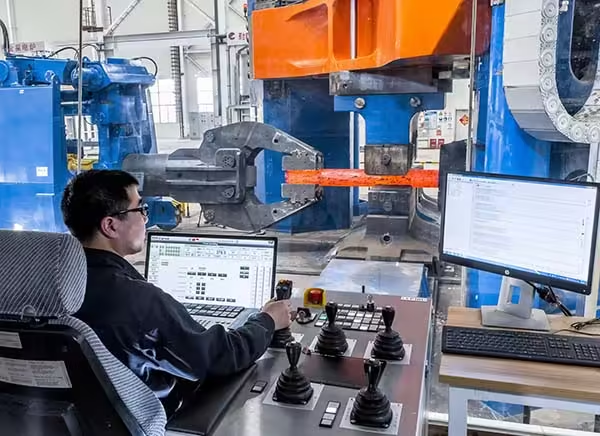
Data analytics is becoming an integral part of forge solutions, enabling manufacturers to make informed decisions based on real-time data. By analyzing production data, manufacturers can identify trends, inefficiencies, and areas for improvement. This data-driven approach allows for the optimization of processes, leading to reduced defects and waste. Implementing predictive analytics can also help anticipate potential issues before they arise.
Conclusion
Incorporating smart forge solutions into your manufacturing processes can dramatically reduce metal defects and waste, leading to improved quality and efficiency. By leveraging advanced monitoring systems, investing in high-quality raw materials, and adopting automation, manufacturers can create a more streamlined and effective operation. Continuous training, emphasizing design for manufacturability, upgrading equipment, and utilizing data analytics further contribute to a culture of quality and innovation. By implementing these eight smart forge solutions, manufacturers can position themselves for success in the competitive metalworking industry.
FAQ
What are forge solutions?
Forge solutions refer to techniques, tools, and processes designed to improve the metal forging industry by minimizing defects and waste while enhancing product quality.
How do advanced monitoring systems help in forging?
Advanced monitoring systems track the forging process in real-time, allowing manufacturers to identify potential issues and make timely adjustments to prevent defects.
Why is training important in forge solutions?
Continuous training ensures that staff are knowledgeable about the latest techniques and technologies, fostering a culture of quality and reducing the likelihood of defects.
What is design for manufacturability (DFM)?
Design for manufacturability focuses on creating product designs that simplify the manufacturing process, reducing complexity and minimizing defects during forging.
How can data analytics optimize forging processes?
Data analytics helps manufacturers analyze production data to identify trends and inefficiencies, enabling informed decisions that lead to reduced defects and waste.