Shandong Qilu lndustrial Co.,Ltd.

5 Benefits of Forged Components for Industrial Applications
Welcome to My Blog!
Before we dive into the content, I’d love for you to join me on my social media platforms where I share more insights, engage with the community, and post updates. Here’s how you can connect with me:
Facebook:https://www.facebook.com/profile.php?id=100090903441806
Now, let’s get started on our journey together. I hope you find the content here insightful, engaging, and valuable.
Table of Contents
Introduction
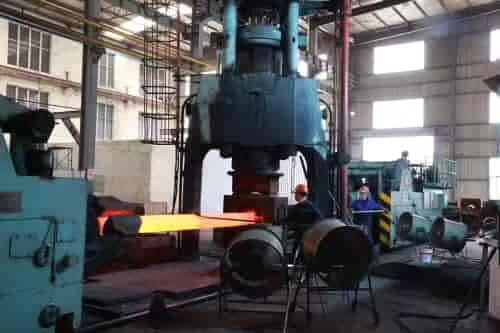
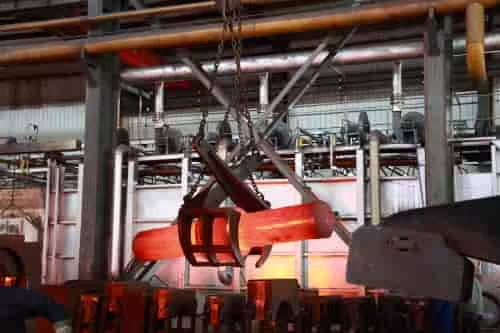
In industrial applications, the choice of materials is crucial to ensuring the longevity, reliability, and safety of machinery and equipment. Forged components have long been recognized as a superior option for industries requiring high-performance parts. Forging is a manufacturing process that involves shaping metal using localized compressive forces, and it is renowned for producing components that offer enhanced strength, durability, and reliability. This blog will explore the top five benefits of forged components for industrial applications, helping businesses understand why they should consider using forged parts for their machinery and equipment.
NO 1. Superior Strength and Durability
Forged components are renowned for their remarkable strength and long-lasting durability, which makes them particularly well-suited for demanding industrial environments. The process of forging, which involves shaping the material under high temperatures, results in a refined grain structure that significantly boosts the overall strength of the metal. As a consequence, these components exhibit exceptional tensile strength, higher resistance to fatigue, and enhanced ability to withstand heavy loads over extended periods. This makes them indispensable for applications where high performance and reliability are essential, such as in heavy-duty machinery, high-stress environments, and critical infrastructure.
How Forging Enhances Strength and Durability
- Material Integrity: The forging process compacts the metal, reducing the likelihood of internal defects such as voids, cracks, or inconsistencies in the material structure. As a result, the integrity of the component is reinforced, ensuring it can handle high stresses without failing.
- Increased Resistance to Fatigue: Components created through forging are known to have an improved resistance to cyclic stress, which makes them more resilient to the wear and tear caused by repeated load-bearing activities. Industries such as automotive, aerospace, and construction greatly benefit from this durability, as parts must endure continuous use without compromising safety or performance.
- Enhanced Impact Resistance: Forged parts are generally much more resistant to shock and impact compared to those produced by casting or machining. This is particularly valuable for industrial applications where components are exposed to sudden impacts, high-pressure conditions, or extreme temperatures. Such characteristics help reduce the likelihood of sudden breakdowns, thus ensuring continuous and reliable operation.
NO 2. Cost-Effectiveness in the Long Term
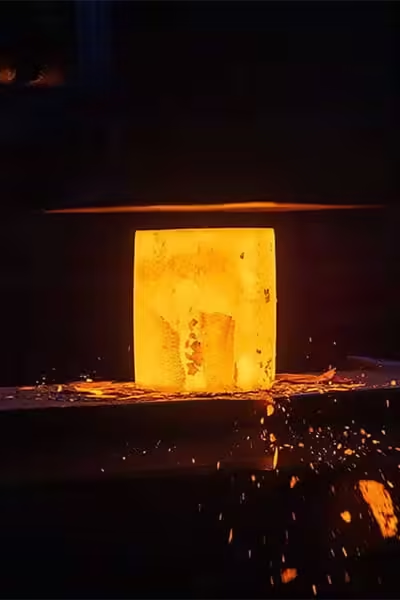
Although the initial cost of forging may be higher than alternative manufacturing methods like casting, the long-term benefits make it a cost-effective option. Forged components are less likely to fail prematurely, reducing maintenance costs, downtime, and the need for replacements.
How Forged Components Help Save Money Over Time
- Extended Operational Lifespan: The exceptional durability of forged components leads to a longer operational life, which means they need to be replaced far less frequently. This not only minimizes the direct costs associated with procurement but also reduces the logistical and labor costs tied to part replacements, which can be significant over time.
- Lower Maintenance Costs: With stronger components, there’s less risk of breakdowns and the need for repairs, translating into fewer maintenance interventions. The reduced frequency of failures allows businesses to allocate resources elsewhere, optimizing their overall operational budget. Components that are resistant to wear and tear also contribute to the smooth running of machinery, leading to fewer interruptions and reduced maintenance-related expenses.
- Improved Manufacturing Efficiency: Forged components are often more robust and require fewer parts to achieve the desired functionality. This helps streamline manufacturing processes and reduce the need for inventory management. Additionally, because these parts are more reliable, companies experience fewer disruptions in their production schedules, making the overall operation more efficient and cost-effective.
By opting for forged components, businesses invest in long-term reliability and performance, which ultimately leads to greater cost savings, enhanced productivity, and less risk of failure in critical industrial applications.
NO 3. Improved Material Properties
One of the most significant advantages of forged components is their improved material properties. Forging produces a more uniform and refined grain structure in the metal, which results in components that exhibit enhanced properties such as improved hardness, wear resistance, and corrosion resistance.
Key Material Benefits
- Better Hardness: Forged components tend to be harder than cast or machined parts, making them ideal for applications that require wear resistance, such as gears and shafts.
- Enhanced Corrosion Resistance: The process of forging can result in parts with fewer impurities, reducing the likelihood of corrosion in environments exposed to moisture or chemicals.
- More Uniform Material Composition: Forging reduces the chance of material inconsistencies, ensuring that the properties of the component remain consistent across the part.
NO 4. Precision and Reliability
Forged components offer a higher level of precision compared to other manufacturing methods. The process allows for more accurate shaping and dimensional consistency, ensuring that each component meets the required specifications. This is especially important in applications where precise tolerances are essential for the proper functioning of machinery.
How Forged Components Enhance Precision and Reliability
- Tight Tolerances: Forging offers superior control over dimensions and tolerances, making it possible to produce components that fit seamlessly within a machine.
- Consistent Performance: With forged components, you can expect consistent performance, as these parts undergo rigorous quality control during manufacturing.
- Reduced Risk of Failure: The precise and reliable nature of forged components minimizes the risk of failure during operation, providing a higher degree of safety in industrial machinery.
NO 5. Versatility in Application
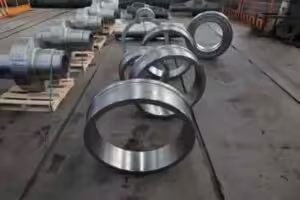
Forged components are highly versatile and widely used across various industries, from automotive to aerospace and heavy machinery. Their ability to withstand high stress, repetitive forces, and extreme conditions makes them ideal for critical applications.
Tailored for Various Industries
In the automotive sector, forged components are essential for engine parts, suspension systems, and transmission components. Similarly, aerospace relies on forged parts for turbine blades, landing gear, and structural components, benefiting from their strength and resistance to fatigue.
Customization for Complex Designs
Forging can be adapted to produce parts in varying sizes and complexities. This flexibility is ideal for industries that require specific material properties or intricate designs, such as energy and mining sectors, where durable, high-performance components are essential.
Large and Small Applications
Forging accommodates a wide range of sizes, from small intricate parts to large, heavy-duty machinery components. This makes forged components suitable for both high-precision and robust industrial applications.
In short, forged components’ adaptability makes them indispensable across diverse sectors, ensuring reliability and performance in demanding conditions.
Applications
| Industry | Common Forged Components | Benefits |
|---|---|---|
| Automotive | Crankshafts, gears | High strength, impact resistance |
| Aerospace | Turbine blades, shafts | Lightweight, durable, high performance at high temps |
| Construction | Load-bearing parts, fasteners | Robust, resistant to wear and fatigue |
| Energy | Valve bodies, pumps | Corrosion resistance, long operational life |
Conclusion
Forged components offer a wide range of benefits for industrial applications, from superior strength and durability to cost-effectiveness and versatility. The process of forging produces components that can withstand extreme conditions, making them ideal for use in industries such as automotive, aerospace, construction, and energy. By investing in forged components, businesses can ensure the reliability and longevity of their machinery while also reducing long-term costs associated with maintenance and replacements.
FAQ
What are forged components made from?
Forged components are typically made from materials like steel, aluminum, and titanium, chosen based on the required properties for the application. Steel alloys are often preferred due to their strength and durability, while aluminum is used for lighter applications. Other materials, like titanium, are selected for their resistance to high temperatures and corrosion.
Are forged components more expensive than cast components?
Forged components may have a higher initial cost compared to cast components, but they offer better durability and strength, resulting in fewer replacements and reduced maintenance costs over time. This makes them more cost-effective in the long run, especially in industries requiring high-performance parts.
Can forged components be used in all industries?
Yes, forged components are versatile and used across various industries, including automotive, aerospace, construction, and energy. Their strength and reliability make them ideal for demanding applications, such as engine components, turbine blades, and heavy machinery parts.
How do forged components compare to machined parts?
Forged components generally offer superior strength and resistance to fatigue compared to machined parts. While machining may be needed after forging for precise shaping, forged components typically perform better under stress and have a longer service life, making them the preferred choice for heavy-duty applications.