Shandong Qilu lndustrial Co.,Ltd.

Why Forge Cast Iron is Your Best Option for Strong Parts
Welcome to My Blog!
Before we dive into the content, I’d love for you to join me on my social media platforms where I share more insights, engage with the community, and post updates. Here’s how you can connect with me:
Facebook:https://www.facebook.com/profile.php?id=100090903441806
Now, let’s get started on our journey together. I hope you find the content here insightful, engaging, and valuable.
Table of Contents
Introduction
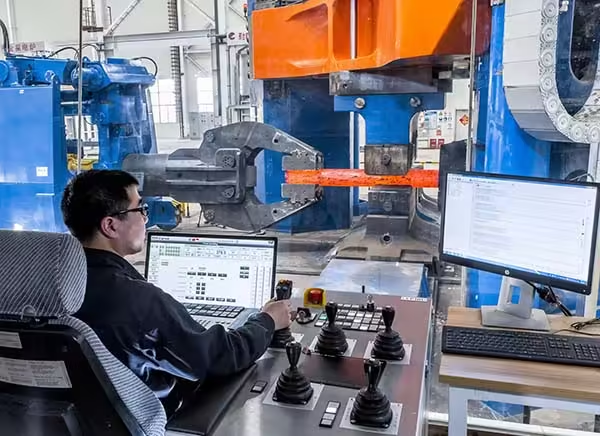
When selecting materials for manufacturing strong and durable components, the decision can be a challenging one. The wide variety of materials available today means that manufacturers must carefully evaluate their options based on factors such as strength, durability, resistance to wear and fatigue, and cost-effectiveness. One material that consistently stands out is forge cast iron. This alloy, renowned for its superior properties, is often the go-to choice when building parts that need to withstand extreme conditions.
In this blog, we will explore why forge cast iron could be your best option for strong parts. From its manufacturing process to its numerous advantages and key applications, we will provide a thorough understanding of this remarkable material and how it can be the perfect fit for various industrial uses.
What is Forge Cast Iron?
Forge cast iron is a unique form of cast iron that undergoes a forging process, which enhances its physical properties. Unlike regular cast iron, which is poured into molds and allowed to solidify, forge cast iron is heated and mechanically worked (forged) to refine its grain structure and improve its overall strength. This process results in a much stronger and more durable material that is ideal for parts that experience heavy stress and wear over time.
By aligning the grains within the metal, forge cast iron exhibits improved toughness, resistance to cracking, and greater tensile strength compared to traditional cast iron. This makes it an excellent material for industrial and mechanical applications where performance under pressure is crucial.
The Benefits
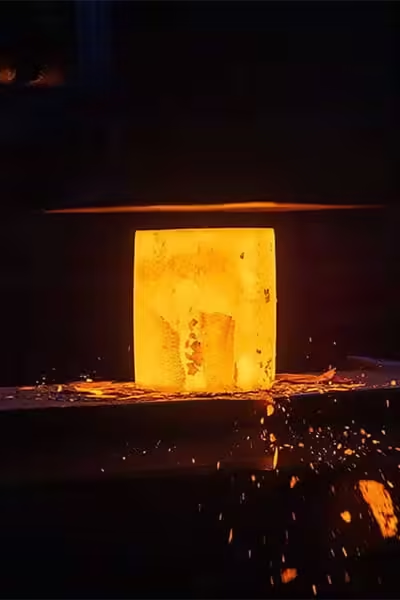
Forge cast iron offers numerous advantages that make it an excellent choice for high-performance parts. Below, we highlight the key benefits that make this material stand out from the competition:
NO 1. Superior Strength and Durability
One of the primary benefits of forge cast iron is its exceptional strength. The forging process increases the material’s tensile strength by aligning the grains in a way that reduces weak points. As a result, parts made from forge cast iron are capable of withstanding heavy loads, intense pressure, and harsh environments. This durability is particularly important for components that need to perform consistently over long periods of time, such as gears, engine parts, and industrial machinery.
NO 2. Enhanced Resistance to Wear and Tear
Forge cast iron exhibits excellent wear resistance, making it ideal for components that experience frequent friction and abrasion. The fine-grained structure produced during the forging process helps minimize the wear and tear that parts undergo in everyday use. For instance, components such as valve seats, bearings, and pistons made from forge cast iron last longer and perform better under repeated stress, reducing the need for maintenance and replacements.
NO 3. Improved Impact Resistance
The forging process also enhances the material’s impact resistance. Forge cast iron parts are more resilient to sudden shocks and high-impact forces compared to those made from regular cast iron. This makes forge cast iron an ideal material for parts in heavy machinery or high-stress applications where components are subjected to sudden impacts or vibrations.
NO 4. Thermal Stability
Forge cast iron is highly resistant to heat, making it suitable for applications that involve high temperatures. Whether it’s used in engines, turbines, or other machinery, forge cast iron can maintain its structural integrity even when exposed to extreme heat. This thermal stability ensures that parts remain reliable and continue to perform effectively under demanding conditions.
Applications
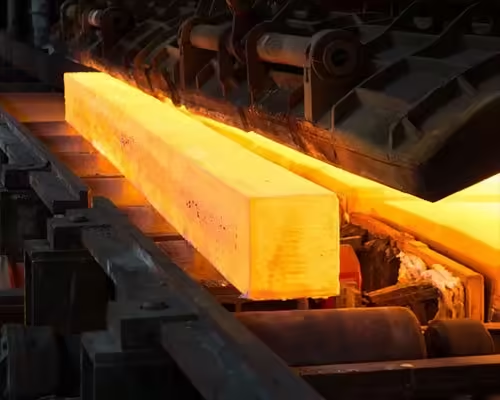
Forge cast iron is used in a wide variety of industries where strength, durability, and heat resistance are essential. Below are a few key industries and applications where forge cast iron is commonly used:
NO 1. Automotive Industry
In the automotive industry, parts like engine blocks, crankshafts, and gears are often made from forge cast iron due to its strength and durability. These components must withstand high-pressure conditions, repetitive motion, and extreme temperatures, making forge cast iron an ideal material choice.
NO 2. Aerospace Industry
In the aerospace sector, forge cast iron is used for components like turbine blades and landing gear. The material’s ability to resist high temperatures, combined with its strength and impact resistance, makes it a critical part of the manufacturing process for aerospace applications.
NO 3. Industrial Equipment
Industrial machinery often requires parts that can handle heavy stress and wear. Forge cast iron is commonly used in equipment such as pumps, compressors, and valves. Its ability to resist wear, handle high pressures, and remain structurally stable under extreme conditions makes it perfect for these applications.
NO 4. Heavy Machinery
Forge cast iron is also widely used in heavy machinery, including construction and mining equipment. Parts like axles, gears, and hydraulic components benefit from the strength and durability of forge cast iron, allowing machinery to operate efficiently even in the harshest environments.
Choosing the Right Type
When selecting forge cast iron for your project, it’s essential to choose the right type of cast iron based on the specific application and performance requirements. Below is a table that compares the different types of forge cast iron and their properties, which can help guide your decision-making process.
| Type of Forge Cast Iron | Tensile Strength | Impact Resistance | Wear Resistance | Best Applications |
|---|---|---|---|---|
| Gray Cast Iron | Moderate | Good | Good | Engine blocks, pumps |
| Ductile Cast Iron | High | Very Good | Excellent | Automotive, machinery |
| White Cast Iron | Very High | Excellent | Excellent | Mining equipment, wear-resistant parts |
| Malleable Cast Iron | Moderate | Good | Moderate | Farm machinery, valves |
Each type of forge cast iron has distinct properties, making it more suitable for specific applications. For example, ductile cast iron offers high tensile strength and impact resistance, making it ideal for automotive components. In contrast, white cast iron is better suited for parts exposed to heavy wear.
Conclusion
Forge cast iron is a highly versatile material that offers outstanding strength, durability, and resistance to wear, making it an excellent choice for parts that must endure heavy stress and extreme environments. Its unique properties, including enhanced tensile strength, impact resistance, and thermal stability, make it a top contender for a wide range of industrial applications.
Whether you’re working in the automotive, aerospace, or heavy machinery industry, forge cast iron can provide the strength and longevity you need for your components. By understanding the benefits and applications of this material, you can make an informed decision when selecting materials for your next project.
FAQ
What is the main difference between forge cast iron and regular cast iron?
The primary distinction lies in the manufacturing process. While regular cast iron is created by pouring molten metal into molds, where it solidifies into the desired shape, forge cast iron undergoes an additional step: the forging process. This involves heating the material and then mechanically working it, which serves to realign the internal grain structure. This forging process significantly enhances the strength, toughness, and overall durability of the material, making it more suitable for applications that require superior performance and longevity.
Is forge cast iron suitable for high-temperature applications?
Indeed, the material is highly resistant to extreme temperatures, which makes it a reliable choice for applications exposed to high heat. The superior properties resulting from the forging process allow the material to maintain its integrity even in high-temperature environments. As a result, it is frequently used in components such as engine parts, turbine blades, and other machinery exposed to heat, where materials that would otherwise degrade quickly need to withstand continuous exposure to intense conditions.
What are some common uses for forge cast iron?
This versatile material is utilized across a wide range of industries due to its robustness and high resistance to wear and heat. It is commonly found in the automotive industry, where it is used for engine blocks, crankshafts, and gears, as well as in the aerospace sector for turbine components and landing gear. Additionally, it’s widely used in heavy machinery and industrial equipment such as pumps, compressors, and valve systems. Its unique ability to resist wear, high-impact forces, and temperature extremes makes it a go-to option for many demanding applications.
Can forge cast iron be used in high-stress environments?
Absolutely. Thanks to its enhanced strength and toughness, parts made from this material are specifically designed to withstand the rigors of high-stress environments. The forging process helps eliminate weak points within the metal, enabling components to endure heavy loads, frequent impacts, and repetitive use without compromising their structural integrity. This makes it an ideal material for equipment in industries like construction, automotive manufacturing, and mining, where parts are constantly under heavy stress and harsh conditions.