Shandong Qilu lndustrial Co.,Ltd.

Steel Forging Temp: Key Factors to Consider
Welcome to My Blog!
Before we dive into the content, I’d love for you to join me on my social media platforms where I share more insights, engage with the community, and post updates. Here’s how you can connect with me:
Facebook:https://www.facebook.com/profile.php?id=100090903441806
Now, let’s get started on our journey together. I hope you find the content here insightful, engaging, and valuable.
Table of Contents
Introduction
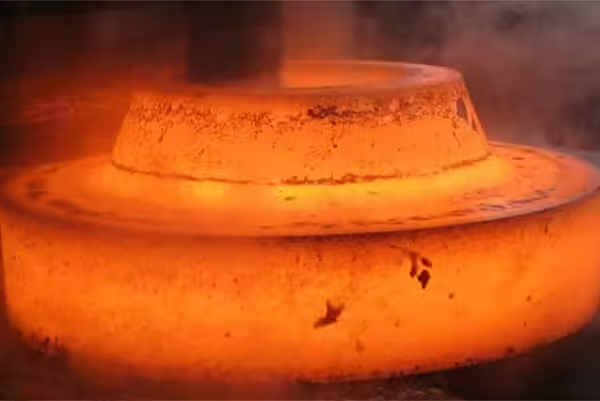
Steel forging is a critical process in the manufacturing industry, shaping the quality and strength of steel products used in a wide array of applications, from automotive components to industrial machinery. One of the most important factors in steel forging is controlling the temperature, commonly referred to as the steel forging temp. The temperature at which steel is forged directly impacts the final product’s mechanical properties, such as hardness, ductility, and strength. This blog will provide a comprehensive guide to understanding steel forging temperatures, the factors that affect them, and why they are so crucial to the forging process.
What is Steel Forging Temp?
Steel forging temperature refers to the optimal range of heat required to reshape steel during the forging process. During forging, steel is heated to a specific temperature to make it malleable enough to undergo deformation under pressure. The right temperature ensures that the steel will retain its strength while achieving the desired shape and size without compromising its properties.
Forging temperatures vary depending on the type of steel being used, the type of forging process (hot or cold), and the end product’s requirements. The temperature control is essential for achieving the desired microstructure and mechanical properties of the forged product.
Key Factors That Influence Steel Forging Temp
Steel Alloy Composition
The chemical composition of the steel alloy is one of the key factors that determine the ideal forging temperature. Different types of steel alloys, such as carbon steel, stainless steel, and alloy steels, have different temperature requirements due to their varying chemical makeups. For example, high-carbon steels tend to require higher temperatures compared to low-carbon steels to achieve adequate malleability.
Type of Forging Process
The type of forging process—whether it is open-die forging, closed-die forging, or upset forging—will affect the forging temperature. For open-die forging, temperatures are typically higher to ensure proper deformation. In contrast, closed-die forging, which involves compressing steel inside a die, may require more precise temperature control to avoid defects.
Desired Mechanical Properties
The mechanical properties required in the final product, such as tensile strength, fatigue resistance, and impact toughness, will dictate the appropriate forging temperature. Steel heated to the right temperature allows for the proper grain structure formation, directly influencing its performance. For example, higher temperatures are typically used for forging steel components that require high toughness and low hardness, while lower temperatures may be employed for parts requiring increased hardness.
Cooling Rate and Post-Forging Treatment
After forging, the cooling rate of the steel is just as critical as the heating process. The rate at which the forged steel cools can influence the material’s hardness, grain size, and overall strength. The cooling process must be carefully controlled and tailored to the forging temperature. Post-forging treatments such as quenching or tempering can further modify the properties achieved through the forging process.
Steel Forging Temp and Its Impact on Quality
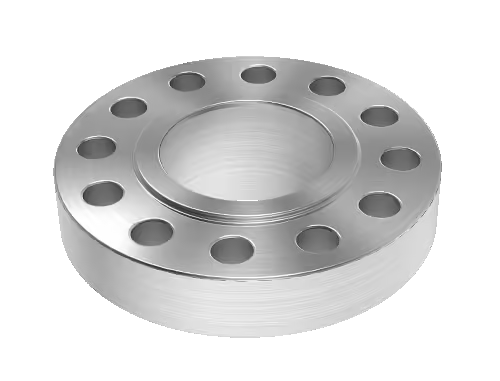
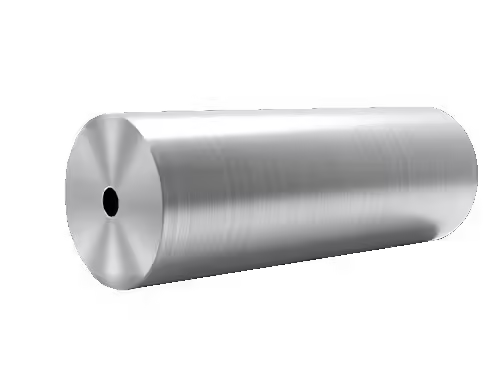
The forging temperature has a direct impact on the quality of the steel product. Maintaining the correct temperature throughout the forging process ensures that the steel exhibits uniformity, improved material properties, and reduced defects such as cracking or warping.
A well-controlled steel forging temp helps in achieving optimal grain flow, ensuring that the steel’s grain structure is aligned correctly. This alignment helps improve the mechanical properties of the steel, making it more durable and suitable for high-performance applications such as aerospace, automotive, and heavy machinery.
Steel Forging Temperature Table
The following table summarizes typical forging temperature ranges for different types of steel alloys. These temperatures are approximate and may vary depending on the specific steel composition and manufacturing processes.
| Steel Type | Forging Temperature Range (°F) | Application |
|---|---|---|
| Carbon Steel | 1,500 – 2,100 | General manufacturing, automotive components |
| Alloy Steel | 1,500 – 2,200 | High-performance components, machinery parts |
| Stainless Steel | 1,800 – 2,200 | Corrosion-resistant parts, food-grade equipment |
| Tool Steel | 1,800 – 2,300 | Cutting tools, dies, and molds |
| High-Speed Steel | 2,000 – 2,400 | High-speed cutting tools |
How to Control Steel Forging Temp
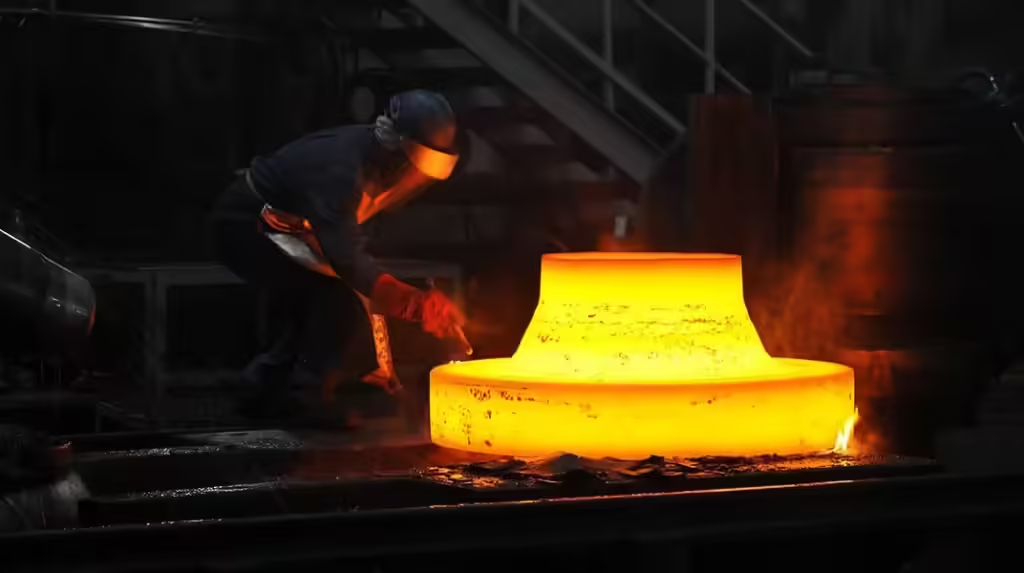
Proper Heating Equipment
To control the steel forging temp, reliable heating equipment such as electric induction furnaces or gas-fired furnaces is required. These furnaces ensure that the steel is heated evenly, preventing localized overheating or underheating that could affect the quality of the final product.
Real-time Temperature Monitoring
Advanced temperature sensors and thermocouples are used to monitor the steel temperature in real time. This data allows operators to make adjustments as needed to maintain the optimal forging temperature and reduce the risk of defects.
Preheating and Soaking Times
Certain alloys, especially those with high carbon content, may require preheating or soaking periods to ensure even heat distribution. Preheating helps to reduce thermal stresses and allows the steel to achieve uniform temperature throughout the material.
Quenching and Tempering
After forging, controlling the temperature during quenching (rapid cooling) or tempering (controlled cooling) processes is essential for tailoring the steel’s hardness, toughness, and ductility. Cooling rates are adjusted based on the steel forging temp to optimize mechanical properties.
Conclusion
The temperature at which steel is forged plays a crucial role in the final product’s quality and performance. By understanding the factors that influence steel forging temp, such as alloy composition, type of forging process, and desired mechanical properties, manufacturers can ensure that they produce high-quality, durable steel products. Proper temperature control during the forging process, along with careful monitoring and post-forging treatment, will result in a steel product that meets the rigorous standards of various industries.
FAQ
What is the best temperature for forging steel?
The optimal temperature for forging steel varies depending on the alloy and intended use. Generally, carbon steel is forged between 1,500°F and 2,100°F, while alloy steels may require higher temperatures of up to 2,200°F.
How does the composition of steel affect forging temperature?
Different steel alloys have different melting points and malleability, which influences the temperature at which they should be forged. High-carbon steels need higher temperatures to become malleable, while low-carbon steels require lower temperatures.
What happens if the forging temperature is too high?
If the forging temperature is too high, the steel may become overly brittle, resulting in cracks or warping during the forging process.
How can I maintain consistent forging temperatures?
Using reliable heating equipment, such as induction furnaces, and monitoring the temperature with sensors can help maintain consistent forging temperatures throughout the process.
Can steel be forged at room temperature?
Room-temperature forging, also known as cold forging, is used for certain types of steel, but it requires much higher pressure. It is not suitable for all steel types and is typically used for smaller components.