Shandong Qilu lndustrial Co.,Ltd.

Heat Treatment Steel: Applications & Industries
Welcome to My Blog!
Before we dive into the content, I’d love for you to join me on my social media platforms where I share more insights, engage with the community, and post updates. Here’s how you can connect with me:
Facebook:https://www.facebook.com/profile.php?id=100090903441806
Now, let’s get started on our journey together. I hope you find the content here insightful, engaging, and valuable.
Table of Contents
Introduction
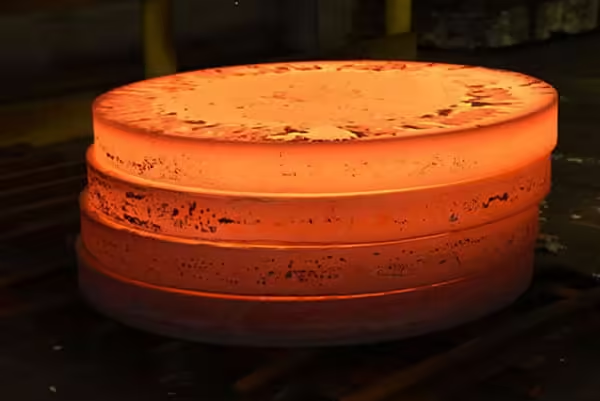
Heat treatment steel refers to steel that has undergone a controlled heating and cooling process to alter its microstructure, thereby changing its mechanical properties such as hardness, strength, toughness, ductility, and elasticity. This process is crucial in various industries to enhance the performance and lifespan of steel components. Without heat treatment, many steel products would not possess the necessary properties for their intended applications. This blog post delves into the world of heat treatment steel, exploring its processes, applications, and significance across diverse industries.
What is Heat Treatment Process for Steel?
The heat treatment process for steel involves several key steps:
- Heating: The steel is heated to a specific temperature, depending on the desired properties and the type of steel. This temperature is usually above the critical temperature range, where phase transformations occur in the steel’s microstructure.
- Soaking (Holding): The steel is held at this temperature for a specific period, allowing the temperature to equalize throughout the material and for the desired phase transformations to take place.
- Cooling: The steel is then cooled at a controlled rate. The cooling rate is crucial as it determines the final microstructure and properties of the steel. Different cooling methods, such as air cooling, oil quenching, water quenching, or furnace cooling, are used depending on the desired outcome.
Common heat treatment processes for steel include:
- Annealing: This process softens the steel, improves machinability, and relieves internal stresses.
- Normalizing: This process refines the grain structure of the steel, improving its strength and toughness.
- Hardening: This process increases the hardness and strength of the steel.
- Tempering: This process reduces the brittleness of hardened steel while maintaining some of its hardness and strength.
- Case Hardening: This process hardens the surface of the steel while leaving the core relatively soft.
Heat Treatment Steel Applications in Automotive Industry
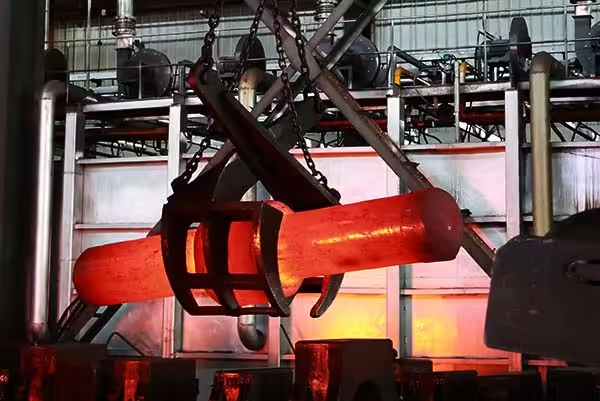
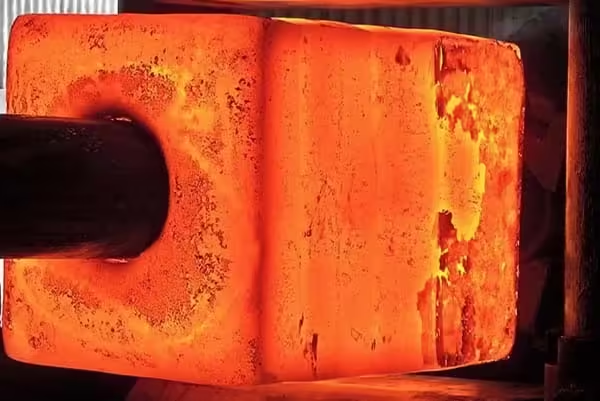
The automotive industry relies heavily on heat treatment steel for various components, including:
- Gears and shafts: Heat treatment enhances the strength and wear resistance of these crucial drivetrain components.
- Engine components: Connecting rods, crankshafts, and valves undergo heat treatment to withstand high temperatures and stresses.
- Suspension springs: Heat treatment provides the necessary elasticity and fatigue resistance for suspension systems.
- Body panels: Some high-strength steel used in vehicle bodies is heat-treated for improved crashworthiness.
The use of heat treatment steel in the automotive industry contributes to improved vehicle safety, performance, and fuel efficiency.
Heat Treatment Steel in Aerospace Applications
The aerospace industry demands materials with exceptional strength, lightweight properties, and resistance to extreme temperatures and stresses. Heat treatment steel plays a vital role in this sector, finding applications in:
- Aircraft landing gear: Heat-treated high-strength steel provides the necessary strength and toughness for absorbing landing impacts.
- Engine components: Turbine blades, shafts, and other engine parts require heat treatment to withstand high temperatures and stresses.
- Structural components: Certain aircraft structural elements utilize heat-treated steel for its high strength-to-weight ratio.
The stringent requirements of the aerospace industry necessitate precise control over the heat treatment process to ensure the reliability and safety of aircraft.
Heat Treatment Steel in Manufacturing and Tooling
In manufacturing and tooling, heat treatment steel is essential for producing durable and high-performance tools and machinery:
- Cutting tools: Drills, milling cutters, and other cutting tools are heat-treated to achieve the required hardness and wear resistance.
- Dies and molds: Heat treatment enhances the durability and lifespan of dies and molds used in various manufacturing processes.
- Machine components: Gears, bearings, and other machine parts undergo heat treatment to withstand demanding operating conditions.
Heat treatment steel is crucial for maintaining productivity and efficiency in manufacturing operations.
Benefits of Heat Treatment Steel: A Summary
Heat treatment offers numerous benefits to steel, including:
- Increased Hardness and Strength: Improves resistance to wear, abrasion, and deformation.
- Enhanced Toughness and Ductility: Increases resistance to impact and cracking.
- Improved Fatigue Resistance: Extends the lifespan of components subjected to cyclic loading.
- Relieved Internal Stresses: Reduces the risk of distortion and cracking during machining or service.
- Improved Machinability: Makes the steel easier to cut and shape.
These benefits make heat treatment an indispensable process for optimizing the performance of steel in a wide range of applications.
Heat Treatment Steel Processes and Their Effects: A Table
| Heat Treatment Process | Purpose | Effects on Steel Properties | Example Application |
|---|---|---|---|
| Annealing | Soften steel, relieve internal stresses | Decreased hardness, increased ductility and machinability | Wire drawing, sheet metal forming |
| Normalizing | Refine grain structure, improve strength | Increased strength and toughness, improved machinability | Structural components, forgings |
| Hardening | Increase hardness and strength | Increased hardness and wear resistance, decreased toughness | Cutting tools, dies |
| Tempering | Reduce brittleness of hardened steel | Reduced brittleness, improved toughness, slight decrease in hardness | Springs, gears |
| Case Hardening | Harden the surface while leaving the core soft | Hard surface for wear resistance, tough core for impact resistance | Gears, camshafts |
| Quenching | Rapid cooling to achieve desired hardness | Significantly increases hardness and strength, can induce internal stresses if not controlled | Cutting tools, high-strength structural parts |
Heat Treatment Steel: Industries and Future Trends
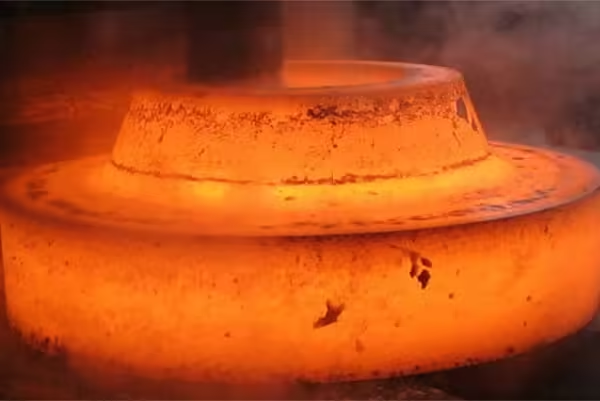
Heat treatment steel is essential in numerous industries, including:
- Automotive: As discussed, for gears, shafts, and other critical components.
- Aerospace: For aircraft landing gear, engine parts, and structural components.
- Manufacturing: For cutting tools, dies, molds, and machine parts.
- Construction: For structural steel used in buildings and bridges.
- Energy: For components used in power generation and oil and gas exploration.
Future trends in heat treatment steel include:
- Advanced heat treatment technologies: Such as vacuum heat treatment, plasma nitriding, and laser hardening, offer greater precision and control.
- Development of new heat-treatable steel alloys: With improved properties for demanding applications.
- Increased focus on energy efficiency and environmental sustainability: In heat treatment processes.
Conclusion
Heat treatment is a crucial process that significantly enhances the properties and performance of steel. By carefully controlling the heating and cooling process, engineers can tailor the microstructure of steel to meet the specific requirements of various applications. From automotive and aerospace to manufacturing and construction, heat treatment steel plays a vital role in numerous industries, contributing to improved safety, performance, efficiency, and sustainability. As technology continues to advance, we can expect further innovations in heat treatment processes and the development of new heat-treatable steel alloys, further expanding the applications and benefits of this essential material.
FAQ
Q: What is the main purpose of heat treating steel?
A: The main purpose is to alter the mechanical properties of steel, such as hardness, strength, toughness, and ductility, to meet specific application requirements.
Q: What are the different types of heat treatment processes for steel?
A: Common processes include annealing, normalizing, hardening, tempering, case hardening, and quenching.
Q: How does heat treatment affect the hardness of steel?
A: Depending on the process, heat treatment can significantly increase the hardness of steel, making it more resistant to wear and abrasion.
Q: Is heat treatment necessary for all steel products?
A: No, not all steel products require heat treatment. However, for many critical applications where specific mechanical properties are required, heat treatment is essential.