Shandong Qilu lndustrial Co.,Ltd.

Advantages of Press Forging Over Other Methods
Welcome to My Blog!
Before we dive into the content, I’d love for you to join me on my social media platforms where I share more insights, engage with the community, and post updates. Here’s how you can connect with me:
Facebook:https://www.facebook.com/profile.php?id=100090903441806
Now, let’s get started on our journey together. I hope you find the content here insightful, engaging, and valuable.
Table of Contents
Introduction
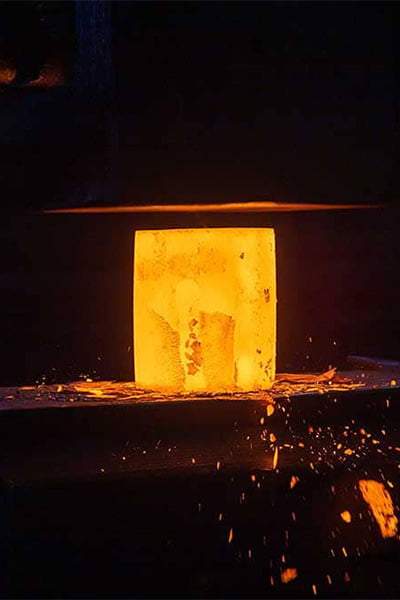
Press forging, a sophisticated metalworking process, has revolutionized the manufacturing industry. By utilizing compressive forces to shape metal, press forging offers a myriad of benefits that surpass traditional forging techniques. This article delves into the key advantages of press forge, exploring why it has become the preferred choice for numerous manufacturers across various sectors.
Understanding Press Forging: A Closer Look
Press forging involves the application of immense pressure to a heated metal workpiece using meticulously designed dies. This intense pressure compels the metal to flow and conform to the intricate contours of the die cavity, resulting in precisely shaped components. The process offers an unparalleled level of control over the final product’s dimensions and tolerances.
Key Advantages of Press Forging: A Comprehensive Overview
- Unmatched Precision: Press forge empowers manufacturers to achieve exceptionally tight tolerances and unwavering part quality. The controlled application of pressure minimizes variations, yielding components with exceptional consistency.
- Enhanced Material Properties: The process has the remarkable ability to improve the mechanical properties of the forged part, including strength, ductility, and fatigue resistance. This enhancement is attributed to the grain refinement and alignment that occur during the forging process.
- Complex Shapes, Simplified: Press forging can effortlessly produce intricate and complex shapes that would be challenging or impossible to create using other methods. The process’s flexibility allows for the creation of components with undercuts, holes, and other intricate features.
- Reduced Material Waste, Optimized Efficiency: Compared to traditional forging methods, press forge typically results in significantly less material waste. This is due to the precise control over material flow, ensuring optimal utilization of the raw material.
- Superior Surface Finish: The forged components produced using press forge often exhibit a superior surface finish, reducing the need for subsequent machining operations. This streamlined process contributes to increased efficiency and cost savings.
- Accelerated Production Rates: Press forge is a highly efficient process capable of producing large quantities of parts at a faster rate than traditional forging methods. This accelerated production significantly boosts productivity and output.
- Automation Potential, Streamlined Operations: The process is well-suited for automation, further increasing production efficiency and reducing labor costs. By integrating automation technology, manufacturers can achieve higher levels of precision, consistency, and output.
- Energy Efficiency, Sustainable Manufacturing: Press forge is generally more energy-efficient than other forging methods, as it requires less energy to shape the metal. This reduced energy consumption aligns with sustainable manufacturing practices and minimizes environmental impact.
Comparison of Press Forging with Other Methods: A Tabular Analysis
| Feature | Press Forging | Hammer Forging | Upset Forging |
|---|---|---|---|
| Precision | High | Moderate | Low |
| Complexity of shapes | High | Moderate | Low |
| Material waste | Low | Moderate | High |
| Surface finish | Good | Moderate | Poor |
| Production rate | High | Moderate | Low |
| Automation potential | High | Moderate | Low |
| Energy efficiency | High | Moderate | Low |
Applications of Press Forging: A Diverse Range of Industries
Press forging finds extensive application in a wide range of industries, including:
- Automotive: Production of engine components, transmission parts, chassis components, and structural elements.
- Aerospace: Manufacturing of aircraft components, such as landing gear, turbine blades, and structural frames.
- Medical: Production of surgical instruments, implants, and orthopedic devices.
- Electronics: Manufacturing of electronic components, such as connectors, heat sinks, and precision parts.
- Construction: Production of construction hardware, such as bolts, nuts, and structural fittings.
Factors Affecting the Choice of Press Forging: Key Considerations

Several factors influence the decision to employ press forge, including:
- Part complexity: The intricacy of the desired shape and the presence of intricate features.
- Required tolerances: The precision and accuracy required for the final product.
- Material properties: The specific characteristics of the metal being forged, such as strength, ductility, and formability.
- Production volume: The quantity of parts needed to be produced.
- Cost: The overall cost-effectiveness of the process, considering factors such as tooling, labor, and energy consumption.
Conclusion
Press forging offers a compelling combination of precision, efficiency, and versatility, making it an attractive choice for a diverse array of manufacturing applications. Its ability to produce complex shapes with exacting tolerances, while simultaneously enhancing material properties and minimizing waste, has solidified its position as a leading metal forming process. As technology continues to advance, we can anticipate even more innovative applications of press forge in the future.
FAQ
What is the difference between press forging and hammer forging?
Press forging utilizes mechanical presses to apply force, resulting in greater control and precision. Hammer forging, on the other hand, relies on the impact energy of a falling hammer, which can be less precise.
Can press forge be used for all types of metals?
While press forge can be applied to a wide range of metals, its suitability depends on factors like the metal’s ductility, strength, and temperature requirements. Some metals may require specific forging conditions or preheating to ensure optimal results.
What are the limitations of press forging?
Some limitations of press forge include the initial setup costs for tooling and dies, as well as the complexity of forging highly intricate shapes. Additionally, the size and weight of the workpiece can also limit the applicability of press forge.
How does press forging compare to CNC machining?
While both processes can produce complex shapes, press forging is generally more efficient for high-volume production of identical parts. CNC machining, on the other hand, offers greater flexibility for producing one-off or low-volume parts with intricate details.
What are some common applications of press forging?
Press forging is widely used in various industries, including automotive, aerospace, medical, and construction. Some common applications include engine components, transmission parts, aircraft components, surgical instruments, and structural hardware.