Shandong Qilu lndustrial Co.,Ltd.

Forging Metals: A Timeless Craft, Modern Applications
Welcome to My Blog!
Before we dive into the content, I’d love for you to join me on my social media platforms where I share more insights, engage with the community, and post updates. Here’s how you can connect with me:
Facebook:https://www.facebook.com/profile.php?id=100090903441806
Now, let’s get started on our journey together. I hope you find the content here insightful, engaging, and valuable.
Table of Contents
Introduction

Forging metals is an ancient art of shaping metal through heat and force, continuing to be a cornerstone of modern manufacturing. From the intricate components of aerospace vehicles to the sturdy tools of everyday life, forged metal products are ubiquitous. This blog delves into the fascinating world of forging metals, exploring its techniques, benefits, and applications.
Understanding the Forging Process
Forging metals is a metallurgical process that involves plastic deformation of a metal workpiece. By heating the metal to a specific temperature, it becomes malleable and can be shaped using various techniques. This process significantly enhances the metal’s mechanical properties, such as strength, toughness, and fatigue resistance.
Key Stages in Forging Metals
- Heating: The metal workpiece is heated in a furnace or forge to a temperature within its plastic deformation range.
- Deformation: The heated metal is shaped using hammers, presses, or dies. The deformation process realigns the metal’s grains, leading to improved properties.
- Cooling: The forged part is allowed to cool slowly to relieve internal stresses and stabilize the microstructure.
Different Forging Techniques
The diverse range of forging metal techniques allows for the creation of a wide variety of metal shapes and sizes. Some of the most common techniques include:
- Open-Die Forging: This technique involves shaping the metal between two flat or curved dies. It is suitable for producing simple shapes and is often used for preliminary shaping before further processing.
- Impression Die Forging: In this technique, the metal is shaped using dies with cavities that match the desired final shape. It is highly accurate and produces complex shapes with precise dimensions.
- Roll Forging: This process involves shaping the metal by passing it between rotating rollers. It is commonly used to produce long, cylindrical shapes, such as rods and bars.
- Upset Forging: This technique involves increasing the cross-sectional area of the workpiece by compressing it along its axis. It is used to create components with specific dimensions and shapes.
Comparison of Forging Metal Techniques
| Technique | Complexity of Shapes | Production Rate | Equipment Requirements |
|---|---|---|---|
| Open-die Forging | Simple to moderate | Moderate | Basic hammers, anvils |
| Impression Die Forging | Complex | High | Precision dies, presses |
| Roll Forging | Long, cylindrical shapes | High | Rollers |
| Upset Forging | Increasing cross-sectional area | Moderate | Upsetting machines |
Materials Suitable for Forging Metals
The choice of metal for forging metals depends on the desired properties of the final product, such as strength, toughness, and corrosion resistance. Some commonly forged metals include:
- Carbon Steel: A versatile and widely used material for forging metals, offering a good balance of strength, ductility, and machinability.
- Alloy Steel: These steels contain alloying elements that enhance specific properties, such as high-strength low-alloy (HSLA) steels for structural applications and tool steels for cutting tools.
- Stainless Steel: Known for its excellent corrosion resistance, stainless steel is often forged into components for harsh environments.
- Aluminum Alloys: Lightweight and easily formable, aluminum alloys are widely used in aerospace, automotive, and other industries.
- Titanium Alloys: High-strength and lightweight, titanium alloys are used in aerospace, medical implants, and other demanding applications.
Advantages of Forging Metals
Forging metals offers several advantages over other manufacturing processes:
- Enhanced Mechanical Properties: The forging process refines the metal’s microstructure, leading to improved strength, toughness, and fatigue resistance.
- Complex Shapes: Forging metals can produce intricate shapes with precise tolerances, often eliminating the need for secondary machining operations.
- Versatility: A wide range of metals can be forged, allowing for diverse applications.
- Cost-Effective: Forging metals can be a cost-effective process, especially for high-volume production, as it often requires fewer machining operations.
Applications of Forging Metals
Forged metal components are integral to numerous industries and everyday products:
- Automotive: Crankshafts, connecting rods, gears, axles, and suspension components.
- Aerospace: Turbine blades, landing gear components, fasteners, and structural frames.
- Construction: Structural beams, columns, and fittings.
- Energy: Valves, fittings, and turbine components.
- Tools and Hardware: Wrenches, hammers, pliers, and other hand tools.
Best Practices for Forging Metals
To achieve optimal results in forging metals, it is essential to adhere to best practices:
- Proper Heating: The metal must be heated to the appropriate temperature to ensure proper deformation.
- Die Design: Well-designed dies are crucial for producing accurate and consistent parts.
- Lubrication: Proper lubrication reduces friction and wear, improving die life and part quality.
- Quality Control: Rigorous quality control measures are essential to ensure the integrity of forged components.
Challenges and Future Trends in Forging Metals
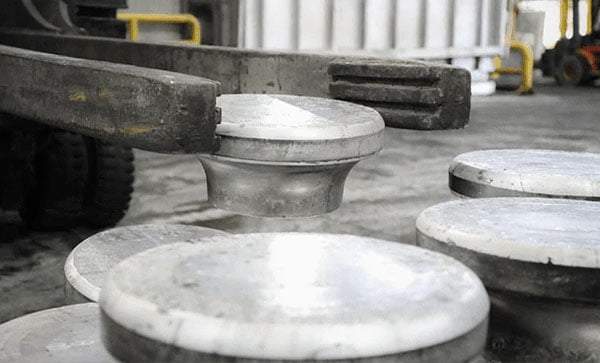
While forging metals is a well-established process, it faces certain challenges:
- High Initial Costs: The cost of tooling and equipment can be significant, especially for complex shapes.
- Material Limitations: Some materials, such as certain high-temperature alloys, may be difficult to forge.
Despite these challenges, the future of forging metals is bright. Advancements in materials science, computer-aided engineering, and manufacturing technologies are driving innovation in the field. New materials, such as advanced high-strength steels and titanium alloys, are being developed for forging metal applications. Additionally, the integration of automation and robotics is improving the efficiency and precision of forging metal processes.
Conclusion
Forging metals is a timeless craft, continuing to be a vital manufacturing process. By understanding its techniques, materials, and best practices, manufacturers can produce high-quality, durable, and reliable metal components. As technology advances, forging metals is poised to play an even more significant role in shaping our world.
FAQ
What is the difference between forging and casting?
Forging involves shaping metal through plastic deformation, while casting involves pouring molten metal into a mold.
Can any metal be forged?
Not all metals can be forged. The metal’s properties, such as ductility and malleability, play a crucial role in its suitability for forging. Common metals used in forging include steel, aluminum, and titanium.
What are the most common forging defects?
Some common forging defects include cracks, laps, folds, and porosity. These defects can occur due to various factors, such as improper heating, excessive deformation, or poor die design.
How is forging used in the automotive industry?
Forging is extensively used in the automotive industry to produce critical components like crankshafts, connecting rods, gears, and suspension components. Forged components offer superior strength, durability, and reliability.
What are the environmental impacts of forging metals?
Forging can have environmental impacts, such as air pollution from furnace emissions and water pollution from cooling processes. However, modern forging practices incorporate pollution control measures to minimize these impacts.