Shandong Qilu lndustrial Co.,Ltd.

7 Unbeatable Benefits of Forging Iron
Welcome to My Blog!
Before we dive into the content, I’d love for you to join me on my social media platforms where I share more insights, engage with the community, and post updates. Here’s how you can connect with me:
Facebook:https://www.facebook.com/profile.php?id=100090903441806
Now, let’s get started on our journey together. I hope you find the content here insightful, engaging, and valuable.
Table of Contents
Introduction
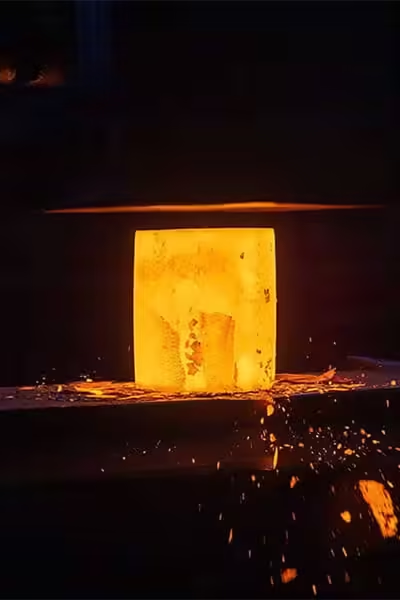
Forging iron has been a fundamental process in metalworking for centuries, offering unmatched strength, durability, and versatility. This technique involves shaping iron using compressive forces, making it ideal for various industrial and commercial applications. From construction to manufacturing, forging iron plays a vital role in producing high-quality components that withstand extreme conditions. In this article, we explore the unbeatable benefits of forging iron and why it remains a preferred choice for professionals across multiple industries.
The Strength and Durability of it
Why Forging Iron Offers Superior Strength
Forging iron significantly enhances the mechanical properties of the metal, making it one of the strongest and most reliable materials in metalworking. The process refines the grain structure of iron, eliminating internal voids and defects. This results in:
- Higher tensile strength – Forged iron components can withstand immense pressure and load-bearing applications.
- Improved impact resistance – The compact grain structure minimizes the risk of fractures and breakages.
- Extended lifespan – Compared to cast or machined iron, forged iron has a longer service life.
Applications That Rely on Forging Iron for Strength
Due to its superior strength, forging iron is widely used in:
- Heavy machinery and industrial equipment
- Automotive and aerospace components
- Construction materials, such as beams and reinforcements
- Agricultural tools and hardware
The Cost-Effectiveness of it
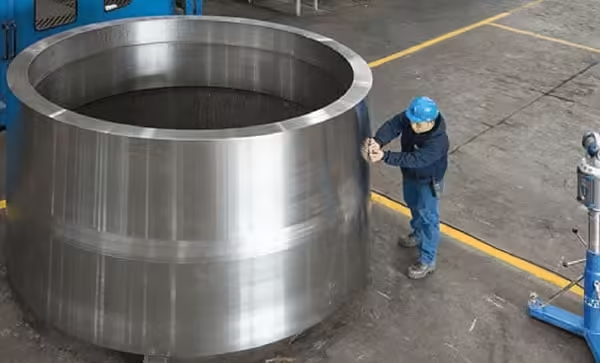
Why Forging Iron Reduces Long-Term Costs
Although the initial investment in forging iron may seem higher than other metalworking processes, the long-term benefits outweigh the costs. The durability and reliability of forged iron lead to:
- Lower maintenance costs – Forged iron components require fewer repairs and replacements.
- Reduced material waste – The forging process minimizes scrap, maximizing material utilization.
- Improved production efficiency – The consistency of forged iron reduces defects, cutting down on rework.
Industries That Benefit from Cost Savings
Several industries rely on the cost-effectiveness of forging iron, including:
- Automotive – Reduced failure rates in forged iron parts enhance vehicle performance.
- Construction – Forged iron structures remain intact for decades, reducing maintenance expenses.
- Oil and gas – High-strength forged iron components extend equipment longevity.
The Versatility of it in Various Applications
How Forging Iron Adapts to Different Needs
One of the greatest advantages of forging iron is its adaptability. It can be shaped into various forms to meet specific industry requirements. The flexibility of forging iron allows for:
- Customization – Different shapes, sizes, and specifications can be achieved.
- Compatibility – Forged iron can be used with different metals and alloys.
- Enhanced properties – Additional treatments can further improve strength and corrosion resistance.
Common Uses of Forged Iron
Forged iron is widely used in:
- Automotive components – Crankshafts, gears, and axles
- Heavy machinery – Mining and construction equipment
- Hand tools – Hammers, wrenches, and pliers
Table: Key Advantages of it Compared to Other Metalworking Processes
| Benefit | Forging Iron | Casting | Machining |
|---|---|---|---|
| Strength | High | Medium | Low |
| Durability | Excellent | Moderate | Low |
| Material Waste | Low | High | Medium |
| Customization | High | Medium | High |
| Cost-Effectiveness | High | Low | Medium |
| Impact Resistance | Excellent | Moderate | Low |
The Environmental Benefits of it
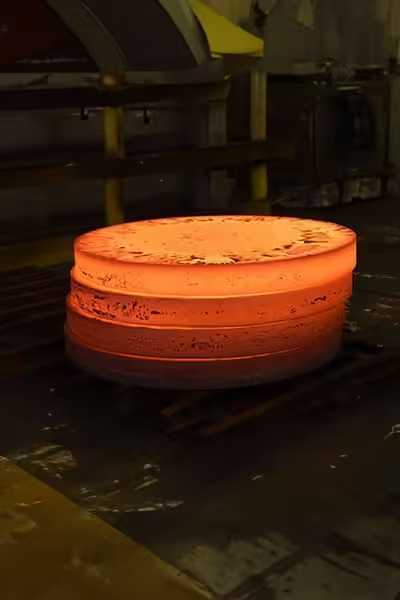
Why Forging Iron is a Sustainable Choice
Sustainability is a growing concern in modern industries, and forging iron offers several environmental benefits:
- Energy efficiency – The forging process consumes less energy compared to casting or machining.
- Reduced material waste – Forging maximizes material usage, minimizing scrap metal.
- Lower emissions – Since fewer resources are wasted, carbon footprints are significantly reduced.
Industries Adopting it for Sustainability
Many industries are prioritizing environmentally friendly processes, and forging iron is a key component in:
- Renewable energy sectors – Wind turbines and hydroelectric components
- Sustainable construction – Durable iron structures that reduce the need for replacements
- Eco-friendly manufacturing – Using recycled iron to create high-quality forged products
The Heat and Corrosion Resistance
How it Withstands Extreme Conditions
It is known for its exceptional heat and corrosion resistance, making it suitable for high-stress environments. This property is enhanced through:
- Heat treatment processes – Such as annealing and quenching to increase resilience.
- Alloying elements – The addition of elements like chromium improves corrosion resistance.
- Protective coatings – Further shielding forged iron from rust and wear.
Where Heat and Corrosion Resistance Matter Most
Industries that require materials capable of withstanding extreme conditions include:
- Aerospace – Engine components and structural reinforcements
- Chemical processing – Pipes and valves exposed to corrosive substances
- Marine industry – Shipbuilding and offshore drilling equipment
The Customization and Precision
Why it Offers Unmatched Precision
Forging iron allows for a high degree of precision and customization, ensuring that each component meets exact specifications. The process results in:
- Consistent mechanical properties – Every forged piece maintains uniform strength.
- Near-net shapes – Reducing the need for extensive machining.
- Tight tolerances – Ideal for precision-based industries.
Industries That Rely on Precision it
Precision is crucial in industries such as:
- Medical – Surgical tools and orthopedic implants
- Defense – Weapons and military-grade components
- Manufacturing – Precision-engineered gears and fasteners
Conclusion
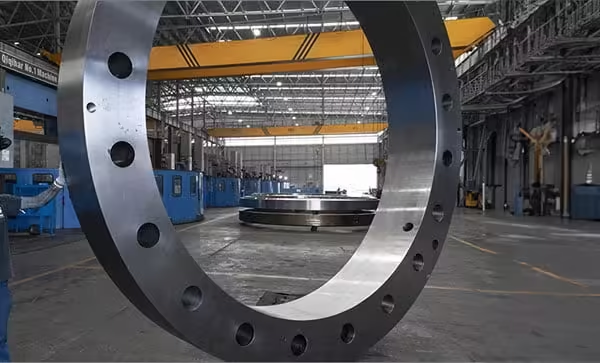
Forging iron is a time-tested metalworking process that delivers superior strength, durability, cost-effectiveness, and versatility. Whether for heavy machinery, construction, or precision engineering, forged iron provides unbeatable benefits. If you’re looking for high-quality, long-lasting metal components, investing in forging iron is the best decision.
FAQ
What makes it stronger than other metalworking processes?
Forging refines the grain structure of iron, eliminating internal defects and enhancing strength and durability.
Is it more expensive than casting?
While the initial cost may be higher, forging iron reduces long-term expenses due to its durability and minimal maintenance requirements.
Can it be used in high-temperature environments?
Yes, forged iron has excellent heat resistance, making it suitable for aerospace, industrial, and chemical applications.
How does it contribute to sustainability?
Forging iron reduces material waste, consumes less energy, and has a lower carbon footprint compared to other metalworking methods.
What industries benefit the most from it?
Industries such as automotive, construction, aerospace, and manufacturing rely on forging iron for its strength, precision, and longevity.