Shandong Qilu lndustrial Co.,Ltd.

5 Powerful Benefits of Precision Disc Forging
Table of Contents
Introduction

In industrial manufacturing, the need for robust, high-performance components is growing every day, especially in critical areas such as aerospace and automotive. Disc forgings are a key process for significantly improving the quality and performance of disc-shaped components to meet these demanding requirements.
Qilu is a leading manufacturer of quality forgings, including disc forgings, and understands the advantages of precision disc forgings. We have invested heavily in state-of-the-art equipment (200-4,000 tons) and testing to produce parts in quantities ranging from 1 piece to over 100,000 pieces. With our global distribution network, we can ensure fast delivery and keep your project running smoothly. In this article, we’ll discuss five key benefits of precision disc forging.
The Core Advantages of Disc Forging
The forging process fundamentally transforms the material’s internal structure, leading to properties that are inherently superior to those achieved through other manufacturing methods like casting or machining from plate. This makes disc forging an invaluable technique for critical applications.
1. Superior Strength and Enhanced Durability
One of the most compelling advantages of precision forged disks is the significant increase in material strength and overall durability. Unlike casting, which can leave internal voids, pores, or an inconsistent grain structure, the forging process subjects the metal to controlled compressive forces. This intense plastic deformation refines the grain structure, making it finer and more uniform. It also eliminates internal defects and porosity, making the material denser and more uniform.
This fine microstructure translates directly into higher tensile, yield and impact strengths. Discs produced by forging can withstand greater loads and stresses without distortion or failure. This enhanced strength is critical for components that operate in highly stressful environments, such as gears in heavy machinery, brake discs in automotive applications or turbine discs in power generation equipment. The inherent toughness and resistance to sudden impact of forged brake discs directly increases the life and reliability of the end product.
2. Optimized Grain Flow and Fatigue Resistance
A unique feature of forged parts is their optimized grain flow. During the disc forging process, the internal grain structure of the metal is stretched and oriented to coincide with the contours of the disc in the same direction as the primary stresses to which the part will be subjected in service. This engineered grain flow provides superior directional strength, making the disk much more resistant to fatigue and crack extension.
Components subjected to cyclic loading, such as those in rotating machinery or aircraft engines, are particularly susceptible to fatigue failure over time. Forged discs with continuous and optimized grain flow resist microcrack initiation and extension more effectively than cast or machined discs. This superior fatigue resistance ensures that the disc retains its structural integrity and performance after millions of stress cycles, making forged discs indispensable in critical applications where safety and longevity are paramount.
3. Excellent Material Utilization and Cost Efficiency
While the initial setup of a forged disk may sometimes require higher tooling costs compared to other methods, the overall economic benefits are often apparent over the product life cycle, especially in medium to high volume production. The precision forging process is very efficient in terms of material utilization. Forged disks are typically capable of near net forming, which means that when forging is complete, the final part is very close to its finished size.
This near-net-shape capability greatly reduces the amount of material that needs to be removed in subsequent machining operations. Less machining means less material waste, shorter machining times, less die wear, and ultimately lower cost per part. In addition, the superior strength and durability of forged disks often means that lighter parts can be designed, or existing designs can be made more robust without increasing the amount of material used. These high-efficiency forging discs are a cost-effective option for manufacturers looking to optimize their production processes and material consumption.
4. Consistent Part-to-Part Uniformity and Reliability
Precision disk forging offers significant advantages in an industry focused on consistency and predictability. From precise temperature management to controlled deformation forces, the forging process is highly controllable, ensuring superior consistency from forged disk to forged disk. This consistent quality minimizes variations in mechanical properties, dimensions and surface finish from batch to batch.
This high degree of part-to-part consistency is critical for assemblies where multiple parts must be put together and work seamlessly together. It reduces the likelihood of defects, improves assembly efficiency, and enhances the overall reliability of the final product. Manufacturers can have greater confidence in the performance of each disk, which is critical for quality assurance and meeting stringent industry standards. The predictability of disk forging results simplifies quality control and reduces scrap, resulting in increased line efficiency.
5. Versatility in Material Grades and Complex Geometries
Modern disc forging technology is versatile enough to process a wide range of ferrous and non-ferrous alloys, including various grades of steel, aluminum, titanium and nickel-based high temperature alloys. This material flexibility allows engineers to select the best alloy for a particular application, whether it be high temperature, corrosion resistance or a specific strength-to-weight ratio.
In addition, advances in die design and forging equipment have allowed us to produce highly complex disk-like structures with intricate features such as hubs, spokes, flanges and varying thicknesses. While maintaining the superior mechanical properties of forged components, this capability allows for innovative design solutions that would be difficult, if not impossible, to achieve with other manufacturing methods. With the ability to mold complex shapes while improving material integrity, disk forging technology has become the preferred choice for the manufacture of complex and demanding disk-shaped components in a wide range of industries.
The Precision Forging Process for Discs

Understanding the step-by-step process provides deeper insight into how these powerful benefits are achieved. The journey of transforming raw material into a high-performance forged disc involves meticulous planning and execution.
Material Selection and Preparation
The foundation of a quality forged disc lies in the selection of the correct material grade. Engineers must consider the application’s specific demands: temperature, pressure, corrosive environment, and required strength. Once the material, often a steel or alloy billet, is chosen, it undergoes preparation. This typically involves cutting the material to the precise weight and dimensions required for the disc, ensuring minimal waste during forging. Surface defects or internal imperfections in the raw material are rigorously inspected and removed to prevent their propagation during the forging process, which could compromise the integrity of the final disc.
Heating the Billet
Before forging, the prepared billet is uniformly heated to a specific forging temperature. This temperature is critical; it must be high enough to make the metal ductile and malleable, allowing it to flow and fill the die cavity, but not so high that it causes unwanted grain growth or material degradation. Precise temperature control is crucial to ensure consistent material properties and to prevent defects such as cracking or inadequate deformation during the subsequent forging steps. Different alloys have different optimal forging temperature ranges, requiring careful calibration.
The Forging Operation
The actual forging of the disc typically occurs through either open-die or closed-die methods, or a combination of both, depending on the disc’s size, complexity, and required tolerances.
- Open-Die Forging (Initial Breakdown): For larger or simpler discs, open-die forging might be used first. This involves shaping the heated billet between flat or contoured dies using a press or hammer. This initial “upsetting” or “blooming” action breaks down the cast structure of the raw material, refines the grain, and establishes a basic disc shape. It’s highly flexible and suitable for large, custom disc components.
- Closed-Die Forging (Precision Shaping): For more intricate disc geometries, tighter tolerances, and higher volume production, closed-die forging is employed. The heated material is placed into a die cavity that precisely matches the desired disc shape. High compressive forces from a hydraulic press or mechanical hammer force the material to fill every intricate detail of the die, creating a near-net shape disc. This method ensures optimal grain flow and excellent dimensional consistency, critical for precision disc forging.
- Ring Rolling (for annular discs): For disc components that are essentially rings or have a central hole, ring rolling can be a specialized forging process. A preform (a pierced disc or “doughnut”) is heated and then rolled between a driven roll and an idler roll, progressively increasing its diameter while reducing its wall thickness. This creates a seamless, strong, and concentric ring or annular disc, commonly used in gears or bearings.
Quality Assurance and Post-Forging Processes
The journey of a precision forged disc doesn’t end with the shaping. A series of critical post-forging operations are essential to achieve the final mechanical properties and surface finish.
Heat Treatment
One of the most vital post-forging steps is heat treatment. The forging process can induce stresses and alter the microstructure of the metal. Heat treatment involves carefully controlled heating and cooling cycles to modify the disc’s metallurgical structure, relieving residual stresses, improving toughness, increasing hardness, or enhancing specific properties like wear resistance. Common heat treatment processes include normalization, annealing, quenching, and tempering, each chosen based on the desired final properties of the disc. This step is indispensable for optimizing the performance and longevity of the forged disc.
Machining and Finishing
Despite the near-net shape capabilities of precision disc forging, some amount of machining is typically required to achieve final dimensions, critical tolerances, and a precise surface finish. This can involve turning, milling, grinding, or drilling to create mounting holes, precise bearing surfaces, or intricate features. The reduced amount of material removal needed due to the near-net shape saves significant machining time and cost, directly contributing to the overall efficiency of the manufacturing process.
Surface Treatment and Inspection
Depending on the disc’s intended application, it may undergo additional surface treatments such as shot blasting (to improve fatigue life and surface finish), passivation (for corrosion resistance in stainless steels), or specialized coatings. Finally, every precision forged disc undergoes rigorous inspection. This includes dimensional checks, visual inspection for surface defects, and non-destructive testing (NDT) methods like ultrasonic testing (UT) for internal flaws, magnetic particle inspection (MPI) for surface and near-surface cracks, and sometimes even metallurgical analysis to confirm the desired microstructure and mechanical properties. These checks ensure that every forged disc meets the highest quality standards and performs reliably in its application.
Comparative Performance: Forged Discs vs. Other Methods
To further emphasize the benefits, it’s useful to compare forged discs with components produced by alternative manufacturing methods.
| Feature / Method | Precision Disc Forging | Casting (Sand/Investment) | Machined from Plate/Bar |
| Grain Structure | Refined & Aligned (Optimal Grain Flow) | Coarse & Random (Potential for Porosity) | Cut Through (Can expose weak points) |
| Strength (Tensile/Yield) | Superior | Good (Lower due to defects) | Good (Dependent on base material quality) |
| Fatigue Resistance | Excellent (Due to optimized grain flow) | Poor to Moderate (Stress concentrators from porosity) | Moderate (Grain flow interrupted by machining) |
| Ductility | High | Lower (More brittle) | Good |
| Material Utilization | High (Near-Net Shape) | Moderate (More risers/gates) | Lower (Significant chip waste) |
| Surface Finish (As-Forged) | Good | Rough (Requires more finishing) | Excellent (Post-machining) |
| Internal Defects | Extremely Low (Eliminated by forging) | High potential for porosity/inclusions | Low (If raw material is sound) |
| Typical Applications | High-stress gears, brake discs, turbine components, flanges | Housings, non-critical parts, complex internal geometries | Prototypes, low-volume, simple shapes |
Applications Benefiting from Disc Forging
The superior characteristics imparted by precision disc forging make these components indispensable across a broad range of industries, particularly where performance under extreme conditions is non-negotiable.
Aerospace and Defense
In aerospace, every component must exhibit maximum strength with minimum weight. Forged discs are critical for jet engine turbine discs, compressor discs, and various structural components where high temperature, high stress, and fatigue resistance are paramount. Their reliability directly impacts flight safety and performance. The demanding specifications of defense applications also heavily rely on the integrity of forged discs for armament components and vehicle systems.
Automotive and Heavy Machinery
The automotive industry utilizes forged discs extensively for brake discs, clutch plates, gear blanks, and wheel hubs. The high strength and excellent wear resistance contribute to enhanced vehicle safety, performance, and longevity. In heavy machinery, forged discs serve as crucial components in transmissions, gears, bearings, and hydraulic systems, enduring immense loads and continuous operation in rugged environments.
Energy and Power Generation
Within the energy sector, forged discs are fundamental to turbines (gas, steam, wind), generators, and large pumps. These components often operate at high rotational speeds and elevated temperatures, requiring exceptional material integrity and resistance to creep and fatigue. The reliability of power generation hinges on the robustness of these critical forged discs.
Oil and Gas Exploration
In the challenging environments of oil and gas exploration, equipment must withstand extreme pressures, corrosive elements, and high temperatures. Forged discs are used in valves, flanges, wellhead components, and drilling machinery, where their durability and integrity are vital for operational safety and efficiency.
Industrial and General Engineering
Beyond specialized industries, forged discs are found in a vast array of general industrial applications, including couplings, pulleys, sprockets, and various types of rollers. Their inherent strength and consistent quality make them a preferred choice for components subjected to significant wear and tear in manufacturing, mining, and construction equipment.
Qilu’s Dedication to Precision Disc Forging
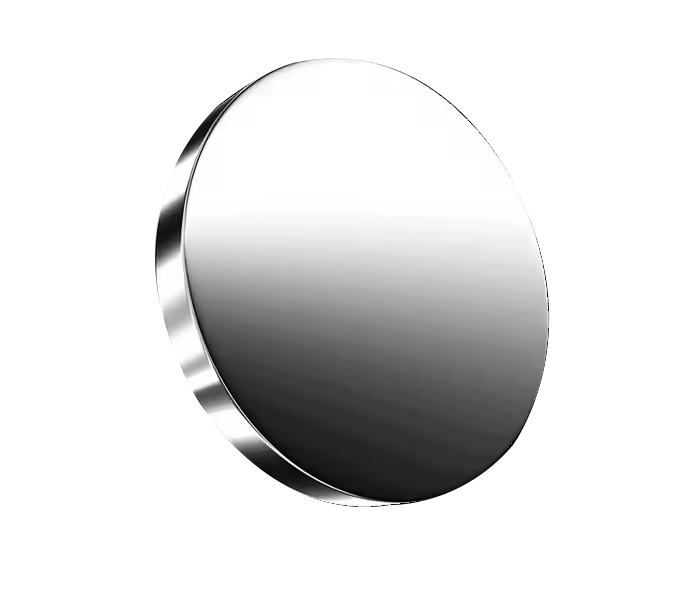
At Qilu, our core business is dedicated to producing superior disc forgings. We pride ourselves on utilizing cutting-edge technology and a deep understanding of metallurgical science to produce disc forging that not only meet, but often exceed the most stringent industry standards. Our extensive investment in state-of-the-art forging presses with torques ranging from 200 to 4,000 tons gives us the flexibility to respond to a wide range of project specifications. Whether you need small, complex parts or large, heavy disc forgings, our equipment and expertise allow us to handle parts of all sizes and complexity with ease.
We have the capacity to produce metal forgings from 1 kilogram to over 100,000 kilograms per piece. Such a wide range of products ensures that we are able to meet special and specialized needs as well as high-volume industrial requirements. We understand that timely delivery is critical to our customers’ project schedules. For this reason, Qilu maintains a well-stocked inventory and operates a strong global distribution network, which is carefully designed to ensure fast and reliable delivery of your customized forging disc orders worldwide. Our stringent quality control process, which covers every stage from raw material inspection to disc forging and post-processing, ensures that every forged disk that leaves the factory is of the highest quality and will perform reliably in its intended application.
Conclusion
The benefits of disc forging are obvious and important to the high performance industry. Their exceptional strength, optimized grain flow, excellent fatigue resistance and cost-effectiveness make them ideal for manufacturing durable and reliable disc forging . The exquisite forging process gives their components inherent characteristics that are stronger than those made by other methods.
Choosing precision forged discs is a strategic investment in the long-term performance of your product. As a leading manufacturer of quality forged components, Qilu would like to be your trusted partner. Our advanced production capabilities, commitment to quality, and worldwide distribution network ensure that you get the best disc forging solution. Contact us today for more information.
FAQ
What makes precision disc forging superior to casting for disc components?
Precision disc forging is superior to casting primarily because it refines the internal grain structure of the metal and eliminates porosity and internal voids, which are common in castings. This results in a disc with significantly higher strength, superior fatigue resistance, and optimized grain flow, leading to greater durability and reliability.
Can forged discs handle high temperatures and extreme pressures?
Yes, forged discs are widely used in applications involving high temperatures and extreme pressures, such as in aerospace jet engines and power generation turbines. The forging process enhances the material’s structural integrity, making it highly resistant to creep and fatigue under such demanding conditions, especially when appropriate alloy steels or superalloys are used.
How does disc forging contribute to cost efficiency?
Disc forging contributes to cost efficiency through its near-net shape capabilities. This means the forged disc is produced very close to its final dimensions, significantly reducing the amount of material waste and the extensive machining time typically required for parts made by other methods. This leads to lower material costs, reduced labor, and faster production cycles.
What types of materials can be used for precision disc forging?
Precision disc forging is highly versatile and can be performed on a wide range of materials, including various grades of carbon steel, alloy steel, stainless steel, aluminum alloys, titanium alloys, and nickel-based superalloys. The choice of material depends on the specific application requirements, such as strength, corrosion resistance, or temperature tolerance.
Does Qilu offer custom disc forging services for unique applications?
Absolutely. Qilu specializes in producing high-quality custom forging, including discs, tailored to specific client requirements. Our extensive range of forging equipment (200 tons to 4000 tons) and capacity (1 to over 100,000 pieces) allow us to handle unique geometries, specific material grades, and both small-batch and large-volume orders, ensuring precision-engineered solutions for diverse applications.