Shandong Qilu lndustrial Co.,Ltd.

10 Proven Benefits of Forged Alloy Steel
Table of Contents
Introduction
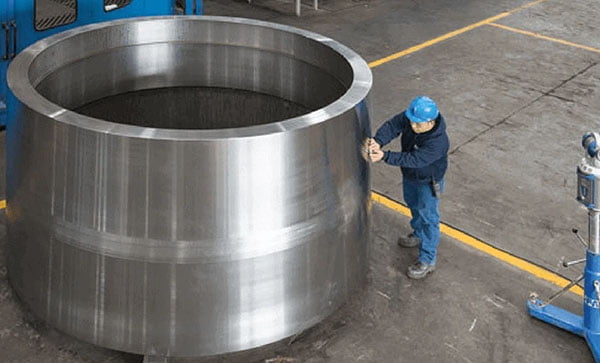
In modern industry, engineers need materials with exceptional performance and reliability, especially for high-stress parts in automotive, aerospace, and heavy machinery. Forged alloy steel stands out, combining the inherent strength of steel with special alloying elements and the transformative power of forging.
As a leading manufacturer of high-quality forgings like shafts, rings, and discs, Qilu deeply understands the vital role of forged alloy steel. We’ve invested heavily in advanced production and testing, with equipment from 200 to 4000 tons, capable of producing parts from 1 to over 100,000 kilograms. Our ample stock and global distribution ensure quick delivery, keeping your projects on track. This post will explore ten proven benefits of using forged alloy steel in your critical applications.
The Unmatched Advantages of Forged Alloy Steel
Alloy steels are steels that have other elements, such as manganese, nickel, chromium, molybdenum, vanadium, silicon, or boron, added in various proportions to improve their properties. When these enhanced steels undergo the forging process, the resulting material combines the best of both worlds, leading to a product with a multitude of superior characteristics.
1. Superior Strength and Hardness
One of the foremost benefits of forged alloy steel is its exceptional strength. The addition of alloying elements significantly increases the steel’s tensile strength and yield strength compared to plain carbon steel. When combined with the forging process, which refines the grain structure and eliminates internal porosity and defects, the resulting material is incredibly dense and robust. This inherent strength allows components made from forged alloy steel to withstand immense loads and stresses without permanent deformation or failure, making it ideal for highly stressed parts in heavy machinery, automotive powertrains, and structural applications.
Furthermore, many alloy steels are designed to achieve high hardness through heat treatment. The forging process prepares the material perfectly for subsequent heat treatment, allowing for optimal hardening. This combination results in components that are not only strong but also highly resistant to wear and abrasion, extending their service life in harsh operating conditions.
2. Enhanced Toughness and Ductility
While often associated with hardness, forged alloy steel also exhibits excellent toughness. Toughness is the ability of a material to absorb energy and deform plastically before fracturing. This property is critical in applications where components might experience sudden impacts or shock loads. The refined and aligned grain structure produced by forging, combined with the specific chemical composition of alloy steels, minimizes the risk of brittle fracture. This balance between strength and toughness is crucial for safety-critical components, ensuring they can absorb energy from impacts or overloads without catastrophic failure. The ductility of forged alloy steel also allows it to be formed into complex shapes while maintaining its integrity.
3. Exceptional Fatigue Resistance
Components in dynamic systems are frequently subjected to cyclical loading, which can lead to fatigue failure over time, even at stress levels well below the material’s yield strength. Forged alloy steel offers superior fatigue resistance due to its optimized grain flow and the absence of internal defects. The forging process ensures a continuous grain structure that follows the contour of the component, aligning the material’s internal fibers with the direction of stress. This inhibits the initiation and propagation of micro-cracks, significantly extending the component’s operational life under repetitive stress conditions. This is a critical advantage for parts like crankshafts, connecting rods, and gears.
4. Optimized Grain Structure
The grain structure is perhaps the most significant metallurgical advantage imparted by forging. Unlike casting, which can result in a coarse and random grain structure, or machining, which cuts through existing grain flow, the forging process plastically deforms the metal, refining and aligning its internal grains. This optimized grain flow ensures greater material uniformity and provides directional strength that resists stress concentrations. This refined microstructure is a fundamental reason why forged alloy steel parts consistently outperform their cast or machined counterparts in demanding applications.
5. Superior Impact Resistance
In many industrial applications, components are regularly exposed to sudden, high-energy impacts. Examples include hammerheads, mining tools, and certain structural components in off-road vehicles. Forged alloy steel excels in impact resistance due to its combination of high strength, toughness, and fine, uniform grain structure. The ability to absorb and dissipate impact energy without fracturing makes it a preferred choice for components that must endure harsh, dynamic environments. The integrity of the material prevents crack initiation even under severe shock.
6. Excellent Wear Resistance
When designed with specific alloying elements (such as chromium, vanadium, or molybdenum) and subjected to appropriate heat treatments (like carburizing or nitriding), forged alloy steel can achieve exceptional wear resistance. This makes it ideal for components that experience continuous friction and abrasion, such as gears, bearings, and cutting tools. The refined microstructure from forging, combined with surface hardening techniques, provides a durable surface that resists material loss and maintains dimensional stability over prolonged periods of use.
7. Enhanced Corrosion Resistance (with specific alloys)
While not inherently stainless, certain grades of forged alloy steel can be formulated to offer improved corrosion resistance. The inclusion of elements like chromium and nickel, coupled with the dense, non-porous nature achieved through forging, helps to resist various forms of corrosion, including oxidation and chemical attack. This property is particularly valuable in marine environments, chemical processing plants, and other areas where exposure to corrosive agents is a concern. The absence of internal defects from forging ensures that there are no weak points for corrosion to initiate.
8. Cost-Effectiveness Through Near-Net Shape Production
While the initial cost of forged alloy steel might seem higher per pound than some alternative materials or manufacturing methods, its overall cost-effectiveness over the product’s lifecycle is substantial. Forging processes, especially precision forging, often produce components very close to their final net shape. This “near-net shape” capability significantly reduces the amount of material that needs to be removed through subsequent machining operations. Less machining translates directly to reduced material waste, shorter machining times, lower labor costs, and extended tool life, ultimately leading to lower manufacturing costs per piece. Furthermore, the enhanced durability and longer lifespan of forged components reduce replacement frequency and maintenance costs, providing long-term savings.
9. Consistency and Reliability
The controlled nature of the forging process, from precise temperature management to consistent deformation, ensures a high degree of part-to-part uniformity. This consistency in mechanical properties, dimensions, and metallurgical structure is critical for high-volume production and for applications where every component must perform identically. This reliability minimizes variations that could lead to performance issues or failures in complex assemblies, reducing rejection rates and improving overall product quality and safety. When you specify forged alloy steel, you are ensuring a predictable and dependable outcome.
10. Versatility in Applications and Heat Treatment
Forged alloy steel is incredibly versatile and can be tailored for a vast array of applications by varying its chemical composition and subsequent heat treatment. Different alloying elements can provide specific properties, such as increased hardenability, improved machinability, or enhanced high-temperature strength. The forging process, by refining the grain structure, prepares the material optimally for various heat treatment processes (quenching, tempering, normalizing, annealing), allowing engineers to fine-tune the final properties to meet highly specific performance requirements. This adaptability makes it suitable for diverse industries, from automotive to aerospace, power generation, and defense.
The Forging Process: From Billet to Benefit
Understanding how these benefits are achieved requires a brief look at the forging process itself. It’s a meticulous journey from raw material to a high-performance component.
Material Selection and Preparation
The foundation of any high-quality forged alloy steel component is the correct material selection. This involves choosing the specific alloy grade based on the required mechanical properties, operating environment, and cost considerations. Once selected, the raw material, usually in the form of billets or bars, is cut to precise dimensions and weight. This preparation minimizes material waste and ensures the correct volume for the forging operation. Thorough inspection for any surface or internal defects is paramount before proceeding.
Heating the Billet
The prepared alloy steel billet is then heated uniformly to its optimal forging temperature, which is specific to the alloy grade. This temperature makes the metal sufficiently plastic and ductile for shaping without compromising its inherent strength or causing unwanted grain growth. Precise temperature control within the furnace is critical to prevent overheating or underheating, both of which can lead to defects or compromise the final properties of the forged alloy steel.
The Forging Operation (Shaping)
The actual shaping of the alloy steel billet occurs through the controlled application of compressive forces, typically using a hammer or a press.
- Open-Die Forging: Often used for larger, simpler shapes or as an initial breakdown process for very large components. The heated billet is manipulated between two dies that do not fully enclose the material. This method is excellent for refining the grain structure, improving homogeneity, and creating general forms like large shafts or discs.
- Closed-Die Forging (Impression Die Forging): For more complex geometries and higher volume production, the heated billet is placed into a die cavity that precisely matches the desired component shape. The forging press then forces the dies together, causing the alloy steel to flow and fill every intricate detail of the cavity. This process creates parts with higher dimensional accuracy and optimizes the grain flow to follow the contours of the part, ensuring superior strength and fatigue resistance in the forged alloy steel.
Comparative Material Performance Chart
To provide a clearer perspective on why forged alloy steel stands out, here’s a comparative chart highlighting key performance indicators across different material types and manufacturing methods.
| Property / Material Type | Forged Alloy Steel | Cast Steel | Machined from Alloy Steel Bar | Carbon Steel Forging |
| Tensile Strength | Excellent | Good | Very Good | Very Good |
| Yield Strength | Excellent | Good | Very Good | Very Good |
| Fatigue Resistance | Superior | Moderate | Good | Excellent |
| Impact Toughness | Excellent | Fair | Good | Good |
| Grain Structure | Refined, Aligned | Coarse, Random | Uniform (but cut) | Refined, Aligned |
| Internal Defects | Minimal | Moderate-High | Minimal | Minimal |
| Wear Resistance | Excellent (alloy dependent) | Moderate | Good | Good |
| Cost-Effectiveness (Lifecycle) | High | Moderate | Moderate-High | High |
Post-Forging Operations for Forged Alloy Steel
The journey of forged alloy steel doesn’t end after the shaping process. Several crucial post-forging operations are necessary to refine its properties and prepare it for its final application.
Heat Treatment
Heat treatment is perhaps the most critical step after forging for alloy steels. The specific composition of alloy steels allows them to respond dramatically to controlled heating and cooling cycles, enabling a wide range of mechanical properties to be achieved. These processes are designed to relieve internal stresses, improve hardness, enhance toughness, or achieve specific microstructures.
- Normalizing: Involves heating the forged alloy steel to a specific temperature and then air cooling it. This process refines the grain structure and homogenizes the material, improving ductility and impact strength.
- Annealing: Heats the steel to a high temperature and then slowly cools it, often in the furnace. This softens the material, making it more ductile and machinable, and relieves internal stresses.
- Quenching: Involves rapidly cooling the heated forged alloy steel (in water, oil, or polymer solutions). This process creates a very hard but brittle microstructure.
- Tempering: Almost always follows quenching. The hardened steel is reheated to a lower temperature and then cooled. This reduces brittleness while retaining significant hardness and toughness, bringing the material to its desired final properties.
- Case Hardening (e.g., Carburizing, Nitriding): These processes introduce carbon or nitrogen to the surface of the forged alloy steel to create a hard, wear-resistant outer layer while maintaining a tough core. This is particularly useful for gears and shafts.
The precise heat treatment regime is meticulously selected based on the specific alloy grade and the performance requirements of the final component.
Machining and Finishing
Even with the near-net shape capabilities of forging, subsequent machining is almost always required to achieve the final dimensions, precise tolerances, and desired surface finish. This can involve turning, milling, drilling, grinding, and polishing. Because less material needs to be removed from forged alloy steel components compared to those machined from solid bar or casting, machining time and costs are significantly reduced. This efficiency is a major economic advantage.
Surface Treatment and Inspection
Depending on the application, additional surface treatments may be applied. These can include shot peening (to improve fatigue resistance by inducing compressive residual stresses), painting, or plating for corrosion protection or aesthetic purposes.
Finally, rigorous inspection and quality control measures are implemented. This includes dimensional checks, visual inspection for surface flaws, and various non-destructive testing (NDT) methods like ultrasonic testing (UT) for internal defects, magnetic particle inspection (MPI) for surface and near-surface cracks, and sometimes even spectroscopic analysis to confirm chemical composition. These comprehensive checks ensure that every piece of forged alloy steel meets stringent quality standards and is ready for its intended use.
Diverse Applications of Forged Alloy Steel
The exceptional properties of forged alloy steel make it indispensable across a vast array of demanding industries and critical applications.
Automotive and Heavy Transportation
In the automotive sector, forged alloy steel is crucial for components that experience high stress and fatigue, such as crankshafts, connecting rods, camshafts, axles, transmission gears, and steering knuckles. Its strength and durability contribute directly to vehicle safety, performance, and longevity. Similarly, in heavy trucks, trains, and marine vessels, forged alloy steel is used in axles, driveshafts, gears, and engine components that must withstand continuous heavy loads and vibrations.
Aerospace and Defense
The aerospace industry relies heavily on forged alloy steel for critical parts where both strength-to-weight ratio and absolute reliability are paramount. Applications include landing gear components, engine shafts, turbine discs (when alloyed for high temperature), structural airframe parts, and missile components. In defense, it is used in artillery components, armor plating, and vehicle powertrains, where exceptional toughness and impact resistance are essential.
Energy and Power Generation
In the energy sector, forged alloy steel is vital for components in power plants (fossil fuel, nuclear, hydro, wind). This includes turbine rotors and blades, generator shafts, high-pressure valves, and fasteners. These parts operate under extreme temperatures, pressures, and corrosive environments, demanding materials with high creep resistance and long-term stability.
Oil and Gas Exploration
The demanding conditions of oil and gas drilling and extraction require incredibly robust materials. Forged alloy steel is used in drill collars, tool joints, valve bodies, pressure vessel components, and downhole tools that must withstand immense pressure, abrasive wear, and corrosive fluids.
Industrial Machinery and Manufacturing
Almost every piece of heavy industrial machinery incorporates forged alloy steel components. This includes gears, shafts, bearings, rollers, and connecting elements in presses, cranes, mining equipment, construction machinery, and agricultural equipment. Its durability ensures reliable operation and minimizes downtime in continuous, high-stress industrial environments. The consistent performance of forged alloy steel is key to productivity.
Qilu’s Unwavering Commitment to Forged Alloy Steel Excellence
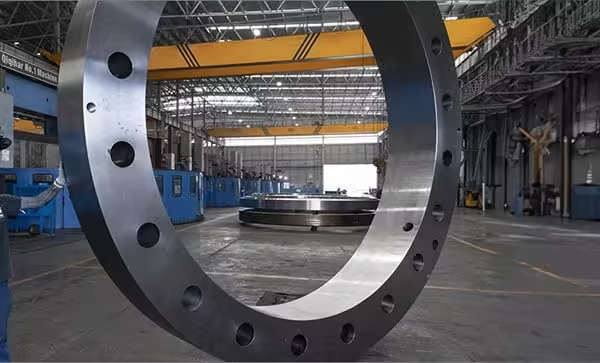
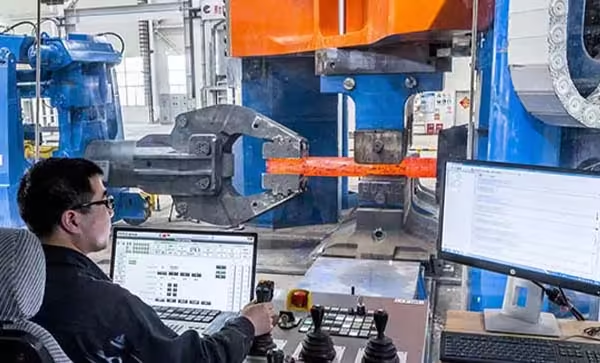
At Qilu, our unwavering commitment to producing high-quality forged alloy steel components is a cornerstone of our operations. We deeply understand the critical role these materials play in the success and safety of your projects. Our substantial investments in advanced manufacturing technologies, including a comprehensive suite of forging presses ranging from 200 tons to 4000 tons, underscore our capability to tackle even the most demanding and complex forging requirements. This expansive capacity allows us to produce a vast range of metal forgings, from intricate small parts weighing just 1 kilogram to massive industrial components exceeding 100,000 kilograms per piece, ensuring we can meet diverse project scales and specifications.
Our dedication to excellence extends beyond manufacturing. We’ve implemented stringent quality control protocols at every stage of production, supported by state-of-the-art testing facilities. This meticulous approach guarantees that every piece of forged alloy steel leaving our factory not only meets but often surpasses the highest industry standards for mechanical properties, dimensional accuracy, and structural integrity. Furthermore, we recognize the importance of timely delivery in today’s fast-paced global market. With ample stock of various alloy steel grades and a robust global distribution network, Qilu is expertly positioned to ensure the swift and reliable delivery of your orders, helping to keep your manufacturing processes efficient and your project timelines on track, no matter where you are in the world.
Conclusion
Forged alloy steel is clearly superior for tough industrial jobs. Its incredible strength, hardness, toughness, and resistance to fatigue and impact, plus an optimized grain structure and versatility, make it the ideal choice for engineers needing reliable, long-lasting parts. The careful forging process, along with special alloying elements, turns raw steel into components that can handle the harshest conditions.
Choosing forged alloy steel is a smart move for your products’ long-term performance, safety, and cost. At Qilu, we’re dedicated to top-quality forged components. Our advanced capabilities, strict quality control, and efficient global distribution make us the perfect partner for your crucial forging needs. To see how our expertise can boost your projects, contact us today.
FAQ
What makes forged alloy steel different from plain carbon steel?
Forged alloy steel differs from plain carbon steel primarily due to the addition of specific alloying elements (like chromium, nickel, molybdenum, etc.) and the forging process. Alloying elements enhance properties like strength, hardness, toughness, and wear resistance, while forging refines the grain structure and eliminates defects, further boosting these mechanical properties to a level plain carbon steel cannot achieve.
Is forged alloy steel more expensive than cast steel?
The initial per-pound cost of forged alloy steel can sometimes be higher than cast steel. However, its superior mechanical properties often allow for lighter component designs, reduced material waste through near-net shaping, and significantly lower machining costs. When considering the entire lifecycle cost, including longer service life and reduced maintenance, forged alloy steel often proves to be more cost-effective.
How does forging enhance the fatigue resistance of alloy steel?
Forging enhances fatigue resistance by creating an optimized and continuous grain flow within the material. This aligned grain structure follows the contours of the component, which prevents the initiation and propagation of micro-cracks under cyclical loading, making forged alloy steel far more resistant to fatigue failure than materials produced by other methods.
What are some common applications of forged alloy steel?
Forged alloy steel is used extensively in high-stress, critical applications across various industries. Common applications include crankshafts, connecting rods, gears, axles, landing gear components, turbine shafts, heavy machinery parts, valves, and various structural components where high strength, durability, and reliability are paramount.
Can Qilu provide custom forged alloy steel components?
Yes, Qilu specializes in manufacturing high-quality custom forgings, including those made from alloy steel. With our versatile forging equipment ranging from 200 to 4000 tons, we can produce components weighing from 1 to over 100,000 kilograms, precisely tailored to meet specific customer designs, material requirements, and performance criteria for a wide range of applications.