Shandong Qilu lndustrial Co.,Ltd.

10 Expert Tips for Maintaining Forge Tools
Welcome to My Blog!
Before we dive into the content, I’d love for you to join me on my social media platforms where I share more insights, engage with the community, and post updates. Here’s how you can connect with me:
Facebook:https://www.facebook.com/profile.php?id=100090903441806
Now, let’s get started on our journey together. I hope you find the content here insightful, engaging, and valuable.
Table of Contents
Introduction

Forge tools are an essential part of any blacksmith’s or metalworker’s workshop. These tools endure extreme heat, heavy use, and constant exposure to metal debris, making regular maintenance crucial for longevity and performance. Without proper care, they can rust, lose sharpness, or even break, leading to inefficient work and potential safety hazards. By following expert maintenance techniques, you can keep your forge tools in top condition, ensuring smooth operation and extended lifespan.
The Importance of Proper Forge Tool Maintenance
Regular maintenance of forge tools is essential for both safety and efficiency. Well-maintained tools not only last longer but also allow for better precision and control. When tools are neglected, rust can set in, handles can weaken, and edges can dull, making work more difficult and even dangerous. For instance, a dull chisel or hammer may require more force to achieve the same result, increasing the risk of slipping and causing injury. Proper maintenance prevents these issues and ensures that every tool in your arsenal remains reliable.
Common problems that arise from poor maintenance include rust and corrosion, which weaken the structural integrity of metal tools, leading to premature wear and breakage. Blunt edges reduce efficiency and precision, while heat damage from excessive forging can alter the metal’s hardness, making it too brittle or too soft. Taking proactive steps to care for your tools minimizes these risks and maximizes their performance.
Cleaning and Removing Debris from Forge Tools
Keeping forge tools clean is a fundamental aspect of maintenance. During use, metal shavings, scale, and soot accumulate on surfaces, which, if left unchecked, can accelerate wear and corrosion. Cleaning tools immediately after use helps remove these contaminants before they cause damage. A wire brush is an excellent tool for scrubbing away loose debris, while a mild solvent or soapy water can be used to dissolve grease and grime. It’s important to dry the tools thoroughly after cleaning, as any remaining moisture can lead to rust.
For rust prevention, storing tools in a dry environment is key. Applying a light coat of oil or wax to metal surfaces creates a protective barrier against moisture. Another effective method is to keep silica gel packets in storage areas to absorb excess humidity. If rust does appear, soaking tools in a vinegar solution or using a rust remover can help restore them. Taking these simple cleaning precautions can significantly extend the life of forge tools.
Proper Lubrication Techniques for Forge Tools

Lubrication is vital for reducing friction and preventing wear, especially for tools with moving parts like tongs and hinges. Without proper lubrication, these parts can become stiff, making them difficult to use and increasing the risk of breakage. Choosing the right lubricant depends on the tool type and usage. Mineral oil works well for general protection, while a beeswax and linseed oil blend provides a traditional coating for hand tools. Graphite-based lubricants are ideal for high-friction components.
Applying lubricant correctly is just as important as choosing the right type. The tool should be clean before lubrication to avoid trapping dirt. A thin layer of lubricant should be applied with a cloth or brush, ensuring even coverage without excess buildup. Regular lubrication prevents tools from seizing up and maintains smooth operation, making forging more efficient and enjoyable.
Proper Storage to Extend the Life of Forge Tools
Storage plays a crucial role in maintaining forge tools. A dry, well-ventilated space is ideal for preventing rust and damage. Tools should be organized on racks or shelves, rather than being left on the ground where they can collect dust and moisture. For smaller tools, protective cases help prevent accidental damage and keep everything easily accessible.
Temperature control is another important factor. Storing tools in an area with extreme temperature fluctuations can cause expansion and contraction, leading to metal fatigue over time. Keeping tools away from direct exposure to damp environments and excessive heat helps maintain their structural integrity. Additionally, applying a rust prevention coating before storage provides an extra layer of protection, ensuring that tools remain in prime condition between uses.
Essential Maintenance Checklist for Forge Tools
| Maintenance Task | Frequency | Recommended Products/Methods |
|---|---|---|
| Cleaning debris and soot | After every use | Wire brush, mild detergent |
| Checking for rust | Weekly | Rust remover, vinegar soak |
| Lubrication | Bi-weekly | Mineral oil, graphite spray |
| Sharpening edges | Monthly | Sharpening stone, grinder |
| Checking for cracks | Monthly | Visual inspection, testing |
| Storage inspection | Quarterly | Rust prevention spray, silica gel |
Sharpening and Repairing Forge Tools

Sharpening is essential for maintaining the effectiveness of forge tools. Over time, cutting and striking edges wear down, making work less efficient. Regular sharpening ensures clean cuts and reduces the effort needed for forging tasks. A sharpening stone is a good option for hand tools like chisels and punches, while a bench grinder can be used for larger tools. After sharpening, honing with a fine file helps refine the edge for precision work.
When tools become damaged, repair may be necessary. Small cracks or bends can sometimes be fixed with heat treatment or welding, but severely compromised tools should be replaced. Using damaged tools can be dangerous, as they may break unexpectedly under pressure. Inspecting tools regularly for signs of wear and damage helps identify problems early, allowing for timely repairs or replacements.
Inspecting Forge Tools for Damage
Regular inspection is one of the best ways to ensure that forge tools remain in working order. Look for visible signs of wear, such as cracks, chips, or warping. If a tool has deep cracks, even welding may not restore its full strength, making replacement the safest option. Excessive wear that sharpening can no longer fix is another indication that a tool should be replaced.
Structural weakness in tools, especially those used for heavy hammering or cutting, can pose a significant safety risk. If a tool no longer holds its shape or has become too weak to perform its intended function, it should be removed from use. By checking tools routinely, you can avoid sudden failures and maintain a safe and efficient workspace.
Conclusion
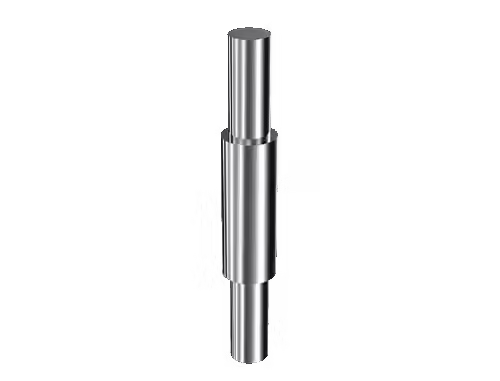
Maintaining forge tools is essential for both performance and longevity. Regular cleaning, lubrication, sharpening, and proper storage can prevent common issues like rust and wear, keeping tools in top condition. Investing time in maintenance ensures that forge tools remain reliable and efficient, ultimately improving the quality of work and safety in the workshop. Upgrade your forge tools today to enhance your craftsmanship and achieve better results!
How often should forge tools be cleaned?
It’s best to clean forge tools after every use to prevent debris buildup and corrosion.
What is the best way to prevent rust on forge tools?
Store tools in a dry environment, apply a protective oil coating, and use rust prevention sprays.
Can household oils be used for lubricating forge tools?
While some household oils may work, it’s better to use specialized lubricants like mineral oil or graphite spray for long-term protection.
How do I know when a forge tool needs replacing?
If a tool has deep cracks, excessive wear, or weakened structural integrity, it should be replaced for safety reasons.
What is the best way to store forge tools?
Keep them in a dry, well-ventilated space, preferably on racks or in protective cases, and apply rust prevention coatings before storage.