Shandong Qilu lndustrial Co.,Ltd.

The Ultimate Guide to Forge Rings: Power and Precision
Welcome to My Blog!
Before we dive into the content, I’d love for you to join me on my social media platforms where I share more insights, engage with the community, and post updates. Here’s how you can connect with me:
Facebook:https://www.facebook.com/profile.php?id=100090903441806
Now, let’s get started on our journey together. I hope you find the content here insightful, engaging, and valuable.
Table of Contents
Introduction

In the world of industrial manufacturing, achieving a balance of precision and power is crucial for the production of high-quality components. One such vital element in this process is the forge ring, a critical piece used across a variety of mechanical and structural applications. Whether in machinery, aerospace, or the automotive industry, these forged components offer unique advantages due to their enhanced strength and durability. In this guide, we will take you through every essential detail regarding the creation, uses, and benefits of these forged circular components, offering you a thorough understanding of their significance in modern manufacturing.
What are Forge Rings?
At their core, forge rings are cylindrical components formed through the process of forging. Forging itself is a method that involves the application of intense heat and pressure to shape raw metal into specific forms, as opposed to casting, which involves pouring molten material into molds. This process of applying force to the metal leads to the refinement of its grain structure, resulting in components that are far stronger and more durable than their cast counterparts. In this section, we will explore the mechanics behind the forging process and how it enhances the overall quality and performance of these critical components.
How Are Forge Rings Made?
The production of these cylindrical forged parts begins with the heating of metal billets to extremely high temperatures. Once the metal reaches the necessary temperature, it is then shaped using specialized forging tools and machinery. This high-pressure process alters the alignment of the metal’s internal grain structure, significantly improving its strength, flexibility, and resistance to wear and fatigue. After the initial shaping, the forged components go through additional steps such as heat treatment, machining, and surface finishing. These processes further refine the material, ensuring it meets the precise dimensions and performance requirements necessary for its intended use. The resulting parts are able to withstand the rigorous demands placed on them, making them essential in a wide range of industrial applications.
Applications
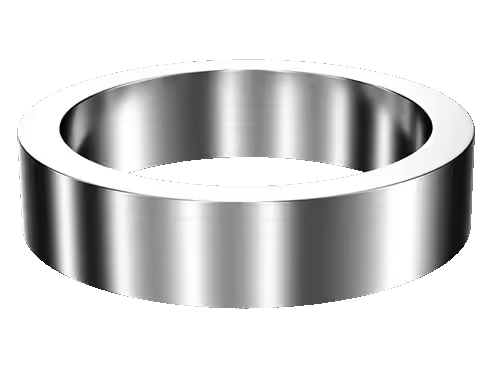
The versatility of forge rings makes them essential in a broad range of industries, thanks to their superior mechanical properties. Their remarkable strength, combined with their ability to withstand significant stress, makes them perfect for environments where both precision and durability are paramount. These forged components are integral to ensuring the reliability and longevity of various systems in some of the world’s most demanding applications. Below are some of the industries where these forged parts play a critical role:
Aerospace
In the aerospace industry, forged circular components are used extensively in turbine engines, compressors, and other high-performance aircraft parts. Their enhanced strength-to-weight ratio ensures that they can endure the extreme conditions experienced during flight, such as high temperatures and pressure variations. These forged components are crucial for ensuring the safety, efficiency, and reliability of aircraft, which require precise, long-lasting components for optimal performance.
Automotive
Within the automotive sector, forged parts are indispensable in the manufacturing of critical components like crankshafts, gear systems, and other mechanical elements that must endure high levels of stress and wear. Their ability to handle these stresses without compromising on precision makes them ideal for the production of durable, high-performance vehicle parts. Whether in engines or drivetrain systems, forged components ensure vehicles operate smoothly and reliably over extended periods.
Oil and Gas
In the oil and gas industry, parts that require high resistance to harsh environments are essential. Forged components, including valves, seals, and other key elements, are used extensively in drilling rigs, pipelines, and other critical infrastructure. These components must withstand extreme pressures, corrosive environments, and high temperatures. The enhanced strength and durability of these forged parts ensure they maintain integrity in such challenging settings, where failure can have serious consequences.
Marine
The marine industry also relies on these forged circular components, particularly in shipbuilding. These components are often used in structural parts that undergo constant stress due to the harsh marine environment. From hull structures to propulsion systems, the durability and strength of forged parts are crucial for the safety and efficiency of vessels operating in tough oceanic conditions. The long-lasting nature of these components ensures that ships can withstand the challenges of the open sea.
Key Factors to Consider When Choosing
Choosing the right forge ring for your project is crucial. The quality of the material, the precision of the forging process, and the heat treatment methods all play vital roles in determining the performance of the final product. Below, we will discuss the key factors to keep in mind when selecting forge rings:
- Material Composition: Different metals offer varying levels of strength, corrosion resistance, and thermal stability. Common materials include carbon steel, stainless steel, and alloy steels.
- Size and Dimensions: Forge rings can be made to precise sizes. The dimensions of the ring should match the specifications of the application to ensure a perfect fit.
- Heat Treatment: Heat treatment affects the hardness and strength of the metal. Depending on the application, some forge rings may require special treatments to achieve the desired properties.
Advantages of Using Forge Rings in Manufacturing
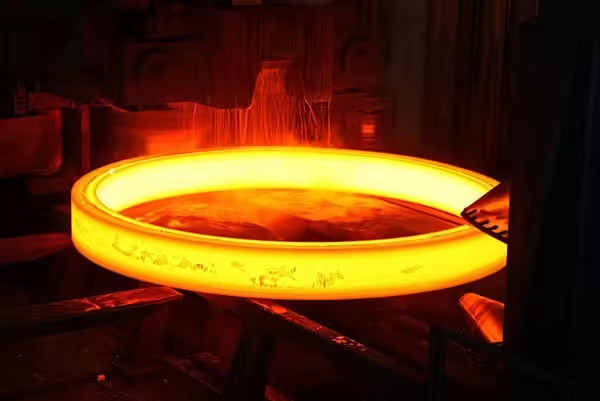
In industrial manufacturing, incorporating forged components into the production process offers numerous advantages that contribute to both the performance and longevity of products. Below are some key benefits of using these forged parts in manufacturing:
- Enhanced Strength: The forging process aligns the metal’s grain structure, significantly improving its strength. This results in a more robust and durable product capable of withstanding higher levels of stress than cast or machined parts.
- Improved Durability: Forge rings are highly resistant to wear, fatigue, and corrosion due to the nature of the forging process. This makes them ideal for use in harsh environments, ensuring long-lasting performance even under extreme conditions.
- Precision: Modern forging techniques allow for highly accurate dimensions, ensuring a perfect fit for components. This precision reduces the need for additional machining and ensures that forged parts maintain their quality and functionality over time.
Common Materials Used for Forge Rings
Several materials are commonly used in the production of forge rings. Each material offers different properties suited to various applications. Below is a table that outlines the most common materials and their characteristics.
| Material | Strength (MPa) | Corrosion Resistance | Typical Applications |
|---|---|---|---|
| Carbon Steel | 400 – 700 | Low | Automotive parts, machinery components |
| Stainless Steel | 500 – 800 | High | Aerospace, oil and gas, marine environments |
| Alloy Steel | 600 – 900 | Medium | Heavy-duty machinery, industrial equipment |
| Titanium | 800 – 1200 | Very High | Aerospace, military, high-performance engines |
| Nickel Alloys | 600 – 900 | Very High | Chemical processing, marine applications |
Conclusion
Forge rings are vital to industries where strength, durability, and precision are paramount. Their ability to withstand extreme conditions makes them indispensable in manufacturing critical components for sectors such as aerospace, automotive, oil and gas, and marine industries. Understanding the forging process, material selection, and advantages of forge rings will enable you to make informed decisions when choosing the right ring for your application.
By prioritizing factors such as material composition, heat treatment, and precision, you can ensure the success of your project and guarantee the reliability and longevity of the components you produce.
FAQ
What is the main difference between forged rings and cast rings?
The primary difference between forged and cast rings lies in the manufacturing process. Forged rings are made by heating metal and shaping it under high pressure, which aligns the material’s grain structure for enhanced strength. Cast rings, on the other hand, are poured into molds and typically lack the same structural integrity as forged rings.
Are forge rings expensive?
While forge rings may have a higher upfront cost compared to other methods, their superior strength, durability, and precision often lead to cost savings in the long run, especially in high-performance applications.
Can forge rings be customized?
Yes, forge rings can be customized in terms of size, material, and heat treatment to meet the specific needs of a project. Advanced forging techniques allow manufacturers to create rings with precise dimensions and desired mechanical properties.
What industries use forge rings?
Forge rings are used across various industries, including aerospace, automotive, oil and gas, and marine. They are particularly valuable in applications where high strength, precision, and durability are required.
How do I select the right forge ring?
When selecting a forge ring, consider the material, dimensions, and heat treatment requirements based on the specific application. Consult with a manufacturer to ensure the right choice for your needs.