Shandong Qilu lndustrial Co.,Ltd.

Heat Treatment for Forged Auto Parts: How Strength and Durability Are Built
Table of Contents
Heat Treatment for Forged Auto Parts is what transforms a solid metal shape into a reliable automotive component.
Forging alone improves grain flow and structural integrity, but it does not finalize performance. After forging, steel still carries internal stresses and uneven mechanical properties. Controlled heating and cooling refine the microstructure, balance hardness, and prepare the part for real operating conditions.
Without proper thermal processing, even the best forging can underperform.
Why Forged Automotive Components Require Thermal Refinement
Forged parts are widely used in engines, drivetrains, and suspension systems because they offer superior strength compared to cast parts.
However, the forging process leaves residual stress inside the material. If these stresses are not relieved or adjusted, cracking and distortion may occur during service.
This is where Heat Treatment for Forged Auto Parts becomes essential. It stabilizes the internal structure and ensures consistent mechanical performance.
The Most Common Processes Used in Automotive Forgings
Different automotive components require different heat strategies.
Quenching and Tempering Forged Steel Parts
Quenching and tempering forged steel parts is one of the most widely applied methods in automotive production.
The steel is heated to an austenitizing temperature, rapidly cooled, and then reheated at a lower temperature to restore toughness.
This process is often used for:
- Connecting rods
- Steering knuckles
- Forged suspension arms
Heat Treatment for Forged Auto Parts using quench and temper improves fatigue strength while preventing brittleness.
Case Hardening for Forged Drivetrain Parts
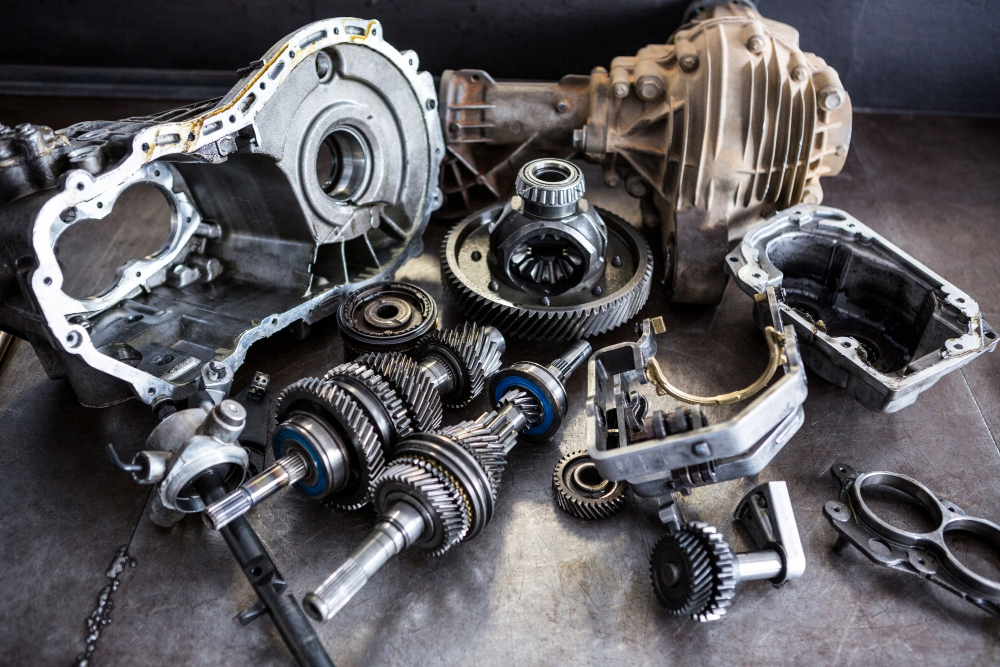
For gears and transmission components, surface wear resistance is critical.
Case hardening for forged drivetrain parts creates a hard outer layer while maintaining a tough and ductile core.
Transmission gears, spline shafts, and differential components commonly rely on this approach.
Heat Treatment for Forged Auto Parts in these applications ensures long-term wear resistance without sacrificing impact strength.
Induction Hardening for Forged Gears
Induction hardening for forged gears focuses heat only where needed.
Instead of heating the entire component, electrical induction targets specific surfaces. Rapid quenching follows immediately.
This localized approach reduces distortion and energy consumption.
Heat Treatment for Forged Auto Parts using induction is particularly effective for gear teeth and shaft surfaces exposed to high friction.
Heat Treatment Process for Forged Automotive Components
The complete heat treatment process for forged automotive components involves careful control at every stage.
Key factors include:
- Precise furnace temperature
- Soaking duration based on section thickness
- Controlled cooling medium
- Post-treatment stress relief
Even small variations in cooling rate can change hardness levels significantly.
Heat Treatment for Forged Auto Parts depends on consistency, repeatability, and documented process control.
Example: Heat Treated Forged Crankshaft
A heat treated forged crankshaft must withstand constant rotational forces and cyclic loading.
If hardness is too high, brittleness increases.
If hardness is too low, wear accelerates.
Heat Treatment for Forged Auto Parts applied to crankshafts balances these properties. The result is improved fatigue resistance and stable dimensional accuracy.
Engines depend on this balance for long service life.
Forged Suspension Parts and Impact Resistance
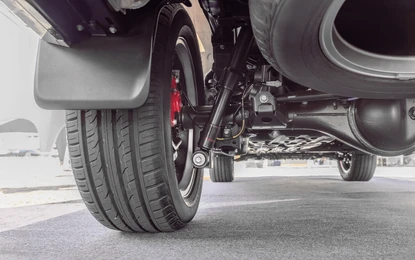
Forged suspension parts heat treatment focuses on shock absorption and structural durability.
Control arms and steering components endure road impact and vibration daily.
Heat Treatment for Forged Auto Parts ensures these components resist cracking while maintaining strength under repeated stress cycles.
Tempered martensitic structures are often preferred for this reason.
Preventing Distortion in Large Forged Components
Distortion is one of the biggest challenges during thermal processing.
Rapid quenching of large sections can cause warping or dimensional shift.
Manufacturers reduce this risk by:
- Using optimized quench media
- Supporting parts with fixtures
- Applying staged cooling strategies
Proper Heat Treatment for Forged Auto Parts minimizes corrective machining and improves overall yield rates.
Automotive Heat Treatment Quality Control
Quality verification confirms whether the thermal process achieved its objective.
Automotive heat treatment quality control commonly includes:
- Hardness testing
- Microstructure analysis
- Case depth measurement
- Non-destructive inspection
Batch traceability and furnace records are equally important.
Heat Treatment for Forged Auto Parts must meet repeatable standards, especially for high-volume production.
Why Heat Treatment Defines Long-Term Performance
Automotive components operate under friction, temperature fluctuation, vibration, and continuous load.
Heat Treatment for Forged Auto Parts directly determines how well these parts endure real-world conditions.
Forging shapes the metal.
Thermal processing defines its reliability.
When properly engineered and controlled, Heat Treatment for Forged Auto Parts ensures that critical components deliver consistent strength, durability, and service life.