Shandong Qilu lndustrial Co.,Ltd.

Key Benefits of Custom Aluminum Forgings Today
Welcome to My Blog!
Before we dive into the content, I’d love for you to join me on my social media platforms where I share more insights, engage with the community, and post updates. Here’s how you can connect with me:
Facebook:https://www.facebook.com/profile.php?id=100090903441806
Now, let’s get started on our journey together. I hope you find the content here insightful, engaging, and valuable.
Table of Contents
Introduction
The industrial world increasingly needs high-performance, lightweight, and durable parts, especially in sectors like aerospace, automotive, marine, and defense. These industries are always searching for materials and manufacturing methods that offer excellent strength-to-weight ratios and top-notch reliability. This is where aluminum forgings become key. As a leading maker of quality forgings, including shaft, ring, and and disc forgings, Qilu understands the big benefits of custom aluminum forgings. We’ve put a lot into advanced production and testing facilities, ensuring our products meet the highest quality and reliability standards.
Our forging equipment, from 200 to 4000 tons, can make metal forgings weighing from 1 to over 100,000 pieces. With plenty of stock and global delivery services, we can get your orders to you fast, keeping your projects on schedule and within budget. This blog post will explore the main advantages of using custom aluminum forgings in your projects, focusing on their adaptability, performance, and long-term worth.
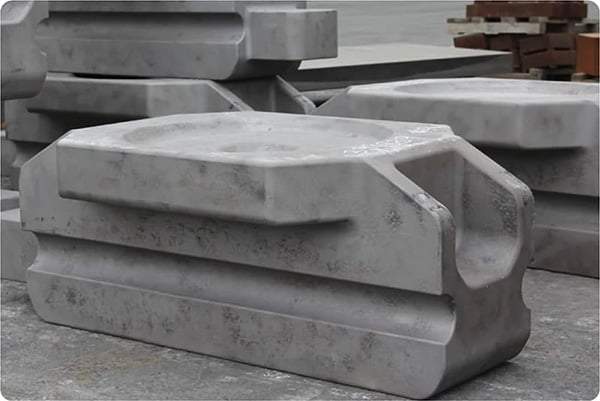
The Superiority of Aluminum Forgings
Aluminum, known for its lightweight properties and excellent corrosion resistance, becomes even more remarkable when subjected to the forging process. Forging involves shaping metal through localized compressive forces, which refines the grain structure and eliminates internal defects, resulting in a product with enhanced mechanical properties.
Enhanced Strength and Durability
One of the most compelling advantages of custom aluminum forgings is their exceptional strength. Unlike cast components, which can suffer from porosity and internal voids, the forging process produces a dense, uniform grain structure. This refinement translates directly into a higher ultimate tensile strength and yield strength, making aluminum forgings far more robust and durable. This enhanced strength is crucial for applications where components are subjected to significant stress and fatigue, such as in landing gear components or high-performance engine parts. The integrity of the material through forging means that the final part can withstand more rigorous conditions over a longer period.
Optimized Grain Structure for Performance
The very nature of the forging process involves plastic deformation of the metal, which aligns the grain flow in a way that optimizes the material’s strength and resistance to fatigue. This aligned grain flow follows the contour of the part, providing superior directional strength, which is particularly beneficial in applications requiring high impact resistance or cyclical loading. This inherent advantage of aluminum forgings minimizes the risk of catastrophic failure and extends the lifespan of the component. The controlled deformation ensures that the material’s internal structure is optimized for the intended application, leading to a more reliable and higher-performing part.
Excellent Fatigue Resistance
Components in demanding environments often experience cyclical loading, which can lead to fatigue failure over time. Due to their refined grain structure and absence of internal defects, custom aluminum forgings exhibit superior fatigue resistance compared to other manufacturing methods. The uniform microstructure created during forging prevents the initiation and propagation of cracks, ensuring the component maintains its structural integrity even after countless stress cycles. This makes aluminum forgings ideal for critical applications where reliability and safety are paramount, such as in aerospace structures and automotive suspension systems.
Lightweight Advantage
Aluminum is inherently lighter than many other commonly used metals, such as steel. When combined with the enhanced strength achieved through forging, aluminum forgings offer an unparalleled strength-to-weight ratio. This is a significant benefit for industries where weight reduction is a primary concern, like in transportation, where lighter vehicles lead to improved fuel efficiency and reduced emissions. In aerospace, every kilogram saved translates to increased payload capacity and reduced operational costs. The lightweight nature of these components does not compromise their structural integrity, making them an excellent choice for a variety of applications.
Cost-Effectiveness Through Reduced Machining
While the initial cost of forging may sometimes seem higher than other processes like casting, the overall cost-effectiveness of custom aluminum forgings becomes apparent over the product’s lifecycle. Forged components often require less machining due to their near-net shape capabilities. The forging process can produce parts with dimensions very close to the final required shape, minimizing material waste and reducing the time and cost associated with subsequent machining operations. This efficiency in manufacturing directly contributes to lower production costs and faster turnaround times, making aluminum forgings a smart economic choice for large-volume production.
Applications of Custom Aluminum Forgings
The versatility and superior properties of aluminum forgings make them indispensable across a broad spectrum of industries.
Aerospace Industry
The aerospace industry heavily relies on aluminum forgings for critical components due to their high strength-to-weight ratio, excellent fatigue resistance, and ability to withstand extreme temperatures and pressures. Parts such as landing gear components, wing spars, airframe structures, and engine parts are frequently made from aluminum forgings, ensuring the safety and performance of aircraft. The rigorous demands of flight necessitate materials that can perform flawlessly under immense stress, and aluminum forgings consistently meet these requirements.
Automotive Industry
In the automotive sector, the drive for fuel efficiency and reduced emissions has led to an increased adoption of lightweight materials. Aluminum forgings are used in various automotive applications, including suspension components, wheels, engine connecting rods, and brake calipers. Their strength and durability contribute to improved vehicle performance, handling, and safety. The ability to produce complex shapes while maintaining high strength is a key advantage for modern vehicle designs.
Marine and Offshore
The marine environment presents unique challenges due to constant exposure to corrosive elements. Aluminum’s inherent corrosion resistance, combined with the structural integrity provided by forging, makes aluminum forgings ideal for marine applications such as propeller shafts, boat fittings, and offshore drilling equipment. Their resistance to saltwater and harsh conditions ensures longevity and reliability in demanding nautical environments.
Industrial Machinery and Equipment
From heavy machinery to specialized industrial equipment, aluminum forgings are used in components requiring high strength and durability, such as gears, shafts, levers, and brackets. Their ability to withstand repetitive stress and heavy loads makes them suitable for machinery that operates continuously in demanding industrial settings. The robust nature of these forgings contributes to the reliability and uptime of industrial machinery.
Understanding Forging Processes
The production of custom aluminum forgings involves several distinct processes, each offering specific advantages depending on the desired shape, size, and properties of the final component.
Open-Die Forging
Open-die forging, also known as blacksmith forging, involves shaping metal between a hammer and a stationary anvil. The metal is manipulated by the operator to achieve the desired shape. This method is highly versatile and ideal for producing large, heavy, or custom-shaped parts with relatively simple geometries, such as shaft forgings, ring forgings, and disc forgings. It allows for greater flexibility in terms of part size and shape and is particularly suited for low-volume production or unique prototypes.
Closed-Die Forging
Closed-die forging, or impression-die forging, utilizes dies that contain a cavity shaped like the desired part. The heated metal is placed between the dies, which are then pressed together, forcing the metal to fill the die cavity. This method produces parts with higher dimensional accuracy, excellent surface finish, and more complex geometries. It is well-suited for high-volume production runs where consistency and precision are critical. This process ensures that each aluminum forging produced is consistent with the last.
Ring Forging
Ring forging is a specialized process used to produce seamless rings of various sizes. A heated, pierced preform is placed over a mandrel and then rolled between a drive roll and an idler roll. This process increases the diameter of the ring while reducing its wall thickness, resulting in a strong, concentric, and seamless ring. Ring forgings are commonly used in gears, bearings, and pressure vessels. Qilu excels in producing high-quality ring forgings with precise dimensions and superior mechanical properties.
Our Aluminum Forging Capabilities
We offer a range of value-added services including heat treatment, physical testing, non-destructive testing, rough machining and finishing. We cater to all of your aluminum forging needs, please contact us today by emailing [email protected]. We can provide special shapes, sizes and weights for your specific application.
| Aluminum Forging Capabilities | ||
| Forged Shape | Max Forging Size | Max Weight |
| Aluminum Forged Rings | 3″ OD up to 72″ OD | 10000# |
| Aluminum Discs | 3″ DIA up to 72″ DIA | 15000# |
| Aluminum Blocks | Up to 54″ Cross Section | 15000# |
| Aluminum Flat Bars | 3″ OD up to 72″ OD | 20000# |
| Aluminum Round Bars | 3″ OD up to 72″ OD | 20000# |
Qilu’s Commitment to Quality in Aluminum Forgings
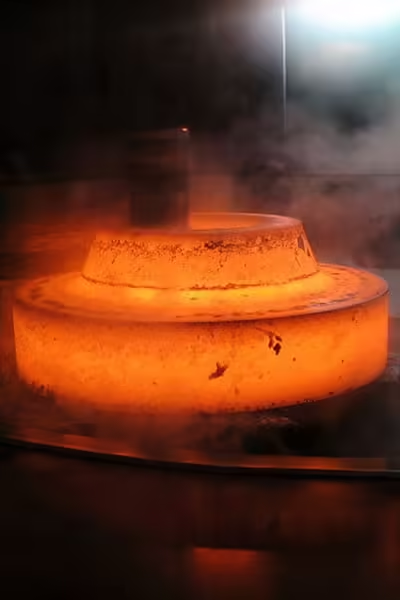
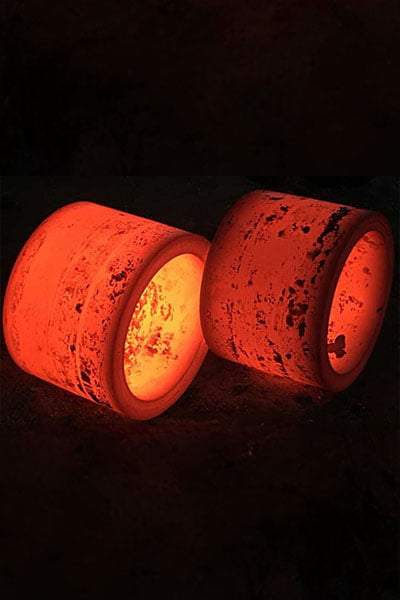
At Qilu, our commitment to producing top-tier aluminum forgings is unwavering. Our extensive investment in advanced production equipment, including forging presses ranging from 200 tons to 4000 tons, allows us to handle a wide range of project sizes and complexities. We can produce metal forgings from 1 to over 100,000 pieces, catering to both small, specialized orders and large-scale industrial requirements. Our state-of-the-art testing facilities ensure that every aluminum forging we produce adheres to the most stringent quality and reliability standards. This meticulous attention to detail ensures that our customers receive components that not only meet but exceed their expectations.
We understand that timely delivery is crucial for our clients’ project timelines. With ample stock and a robust global distribution network, Qilu is equipped to provide rapid delivery services, ensuring that your custom aluminum forgings arrive when and where you need them. Our efficient logistics and production planning minimize lead times, allowing you to maintain your project schedules without interruption.
Conclusion
Custom aluminum forgings offer significant advantages: they boast an unmatched strength-to-weight ratio, excellent fatigue resistance, cost-effectiveness, and broad versatility. The forging process refines the material’s grain structure and removes internal flaws, resulting in parts that are inherently stronger, more durable, and more reliable than those made by other methods.
Choosing custom aluminum forgings means investing in the long-term performance of your products. Qilu, a committed manufacturer of high-quality forged components, is ready to be your partner. Our vast capabilities, dedication to quality, and efficient global distribution ensure you get the best possible aluminum forgings for your needs. Discover how precision-engineered aluminum forgings can enhance your next project; contact us today to discuss your requirements.
FAQ
What is the primary benefit of using custom aluminum forgings over other manufacturing methods?
The primary benefit is the superior combination of high strength, excellent fatigue resistance, and a remarkable strength-to-weight ratio. The forging process refines the grain structure, eliminating internal defects common in castings, resulting in a much stronger and more durable component.
Are aluminum forgings truly more cost-effective in the long run?
Yes, while the initial cost might sometimes be perceived as higher, the overall cost-effectiveness comes from reduced material waste due to near-net shaping, lower machining costs, and the extended lifespan of the component due due to its enhanced durability and fatigue resistance, leading to fewer replacements and less downtime.
What industries most commonly use aluminum forgings?
Aluminum forgings are widely used in industries where high performance and lightweight components are critical. This includes the aerospace, automotive, marine, defense, and industrial machinery sectors. Their properties make them ideal for critical structural and functional parts.
How does Qilu ensure the quality of its aluminum forgings?
Qilu ensures quality through significant investment in advanced production equipment, including forging presses ranging from 200 to 4000 tons, and state-of-the-art testing facilities. Every step of the manufacturing process is meticulously controlled to meet the highest quality and reliability standards, from raw material inspection to final product verification.