Shandong Qilu lndustrial Co.,Ltd.

Steel Blocks for Durable Solutions: Key Applications
Welcome to My Blog!
Before we dive into the content, I’d love for you to join me on my social media platforms where I share more insights, engage with the community, and post updates. Here’s how you can connect with me:
Facebook:https://www.facebook.com/profile.php?id=100090903441806
Now, let’s get started on our journey together. I hope you find the content here insightful, engaging, and valuable.
Table of Contents
Introduction
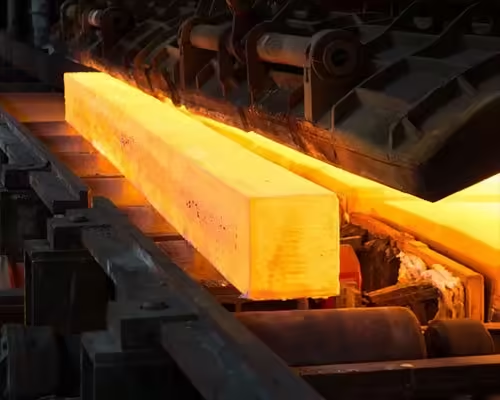
Steel blocks are foundational components in various industries, offering unmatched strength, durability, and versatility. Their applications span from construction and manufacturing to aerospace and energy sectors. This comprehensive guide explores the diverse uses of steel blocks, their manufacturing processes, and the advantages they bring to modern engineering and industrial applications.
Understanding Steel Blocks
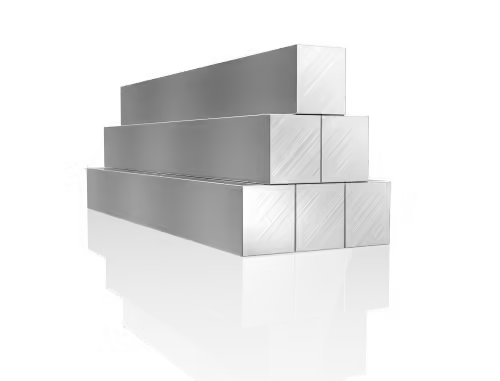
Steel blocks are solid pieces of steel, often forged or cast, used as raw materials or components in machinery, structures, and tools. Their inherent strength and adaptability make them suitable for applications requiring high load-bearing capacity and resistance to wear and corrosion.
Manufacturing Processes of Steel Blocks
Forging
Forging involves shaping steel block by applying compressive forces, enhancing their mechanical properties and grain structure. This process results in superior strength and fatigue resistance, making forged steel block ideal for critical applications.
Casting
Casting involves pouring molten steel into molds to form blocks. While casting allows for complex shapes and sizes, it may result in lower strength compared to forging due to potential internal defects.
Machining
Post-forging or casting, steel block often undergo machining processes like milling, drilling, and grinding to achieve precise dimensions and surface finishes required for specific applications.
Advantages of Using Steel Blocks
- High Strength: Steel blocks offer exceptional tensile and compressive strength, suitable for heavy-duty applications.
- Durability: Their resistance to wear, impact, and corrosion ensures longevity in harsh environments.
- Versatility: Steel blocks can be customized in terms of size, shape, and composition to meet diverse industrial needs.
- Cost-Effectiveness: Their durability reduces maintenance and replacement costs over time.
Applications of Steel Blocks
Construction Industry
Steel blocks are used in structural components, support beams, and foundation elements, providing stability and strength to buildings and infrastructure.
Manufacturing Sector
In manufacturing, steel block serve as bases for machinery, molds for shaping products, and components in equipment requiring high precision and strength.
Aerospace and Defense
Due to their high strength-to-weight ratio, steel block are utilized in aircraft components, missile structures, and defense equipment, ensuring performance and safety.
Energy Sector
Steel block are integral in power generation equipment, including turbines and generators, where they withstand high pressures and temperatures.
Automotive Industry
In automotive manufacturing, steel block are used in engine components, chassis parts, and tooling equipment, contributing to vehicle safety and performance.
Spotlight on Qilu Forging
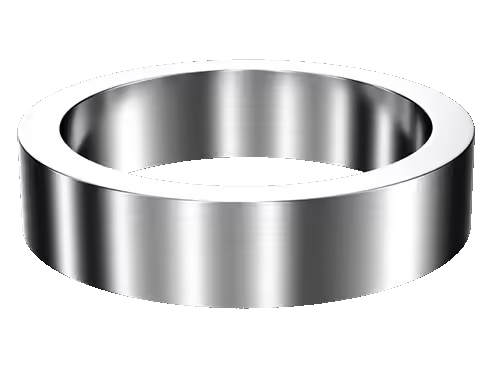
Qilu specializes in producing high-quality forged components, including shaft, ring, and disc forgings. With significant investments in advanced production and testing equipment, Qilu ensures its products meet the highest standards of quality and reliability. Their forging equipment ranges from 200 to 4000 tons, capable of producing between 1 to over 100,000 metal forgings. With ample inventory and global distribution services, Qilu can quickly deliver orders to meet customer demands.
Comparative Overview of Steel Block Applications
| Industry | Application Examples | Key Benefits |
|---|---|---|
| Construction | Structural beams, foundations | Enhanced stability and load-bearing |
| Manufacturing | Machinery bases, molds, precision tools | High precision and durability |
| Aerospace & Defense | Aircraft components, missile structures | Strength-to-weight ratio, reliability |
| Energy | Turbines, generators | Resistance to high pressure and temperature |
| Automotive | Engine parts, chassis components | Safety, performance, and longevity |
Maintenance and Longevity of Steel Blocks
Regular inspection and maintenance of steel block are essential to ensure their longevity and performance. This includes checking for signs of wear, corrosion, and structural integrity, as well as applying protective coatings and lubricants as necessary.
Future Trends in Steel Block Applications
Advancements in materials science and manufacturing technologies are expanding the applications of steel block. Innovations such as additive manufacturing, advanced alloys, and surface treatments are enhancing the properties and capabilities of steel block, opening new possibilities in various industries.
Conclusion
Steel blocks are indispensable in modern industry, offering unmatched strength, durability, and versatility across various applications. Understanding their manufacturing processes, advantages, and applications can help in selecting the right steel blocks for your specific needs.
For high-quality steel blocks tailored to your requirements, contact us today to learn how our products can support your projects and enhance performance.
FAQ
What are the common sizes of steel blocks available?
Steel blocks come in various sizes, ranging from small precision blocks to large industrial components, depending on the application requirements.
Can steel block be customized for specific applications?
Yes, steel block can be forged or machined to specific dimensions, shapes, and material compositions to meet unique application needs.
How does forging improve the properties of steel block?
Forging refines the grain structure of steel, enhancing its strength, toughness, and resistance to fatigue and impact.
What industries benefit most from using steel block?
Industries such as construction, manufacturing, aerospace, energy, and automotive extensively use steel block for their structural and mechanical applications.
How do I choose the right type of steel block for my application?
Consider factors like load requirements, environmental conditions, and specific industry standards. Consulting with a reputable manufacturer like Qilu can provide guidance tailored to your needs.