Shandong Qilu lndustrial Co.,Ltd.

Common Applications of the Process of Forging Metal
Welcome to My Blog!
Before we dive into the content, I’d love for you to join me on my social media platforms where I share more insights, engage with the community, and post updates. Here’s how you can connect with me:
Facebook:https://www.facebook.com/profile.php?id=100090903441806
Now, let’s get started on our journey together. I hope you find the content here insightful, engaging, and valuable.
Table of Contents
Introduction
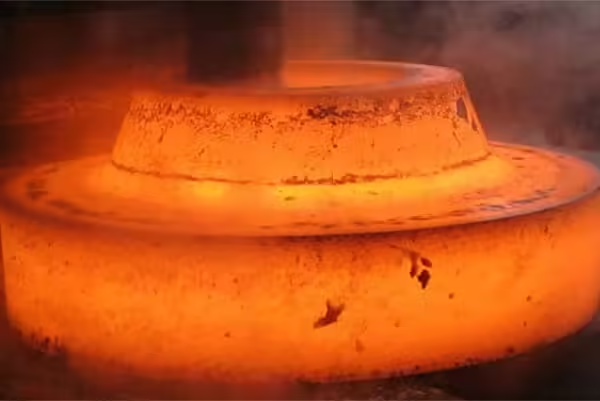
The process of forging metal is one of the oldest and most versatile manufacturing techniques, dating back thousands of years. This time-tested method involves shaping metal through compressive forces, typically by hammering or pressing, to create products with superior strength and durability. Today, forging metal plays a crucial role across industries, from automotive to aerospace, construction, and beyond. In this blog, we’ll dive into the process of forging metal, its applications, benefits, and why it remains a vital manufacturing technique in modern industries.
What Is the Process of Forging Metal?
The process of forging metal involves shaping a workpiece by applying compressive forces using specialized tools or machinery. Forging can be classified into different types based on temperature and methods:
Types of Metal Forging Processes
- Hot Forging:
The metal is heated to high temperatures to increase malleability and reduce the risk of fractures. This process is ideal for creating complex shapes. - Cold Forging:
Performed at room temperature, cold forging improves surface finish and increases material strength due to work hardening. - Warm Forging:
A middle ground between hot and cold forging, warm forging combines the benefits of both processes. - Open Die Forging:
The workpiece is not enclosed, allowing for large and intricate parts to be forged. - Closed Die Forging (Impression Die):
The metal is compressed within a die, resulting in precise and detailed shapes.
Each of these methods is chosen based on the material, desired properties, and end application.
Applications of the Process of Forging Metal
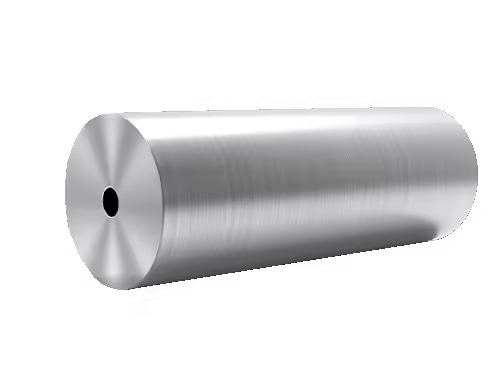
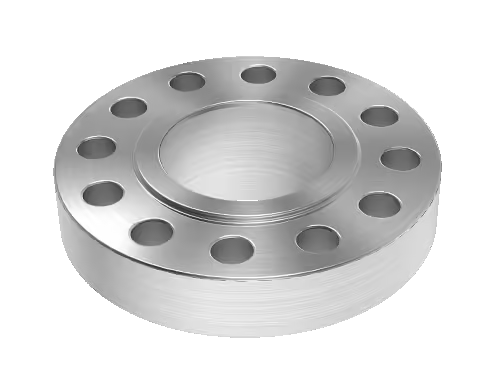
The process of forging metal is employed in a wide range of industries due to its ability to produce high-quality, durable components.
Automotive Industry
Forged parts such as crankshafts, gears, and axles are critical to the automotive industry. These components need exceptional strength and resistance to wear and tear, making forged metal the ideal choice.
Aerospace Industry
Aerospace components demand extreme precision and durability. Forging is used to manufacture aircraft landing gear, turbine blades, and structural components, ensuring they can withstand high stress and harsh conditions.
Construction Sector
From structural steel elements to heavy-duty fasteners, forged metal parts provide the necessary strength and reliability required in construction projects, especially in large infrastructures like bridges and skyscrapers.
Energy Sector
The oil and gas industry relies on forged components such as valves, flanges, and fittings for pipelines. These parts need to perform reliably under extreme pressure and temperature.
Defense and Military Applications
The process of forging metal is vital for manufacturing weapons, armor, and other defense equipment. Forged components ensure high impact resistance and durability, which are essential in military applications.
Benefits of Forging Metal
The process of forging metal offers numerous advantages over other manufacturing methods, making it a preferred choice for critical applications.
- Superior Strength: Forged components have higher tensile and impact strength, ensuring they perform well under stress.
- Improved Grain Structure: The forging process refines the metal’s grain structure, enhancing its mechanical properties.
- Design Flexibility: Complex shapes and custom components can be created with high precision.
- Enhanced Durability: Forged parts are resistant to fatigue and wear, ensuring a longer lifespan.
- Cost-Effective: While the initial tooling costs may be high, forging provides cost savings in the long run due to reduced material wastage and lower maintenance requirements.
Comparison of Metal Forging Types
| Forging Type | Temperature | Applications | Advantages |
|---|---|---|---|
| Hot Forging | High temperature | Automotive, aerospace, heavy machinery | High malleability, complex shapes |
| Cold Forging | Room temperature | Fasteners, small automotive parts | Improved surface finish, high strength |
| Warm Forging | Moderate temperature | Gears, automotive components | Combines hot and cold forging benefits |
| Open Die Forging | No enclosure | Large components like shafts, beams | Handles large-scale projects |
| Closed Die Forging | Enclosed die | Precision tools, small to medium components | High precision and detailed shapes |
Innovations in Metal Forging Technology
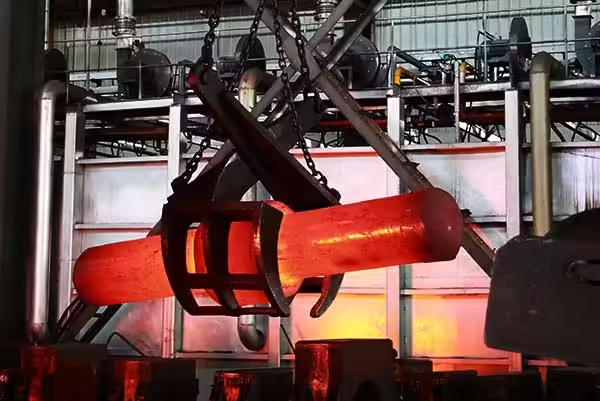
With advancements in technology, the process of forging metal continues to evolve. Automation, computer-aided design (CAD), and precision machinery have improved efficiency, consistency, and scalability. The adoption of environmentally friendly practices, such as reducing energy consumption and recycling materials, further enhances the sustainability of the forging industry.
Conclusion
The process of forging metal is a cornerstone of modern manufacturing, offering unmatched strength, durability, and reliability. Its applications across industries, from automotive to aerospace and beyond, highlight its versatility and importance. As technology advances, the forging industry will continue to innovate and adapt, ensuring it remains a crucial manufacturing process for generations to come.
At Guanglei, we specialize in high-quality forged metal components tailored to meet your specific needs. Whether you’re in the automotive, aerospace, or construction sector, our expertise ensures that you receive the best products for your applications.
FAQ
What types of metals are commonly used in the process of forging metal?
Commonly forged metals include steel, aluminum, titanium, and copper alloys, each chosen for its unique properties suited to specific applications.
Is the process of forging metal environmentally friendly?
Yes, forging is considered eco-friendly as it reduces material wastage, consumes less energy compared to other methods, and often uses recyclable materials.
What are the limitations of metal forging?
Forging may not be suitable for extremely thin or complex shapes and typically involves higher upfront costs due to tooling and equipment requirements.
How do I choose the right forging method for my project?
The choice depends on factors like the type of metal, desired properties, application, and production volume. Consulting with a professional forging manufacturer can help you determine the best approach.
What industries benefit most from the process of forging metal?
Industries such as automotive, aerospace, construction, energy, and defense rely heavily on forged components for their durability and performance in critical applications.