Shandong Qilu lndustrial Co.,Ltd.

Benefits of Forging Aluminum Parts
Welcome to My Blog!
Before we dive into the content, I’d love for you to join me on my social media platforms where I share more insights, engage with the community, and post updates. Here’s how you can connect with me:
Facebook:https://www.facebook.com/profile.php?id=100090903441806
Now, let’s get started on our journey together. I hope you find the content here insightful, engaging, and valuable.
Table of Contents
Introduction

Forging aluminum is a crucial manufacturing process that significantly enhances the mechanical properties and overall performance of aluminum parts. Unlike casting or machining from billets, forging involves shaping aluminum using compressive forces, typically with a hammer or press. This process refines the grain structure of the metal, resulting in superior strength, durability, and reliability. In this comprehensive guide, we will delve into the numerous benefits of forging aluminum, exploring its applications, advantages over other manufacturing methods, and answering frequently asked questions.
What is aluminum forging?
Forging aluminum involves plastically deforming aluminum stock between dies under pressure. This process can be performed at either hot or cold temperatures, depending on the specific alloy and desired properties. Hot forging, also known as hot working, is typically used for more complex shapes and larger parts. Cold forging, or cold working, is often preferred for smaller parts requiring tighter tolerances and a smoother surface finish. The forging process refines the grain structure, eliminates internal voids, and creates a continuous grain flow, leading to improved mechanical properties.
Superior Mechanical Properties of aluminum forging
One of the primary advantages of aluminum forging is the significant improvement in mechanical properties compared to other manufacturing methods. The forging process refines the grain structure of the aluminum, creating a denser and more uniform microstructure. This results in enhanced strength, ductility, toughness, and fatigue resistance.
Enhanced Strength and Durability through Forging Aluminum
Aluminum forging significantly increases the strength and durability of the resulting parts. The continuous grain flow created during forging enhances the material’s resistance to stress and impact. This makes forged aluminum parts ideal for applications requiring high strength-to-weight ratios and resistance to demanding conditions.
Improved Fatigue Resistance with aluminum forging
Fatigue failure is a common concern in many applications, especially those involving cyclic loading. Forging aluminum significantly improves fatigue resistance by eliminating internal voids and creating a more uniform grain structure. This reduces the initiation and propagation of cracks, extending the service life of the component.
Design Flexibility and Complex Shapes through aluminum forging
Forging aluminum offers remarkable design flexibility, allowing for the production of complex shapes and intricate geometries. The forging process can effectively form aluminum into near-net shapes, minimizing the need for subsequent machining and reducing material waste.
Near-Net Shape Forging Aluminum for Reduced Machining
Near-net shape forging is a highly efficient manufacturing method that produces parts very close to their final dimensions. This significantly reduces the amount of machining required, saving time, money, and material. Forging aluminum using near-net shape techniques is particularly beneficial for high-volume production runs.
Creating Complex Geometries with aluminum forging
The forging process can create complex geometries that would be difficult or impossible to achieve with other manufacturing methods. This makes forging aluminum ideal for applications requiring intricate shapes, undercuts, and internal features.
Cost-Effectiveness and Long-Term Value of Forging Aluminum
While the initial tooling costs for aluminum forging can be higher than other methods, the long-term cost benefits are often significant. The improved mechanical properties, reduced machining, and longer service life of forged aluminum parts contribute to overall cost savings.
Reduced Material Waste with aluminum forging
Forging aluminum is a material-efficient process that minimizes waste. The near-net shape capabilities of forging reduce the amount of material removed during machining.
Longer Service Life and Reduced Maintenance with aluminum forging
The enhanced durability and fatigue resistance of forged aluminum parts translate to a longer service life and reduced maintenance requirements. This can lead to significant cost savings over the lifespan of the component.
Applications of aluminum forging Across Industries
Forging aluminum is utilized in a wide range of industries due to its exceptional properties and versatility. Some key applications include:
Aerospace Applications of aluminum forging
The high strength-to-weight ratio of forged aluminum makes it an ideal material for aerospace applications. Forged aluminum parts are used in aircraft structures, landing gear components, engine parts, and more.
Automotive Applications of aluminum forging
In the automotive industry, forging aluminum is used to produce lightweight and high-strength components such as suspension parts, wheels, and engine components. This contributes to improved fuel efficiency and vehicle performance.
Industrial Applications of aluminum forging
Forged aluminum parts find applications in various industrial settings, including machinery, construction equipment, and transportation. Its strength, durability, and corrosion resistance make it suitable for demanding environments.
Comparison of aluminum forging with Other Manufacturing Methods
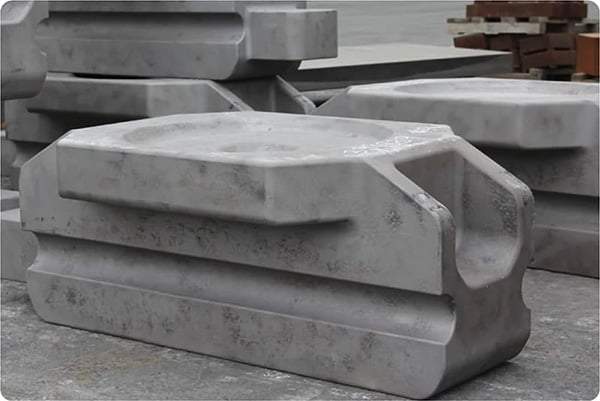
Forging aluminum offers distinct advantages over other manufacturing methods such as casting and machining from billets.
Forging Aluminum vs. Casting
Casting involves pouring molten metal into a mold. While casting can produce complex shapes, it often results in weaker parts with internal voids and inconsistent grain structure. Aluminum forging, on the other hand, produces parts with superior strength, durability, and a refined microstructure.
Forging Aluminum vs. Machining from Billets
Machining from billets involves removing material from a solid block of metal. This process can be wasteful and time-consuming, especially for complex shapes. Forging aluminum offers a more efficient and cost-effective approach, particularly for high-volume production.
Here’s a table summarizing the key differences:
| Feature | Forging Aluminum | Casting | Machining from Billets |
|---|---|---|---|
| Strength | High | Medium | Medium |
| Durability | High | Medium | Medium |
| Grain Structure | Refined, Continuous | Coarse | Directional |
| Material Waste | Low | Medium | High |
| Cost (High Volume) | Low | Medium | High |
| Complexity | High | High | Medium |
Conclusion
Forging aluminum offers a multitude of benefits, including superior mechanical properties, design flexibility, cost-effectiveness, and wide-ranging applications. The forging process enhances the strength, durability, and fatigue resistance of aluminum parts, making them ideal for demanding applications across various industries. While the initial tooling costs may be a consideration, the long-term advantages and overall value of aluminum forging make it a compelling choice for manufacturers seeking high-performance and reliable components. By understanding the benefits of aluminum forging, engineers and designers can make informed decisions to optimize their products and achieve superior results. Forging aluminum remains a cornerstone of modern manufacturing, providing solutions that meet the ever-increasing demands for lighter, stronger, and more durable materials. The future of aluminum forging looks promising, with ongoing advancements in technology and processes further expanding its capabilities and applications.
FAQ
What are the different types of forging aluminum?
There are several types of forging aluminum, including drop forging, press forging, and upset forging. Each method has its own advantages and is suitable for different applications.
What aluminum alloys are commonly used for forging?
Common aluminum alloys used for forging include 6061, 7075, and 2014. These alloys offer a combination of strength, machinability, and corrosion resistance.
How does forging aluminum affect the material’s microstructure?
Forging aluminum refines the grain structure of the metal, creating a denser and more uniform microstructure. This results in improved mechanical properties.